

🔥
2d •
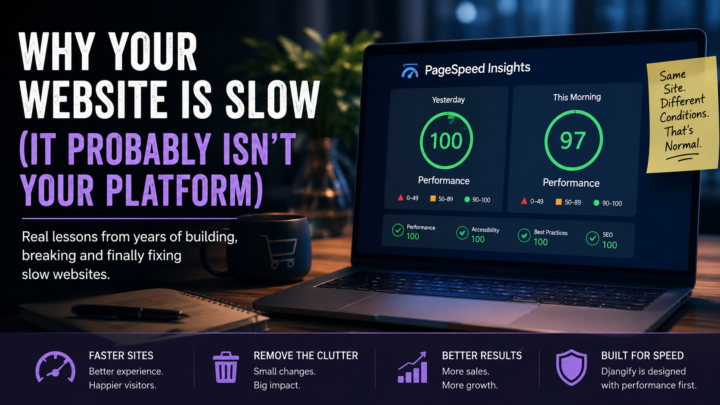
10 Things That Slow Down Your Website (And How to Avoid Them)
Most people assume a slow website means they need better hosting or a completely different platform. Sometimes that's true. Most of the time, it isn't. Over the years I've discovered that websites rarely become slow because of one huge mistake. They become slow because of dozens of tiny decisions that slowly build up over months or years. The good news is that most of them are surprisingly easy to fix. Here are ten of the biggest performance killers I see. 1. Uploading Huge Images This is probably the biggest offender. Modern phones take incredible photos, but they also produce enormous files. Uploading a 6MB photo straight to your website is like trying to squeeze a sofa through your front door every time someone visits your page. Instead - Resize images before uploading. - Use WebP where possible. - Don't upload a 4000-pixel image if it's only displayed at 800 pixels. 2. Installing Plugins "Just to Try Them" We've all done it. You install a plugin because it sounds useful. A few weeks later you've forgotten about it. A year later it's still loading code on every page. One plugin probably won't hurt but twenty eventually will. Instead Every few months ask yourself: "If I was building this website today, would I still install this?" If the answer is no, remove it. 3. Too Many Marketing Scripts Marketing software is fantastic until you install everything. Facebook Pixel. Pinterest Tag. Google Analytics. Microsoft Clarity. Heat maps. Retargeting. Live chat. Cookie software. Email popups. Every one of those has work to do before your visitor can use your website. Instead Only keep the tools that genuinely help your business. 4. Embedding Everything It's tempting to embed content everywhere. Instagram posts. Facebook videos. Google Maps. Calendars. YouTube playlists. Review widgets. Each embed contacts another server before your page finishes loading. Instead Ask yourself: Does this actually improve the visitor's experience? If not, replace it with a simple image or link.
🔥
9d •
How to start YouTube automation in 2026
I am getting ready to make my first video. I did research on what people are looking for and asking for I have created my YouTube channel I moved my desk to get the best possible natural light during the day I have a list of topics I downloaded OBS for making videos and DaVinci Resolve for editing. ChatGPT help me set it all up and go over the right settings. Chat also helped me set up my Yeti microphone The only thing left is to make an actual video!! This one focuses on setting up faceless channels but is also good for personal brands. I will be watching this today https://youtu.be/J-suhuECjBw?is=Ta198yVYukjztsY5 He also has a video on the biggest mistake to make with a new channel which is asking random family and friends to watch if they're not your target market. It confuses the Google algorithm and it ends up not liking your videos as much. He recommends letting it happen organically.
🔥
8d •
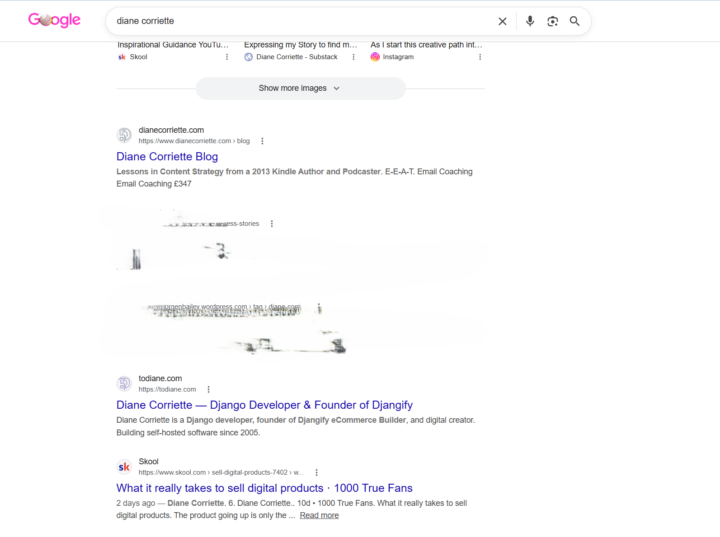
The group is now being indexed
I have been waiting to see how long it would be before the group appeared in the search engines and it has taken 6 weeks. So now, search-led content becomes really important. How long it takes to be found for different keywords
🔥
11d •
Free Claude Artifact Tools I Built
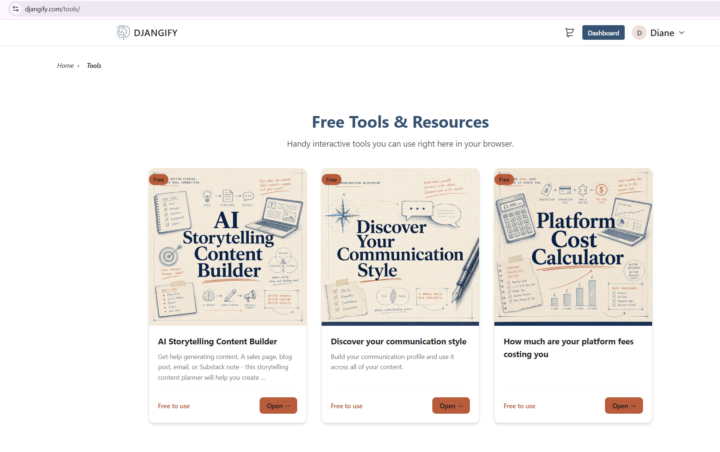
Now that I have included the ability to add artifact html files to Djangify I have added a few up there and welcome feedback - especially around the Storyteller Content Builder - I have been using it to help me create posts and ideas. Does it help you? It might turn into a paid tool - will see. https://www.djangify.com/tools - AI Storytelling Content Builder - Create content for your site (this should be premium) - Discover Your Communication Style - Let AI know your preferred style (always free - links to premium) - Platform Fees Estimator - how much are your platforms costing you - Free Core Values Compass - find your Core Values by answering questions. - An ALIVE List Prompts - prompts to use with AI (there will be a premium version) - An ALIVE List Direction Finder - figure out where you are now They are all available for me to share on Pinterest and social media.
🔥
13d •
My EEAT One Month Later
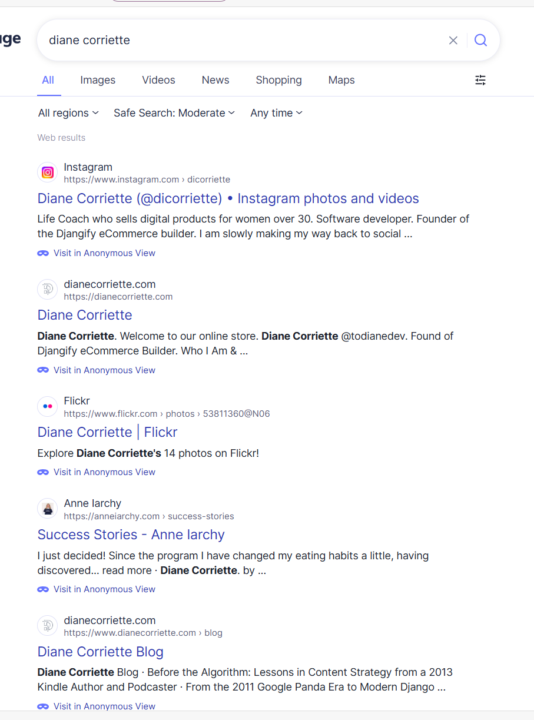
It was May 29th when I realized the search results for my name were terrible. Full of old accounts and nothing to do with me. Well the EEAT profile has worked. Today is June 29th 2026 and I am now showing up on the first page for my name. There is still a Flickr account from 2010 and an old testimonial from around 2009 showing up but hopefully over the next month that will change. The most important thing is if someone searches for me they find Djangify. They find todiane.com and they find the site that I really only set up for EEAT dianecorriette.com So having the EEAT profile worked. This Skool group still isn't showing up yet though. I think it takes 2 or 3 months. Now I just have to keep working on the 170 deindexed articles I still have!!! The flickr images are me at an internet marketing event in 2010 when there were hardly any women attending and very few BPOC! One of those guys in that image - Mike Filsaime - is now a mult-millionare. I spent money on his courses with "Lifetime access" that disappeared 18 months later. Oh the good ole days 🤣 https://www.flickr.com/photos/localbusinessworkshops/4975050241/in/photostream/ When you are an independent digital store SEO is everything and how you show up for your own name is so important.
1-23 of 23
powered by

skool.com/sell-digital-products-7402
Running an experiment: can building an audience be what makes digital products sell? Using eCommerce software I built myself & documenting as I go.
Suggested communities
Powered by