
Write something

Apr '24 •
The Secret to Building Incredible Products that People Love
Great chefs write great code. Why? Because they taste before they serve. They're testing flavors and textures at every opportunity, constantly slipping into the shoes of their customers and improving their product. But I didn't realize until embarrassingly recently that “customer” can be a very loose term. In fact, so can “product”. Of course, obsessing over the customer experience will help you design a better UI for your website. But that same customer obsession can be applied to your team’s onboarding process, code reviews, GraphQL schema, and much more. Everything you create that gets consumed fits this formula. Product = function ➡️ customer = caller. Product = scrum ticket ➡️ customer = engineer. Product = analytics dashboard ➡️ customer = on-call support. Take a slide deck, for example. What ingredients would tailor it to your customer's liking? Will they be wolfing it down hastily between meetings, or consuming it slowly like a three-course meal? Should it be presented elegantly like a filet on white tablecloth, or casually like a burger through the car window? At it's core, this metaphor tells a heartwarming story: the lifeblood of creation is empathy. Taste the food before you put it on the plate. And if your tastebuds can't be trusted, find a good sous chef! P.S. This simple trick will get you at least 50% of the way toward building something truly exceptional. The other 50% requires incorporating feedback from – you guessed it – your actual customers. 😉 Which dish will you be taste testing on this week's menu? Comment below so we can all learn together. 👇 #softwareengineering #programming #coding
0
0
Apr '24 •
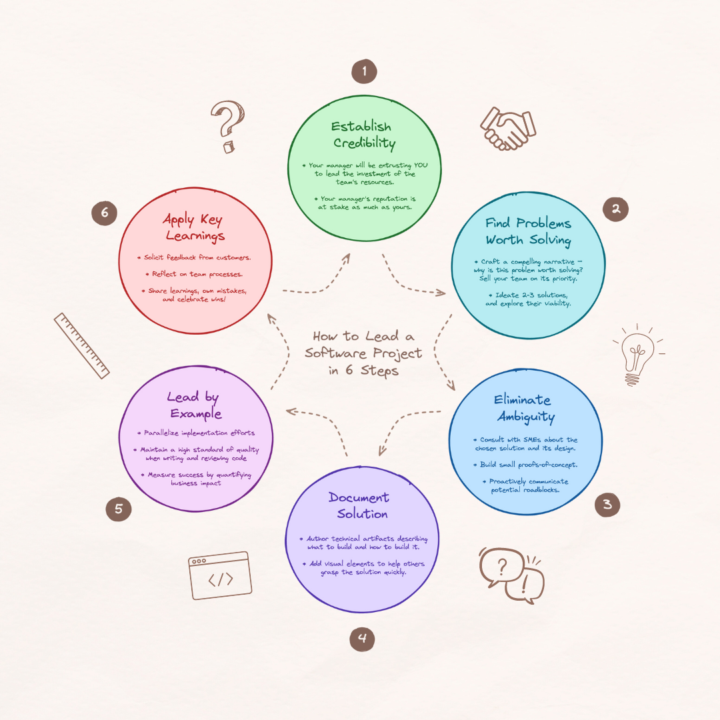
How to Lead a Software Project in 6 Steps
You're eager to get promoted as a junior SWE—I’ve been there. To rise through the ranks, you'll need to deliver projects that unlock meaningful value for your customers. But what if you've never owned and delivered a software project from start to finish? Luckily, I've walked this road many times over the past 3 years at Wayfair. These 6 steps comprise my battle-tested formula for success: 1. Establish credibility as a competent SWE. Before any manager will hand you the reigns to lead a multi-month project, you'll need to establish a reputation for delivering high quality work on time. This is because they'll be taking on risk by investing the team's resources to complete the project. And your manager will be entrusting YOU to lead that investment. Their reputation will be at stake as much as yours, so give them every reason to believe that your leadership abilities are worth taking a risk on. 2. Wait patiently for the right opportunity, or create your own. You may be lucky enough to get handed your first major project. If so, great! Pick up the baton, and run the rest of the race as if you started it. If you aren't so fortunate, you'll have to make your own luck. This means doing the up-front work of inventing the project you'll own by looking for high-priority problems your team can feasibly address. It may be a large enough problem to warrant collaboration with other teams. See this as an opportunity to broaden your scope of influence within the company, not as a roadblock to success. Once you've found the problem you want to solve and thought through a few high-level solutions, you'll need to sell the project. The rest of your team has to buy into your narrative about WHY this problem is worth solving. Use real data to back up your claims – it will provide additional credibility and help your manager sell the project to other stakeholders. Then organize your "sales pitch" in writing to minimize meetings and maximize alignment. 3. Shift left – eliminate ambiguity as early as you can.
0
0
1-2 of 2
skool.com/self-taught-web-developers-5417
A community of friendly software devs working at big tech companies.
Constantly sharing learnings to help each other earn that next promotion.
Powered by