
Write something

5h •
🐾 From Compassion to Change: Let’s Explore Humane Education Together
The movement we just touched on—the Bands of Mercy—started with one simple idea: 👉 Teach kindness to animals early. That idea has grown into something we still use today: 🌱 What Is Humane Education? Humane education is about helping people—especially kids: - Feel empathy for animals - Understand their experiences - Learn kindness in a natural, lasting way It’s not about memorizing rules.It’s about shaping how we see and treat living beings. 📖 Why Black Beauty Still Matters The book Black Beauty by Anna Sewell is one of the most powerful humane education tools ever created. Instead of telling you “be kind,” it lets you:👉 experience life from an animal’s point of view That’s what makes it so effective—especially for young learners. 🐾 What We’re Building Here We’re continuing this tradition with a Black Beauty Humane Education Course for Kids ✨ Story-based learning✨ Gentle, age-appropriate lessons✨ Focus on empathy, not judgment 💬 Let’s Build This Together: We’d love your input as we shape this: 1️⃣ If you’re a parent, teacher, or mentor: What would you want kids to feel or learn from a course like this? 2️⃣ If you love animals:What moment (real life or story) made you feel deep compassion for an animal? 3️⃣ Quick poll — what matters most? Drop one in the comments: - ❤️ Empathy - 🧠 Understanding - 🐾 Action - 📖 Storytelling 4️⃣ Bonus : If you could name a lesson in this course, what would it be called? 🌟 Why Your Voice Matters The original Bands of Mercy were community-driven. People shared ideas, taught each other, and built something meaningful. 👉 We’re doing the same thing here. 🧭 Coming Next ➡️ Sneak peek of the first lesson➡️ How this connects to modern animal laws (like Ryder’s Law)➡️ Simple ways kids can practice kindness daily This isn’t just a course. It’ s a community shaping how the next generation learns compassion.
0
0
16h •
🐾 A Quick History: The “Bands of Mercy”
The Bands of Mercy were one of the earliest organized movements to teach kindness to animals—especially to children. 🌱 Where Did They Come From? The idea began in the 1800s alongside the rise of animal protection groups like theRoyal Society for the Prevention of Cruelty to Animals (RSPCA) in England. At that time: - Animals (especially working animals like horses) were often overworked and mistreated - There were very few laws protecting them - Compassion toward animals wasn’t always taught or encouraged So reformers had a simple but powerful idea: 👉 Teach kindness early. 👧🧒 What Were the Bands of Mercy? They were clubs—often for children—that focused on: - Kindness to animals - Compassion toward all living beings - Building humane habits from a young age Members would: - Take a pledge to be kind to animals - Meet regularly (often in schools or churches) - Learn how to care for animals and prevent cruelty 🇺🇸 How Did They Come to the United States? The movement spread to the U.S. through organizations like theAmerican Society for the Prevention of Cruelty to Animals (ASPCA). In the late 1800s, thousands of Bands of Mercy groups formed across the country. 💡 At one point, millions of children were involved. 💡 Why This Still Matters Today The Bands of Mercy helped shape something we still believe today: 👉 That kindness can be taught👉 That education leads to compassion👉 That protecting animals starts with awareness Many modern ideas about humane education—and even laws protecting animals—trace back to this movement. 🌿 Simple Takeaway Before stronger laws existed, there were people teaching kindness.And those teachings helped create the laws we have today.
0
0
2d •
🐾 Welcome—Introduce Yourself!
You made it here for a reason. Whether you’ve always cared about animals or you’re just starting to think about the laws that protect them—you’re in the right place. This community is about turning compassion into understanding, and understanding into action. We’re starting with Ryder’s Law—but this is bigger than one law. It’s about learning how change actually happens. 💬 Let’s get to know you Drop a comment below and share: 1. Your name (or initials) 2. Why you care about animals 3. One thing you’d want to change about how animals are treated 🧠 No pressure You don’t need to know anything about the law yet. Just being here means you’re already someone who: - Pays attention - Cares - Is open to learning That’s where change starts. 🔥 Quick question to start us off: 👉 Do you think animal cruelty laws are currently strong enough? Yes / No / Not sure — and why? 🐾 Our reminder They’re voiceless.Our voice. Our action.
3d •
🐾 Start Here: Ryder’s Law Collective
Welcome—this is where compassion becomes action. We focus on understanding and improving animal protection laws, starting with Ryder’s Law. ⚖️ What to expect - Simple breakdowns of real animal cruelty laws - Weekly case discussions - Action steps (easy + optional) - A supportive, respectful community 🧭 How to get started 1. Introduce yourself in the Welcome post 2. Read the Ryder’s Law intro (Lesson 1) 3. Join the discussion—your voice matters 💬 Community guidelines - Be respectful - Stay focused on learning + advocacy - No graphic content - We build change through awareness—not hostility 🔥 Our mission Learn the law.Use your voice.Change their future.
0
0
1-4 of 4
powered by
skool.com/ryders-law-collective-8516
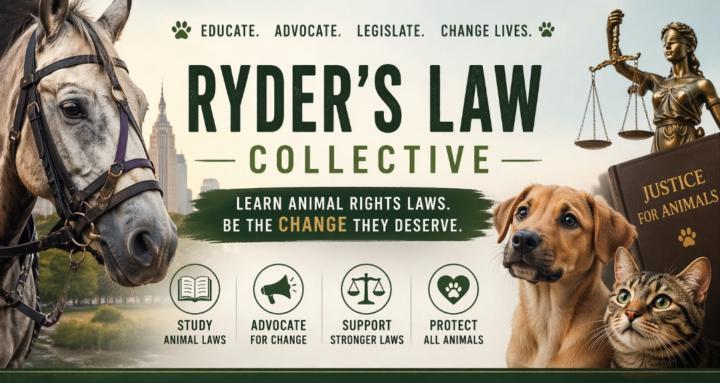
Learn, discuss, and advocate for animal rights laws—starting with Ryder’s Law. Turn awareness into real change.
Suggested communities
Powered by