
Write something

🔥
10d •
☕ Sunday Check-In
Happy Sunday everyone! I know many of us have different things going on today. Some are spending time with family, some are catching up on work, some are learning something new, and some are simply taking a well-deserved rest. Wherever you are today, I hope you can take a few moments just for yourself. Here's a simple question I'd love you to think about... What's one small thing you've done this week that you're quietly proud of? It doesn't have to be something big. Maybe you finally tried an AI tool. Maybe you read an article you've been putting off. Maybe you asked a question. Maybe you simply decided not to give up. Sometimes we focus so much on what's left to do that we forget to acknowledge how far we've already come. If you'd like to share, I'd love to hear it. 😊 Have a peaceful Sunday, everyone. ☕ — William
2
0

🔥
16d •
☕ You Don't Have to Rush Here
If you've been quietly reading the posts without commenting... welcome. I'm glad you're here. Not everyone learns by speaking up straight away. Some people prefer to observe first, take things in, and move at their own pace. That's perfectly okay. This community isn't about keeping up with everyone else. It's about finding your own rhythm as you adapt to today's digital world. Whenever you're ready, feel free to introduce yourself, ask a question, share a small win, or even tell us what you're finding difficult. Chances are, someone else has been wondering the same thing. I'll leave you with one simple question: What brought you here, and what are you hoping to become more confident about? There's no right or wrong answer. Just a conversation waiting to begin. ☕

🔥
Jan 18 •
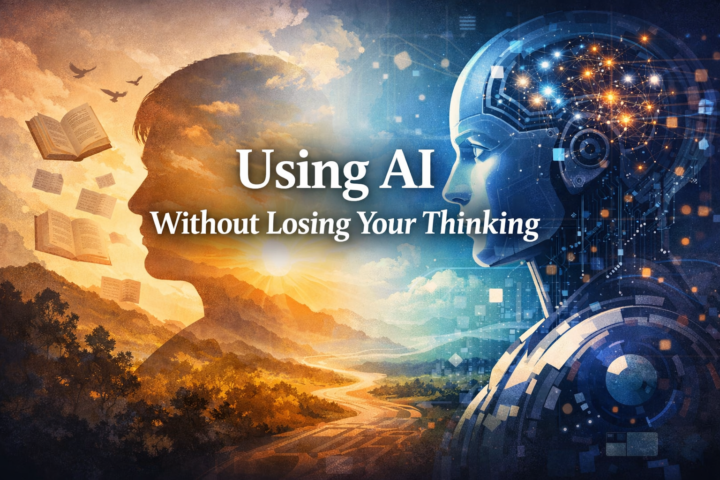
Using AI Without Losing Your Thinking
I want to share something honestly, not as advice or instruction — just a reflection from my own experience using AI. At one point, I found myself wondering: Am I relying on AI too much? Is it making me sharper… or quietly dulling my thinking? That question matters — especially if you’re restarting, relearning, or experimenting with AI on your own. Here’s what I eventually realised. AI does NOT lower our intelligence. What it changes is the interface — the way ideas are expressed, paced, and unpacked. There’s an important difference between: - depth of understanding, and - how that understanding is explained or explored A good human mentor doesn’t speak in complex language just to sound smart. They know the terrain, and they choose the right entry point. AI, when used well, can play a similar role — not by thinking for us, but by helping us think with less friction. What made me pause wasn’t that things became easier to understand. It was the old belief that learning must feel difficult to be real. But clarity is not “dumbing down”. Clarity is compression without distortion. I’ve come to see AI as a thinking partner, not a replacement: - It helps surface ideas - It helps name things I already sensed - It helps me organise thoughts I’m still forming And importantly, it doesn’t cap growth. If I want deeper theory, academic framing, or more challenge, I can always ask for it. There’s no ceiling unless I impose one myself. So if you’re feeling skeptical, cautious, or unsure about using AI in your daily work or thinking, you’re not wrong to question it. The key isn’t whether you use AI. It’s 👉 how consciously you use it. For me, the goal isn’t speed or cleverness. It’s understanding that actually sticks. Take what resonates. Leave the rest. #AI & Thinking
🔥
27d •
Welcome New Member To The Community
Welcome @sharon-bowes-9182 to the Restarting Beginners Community! 🎉 Feel free to start by exploring the pinned posts and resources at your own pace. There is no pressure to participate immediately, complete anything quickly, or have all the answers. Many of us are simply taking one small step at a time as we learn and adapt together. If you have a question or would prefer a private conversation, you're welcome to send me a DM and I'll do my best to reply when I'm available. One simple community rule: please help us keep this a safe and distraction-free space. Promotional posts, unsolicited invitations, affiliate links, and attempts to redirect members outside the community are not permitted and may result in removal from the community. Thank you for being here, and I look forward to getting to know you. — William Adapt. Learn. Thrive.

🔥
28d •
Welcome New Members To The Community
Welcome @angela-walters-1432, @nassim-el-filali-4941, @donald-cooper-7917 and @olaoluwa-john-4292 to the Restarting Beginners Community! 🎉 Feel free to start by exploring the pinned posts and resources at your own pace. There is no pressure to participate immediately, complete anything quickly, or have all the answers. Many of us are simply taking one small step at a time as we learn and adapt together. If you have a question or would prefer a private conversation, you're welcome to send me a DM, and I'll do my best to reply when I'm available. One simple community rule: please help us keep this a safe and distraction-free space. Promotional posts, unsolicited invitations, affiliate links, and attempts to redirect members outside the community are not permitted and may result in removal from the community. Thank you for being here, and I look forward to getting to know you. — William Adapt. Learn. Thrive.

1-26 of 26
powered by
skool.com/restarting-beginners-community-1925
A Digital Restart community for adults 30–65 who feel left behind by technology and want confidence with AI and digital skills. 💡
Suggested communities
Powered by