
Write something
Pinned
Jan 15 •
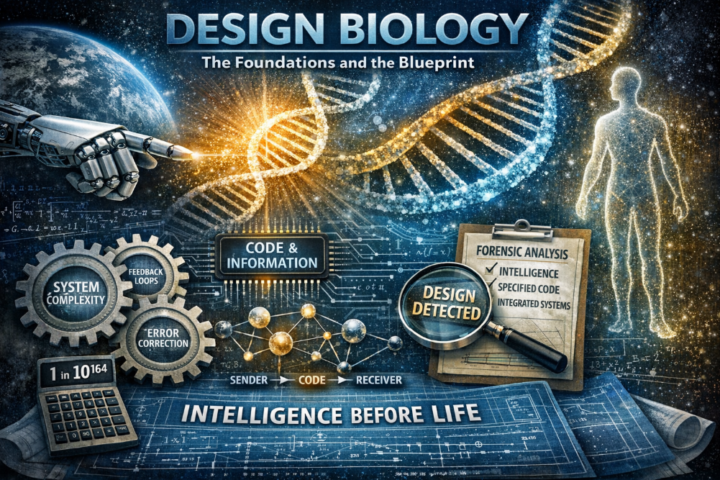
Design Biology: The Foundations and the Blueprint
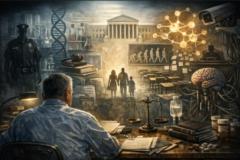
“Show Your Command Center” Every builder has a base of operations. Post a photo of your workspace. Desk, kitchen table, garage bench, truck cab, porch chair. All count. Tell us: What are you building right now? What tool do you use the most? What time of day do you do your best thinking
1
0
Feb 17 •
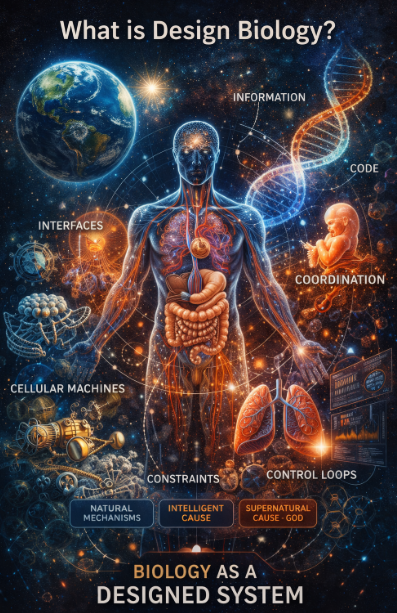
What is Design Biology?
So what is DB? Design Biology or DB is my shorthand for this idea: biology looks less like an accident and more like an engineered system. It treats living things the way an investigator treats a complex artifact, by asking what the parts do, how the information is stored, and what it would take for the system to work at all. Here’s the outline of what I mean. Design Biology starts with the universe and the body. I believe the universe is ordered, lawful, and finely tuned for life. I also see the human body as an integrated, goal-directed system. It has interlocking subsystems, error-checking, repair, feedback control, and layered information storage. When I look at things like DNA coding, cellular machines, embryonic development, and the way organs coordinate, I see the same patterns we see in designed systems: codes, constraints, interfaces, and control loops. Design Biology is also a method, not just a conclusion. It asks, “What is the mechanism that builds this?” “What information is required?” and “What must already exist for this to function?” It focuses on testable features such as information density, irreducible interdependence among parts, coordinated timing, and the fact that many biological functions work only when multiple components are present together. My stance, stated plainly: I think life and the major biological architectures point to real design rather than undirected chance. I see design as the best explanation for why complex biological systems are information-rich, tightly coordinated, and functional from the start. I see it as an alternative to biological evolution. Mainstream evolution explains diversity through mutation and natural selection over time. My issue is not that populations change or that selection happens. My issue is whether unguided processes can realistically generate the kind of new, integrated biological machinery we see, in which many parts must match and work together. The system depends on encoded instructions and regulation. In my view, the origin of that kind of functional information and coordinated architecture is the central question, and “chance plus selection” does not answer it at the level of mechanism.
0
0
Jan 28 •
DB-FEP
DB-FEP is a text-audit protocol for separating reported evidence, inference steps, bridge assumptions, and failure conditions—especially when passages make sufficiency, necessity, or ‘case closed’ claims
1
0

1-3 of 3
powered by
skool.com/real-science-2248
Real science. Real evidence. Systems thinking. Exposing false models and defending intelligent design.
Suggested communities
Powered by