
Write something
24d •
Welcome to Practical AI Academy
Thanks for being here. You're one of the first to join this community, and that matters. What This Is (And What It Isn't) This is not: - Generic AI theory and hype - Prompts you'll forget in a week - Motivation without results - Another paid course This is: - A place to learn frameworks that actually work - Real case studies from real businesses - Practical automation tools you can use Monday morning - A community of people building AI into their operations (not replacing them) Why I Built This I've spent 20 years in manufacturing. Built teams. Hit targets. Optimized systems. Recently, I've worked with SMEs on AI adoption. I've seen what works and what fails. The pattern is clear: Most AI implementations fail because leaders treat it like a tech problem. It's not. It's a people problem. The best implementations follow a framework: 1. Assess – What's actually broken? 2. Educate – Do people understand why? 3. Automate – Build the right tools 4. Scale – Lock in the wins This community is where I document that framework. And I want you to shape it. What You Get as an Early Member Right now (free tier): - Foundational modules on AI adoption, prompt engineering, and operational optimization - Weekly Q&A calls (ask anything, no stupid questions) - Early access to frameworks, templates, and prompts before they're polished - Direct feedback loop – your input shapes what we build next - The First Course id FREE - The AI Tutor Prompt – a production-ready prompt that personalizes learning In a few weeks (paid tier launches): - 5 pre-built templates (Dyslexia, ESL, Professional Skills, ADHD, Language Learning) - Advanced automation blueprints for your specific operations - 1:1 consultation slots (for paid pro members) - Priority access to new resources Your First Action 1. Introduce yourself – Post in #introductions Your name Your role / what you're working on One specific thing you want to improve with AI this year 2. Read the pinned posts in #community – They give you the foundation 3. Show up to this week's Q&A – I'll walk through the framework that ties everything together
0
0
29d •
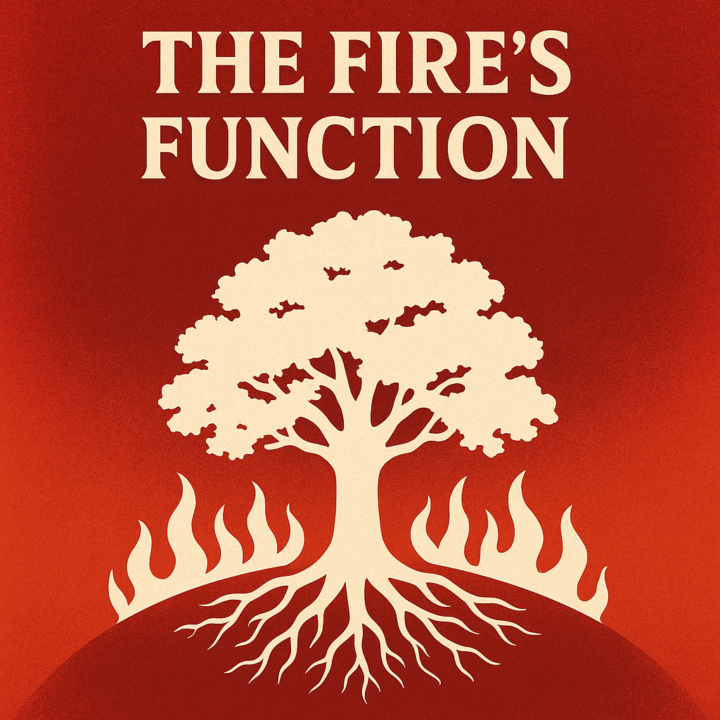
The AI Wildfire Is Coming.
I read an article taken from a recent event where a guest asked a veteran Silicon Valley CEO the burning question - Are we in an AI Bubble? His reply really resonated with me so here is my summary: Silicon Valley’s periodic crashes act like forest fires. They burn away excess, reallocate talent, and create the infrastructure for the next generation of growth. 1. The Function of the Fire - Each tech boom ends when growth chokes itself. - Crashes redistribute talent, culture, and infrastructure. - Survivors emerge leaner, faster, and better equipped. 2. The First Two Fires (2000 and 2008) - 2000 (Web 1.0): Total wipeout of speculative startups. Yet data centers, fiber, and key firms like Amazon, eBay, and Google survived and built lasting systems. The fiber glut became the backbone for Web 2.0 and cloud computing. - 2008 (Web 2.0): The recession killed weak business models but rewarded resilient ones—Apple, Amazon, Netflix, Google, and Salesforce integrated hardware, software, and services into sustainable ecosystems. 3. The Current Fire (AI Cycle) - Today’s bubble centers on the biggest players: Nvidia, OpenAI, Microsoft. - The danger is a “canopy fire” at the top—mutual overinvestment in compute creating an industrial bubble. - When demand cools, compute utilization could collapse, exposing dependence on a few large buyers. 4. Compute Overbuild and Abundance - Massive GPU and data center spending mirrors the 1990s fiber boom. - Overcapacity will drive compute costs down, seeding future innovation. - Two compute markets matter: 5. Why This Bubble Is Productive - Overinvestment in compute infrastructure will leave behind real assets. - Inference demand—AI applied to productivity, cost reduction, and decision-making—is durable and measurable. - The correction will shift capital from speculative training to practical deployment. 6. The Depreciation and Energy Problems - GPUs age fast; unlike fiber, they lose value in a few years. Survivors with the latest hardware will hold an edge. - True bottleneck: energy. Compute equals electricity. Power generation and grid capacity, not chips, will decide who leads the next cycle. - Energy infrastructure takes decades to build, creating strategic advantage for those investing in it now.
1
0
30d •
⚙️ 7 Common Mistakes in AI Adoption — and How to Avoid Them
Most AI projects fail not because the tech doesn’t work, but because the business approach does. After working with companies of all sizes on AI strategy and implementation, these are the seven mistakes I see again and again — and how to fix them. 🚧 The Mistakes• No clear link between AI and business goals• Unrealistic expectations of what AI can do• No policy or guardrails in place• Weak change management and low employee trust• No ownership or dedicated resources• Poor data quality and governance• Treating AI as a one-off project, not a living capability ✅ The Fix• Set a clear strategy that connects top-down goals with bottom-up use cases• Educate leaders and staff on AI’s real limits and potential• Build and update a Safe AI Policy• Identify champions and involve teams early• Assign clear leadership and resources• Get data right before deploying models• Review and adapt quarterly — AI maturity is continuous Balanced adoption happens when leadership sets direction, teams co-create solutions, and everyone learns together. 📎 Download the full PDF guide below:“7 Common Mistakes in AI Adoption — and How to Avoid Them” Which of these mistakes do you see most often in your organization?
1
0
30d •
📘 AI Literacy 2025 – 26 Essential Concepts You Need to Master
Most people use AI tools without understanding how they think. That gap costs time, money, and accuracy. This AI Literacy 2025 Cheat Sheet breaks down 26 core concepts that every professional should know — from tokenization and embeddings to RAG, LoRA, and prompt injection defense. You’ll learn:• How AI actually processes and interprets your text• The four levers that control every model’s output• Practical ways to reduce API costs and prevent hallucinations• How to personalize AI systems cheaply and safely• The difference between amateurs and fluent AI users This is the reference I wish every business leader and builder had before deploying AI. 📎 Download the PDF below🧠 Read it, apply one concept per day, and you’ll be ahead of 99% of AI users by the end of the month. What’s one concept here you’d like me to break down in our next session?
1
0
30d •
🚀 Stop Using Microsoft Copilot Like It’s ChatGPT
Too many teams spend six figures on Microsoft Copilot and only use it to write emails. That’s like buying a Ferrari to drive around the car park. Copilot isn’t another productivity app — it’s an embedded intelligence layer across Microsoft 365 that can transform how your team works if you know how to use it. 📘 My new Copilot Playbook breaks it all down:• The 12 Copilot products and which ones matter for you• Real workflows for Outlook, Excel, Word, Teams, and PowerPoint• Proven adoption strategies (Vodafone’s 68,000-user rollout)• 50 tested prompts for business roles• How to measure ROI and scale safely 🎯 Goal: move your business from AI activity to AI fluency — where AI delivers measurable gains, not hype. If you’re ready to turn Copilot from a toy into a transformation tool, this guide shows how.
1
0
1-5 of 5
powered by
skool.com/practical-ai-academy-1389
Welcome to The AI Practice — a learning hub for people and businesses who want to work smarter with AI.
Suggested communities
Powered by