
Write something

Nov '22 •
Winnie the Kingmaker?
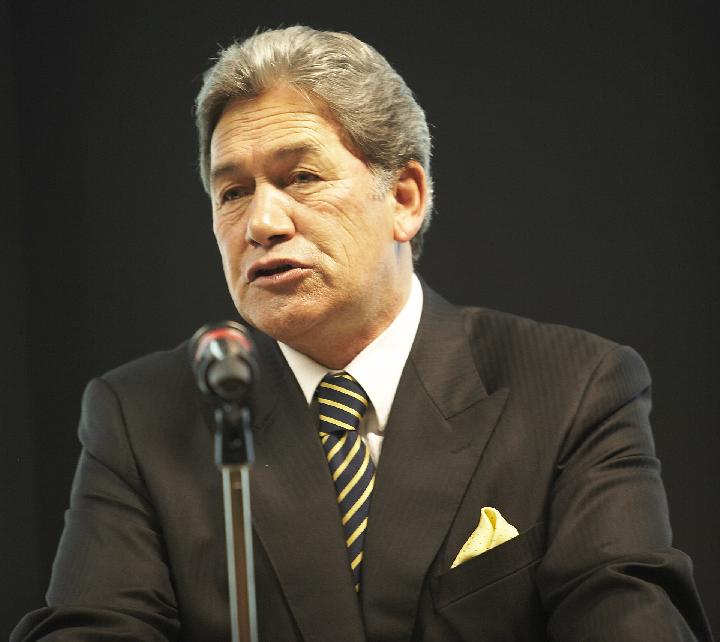
Polling shows NZ First rising A recent Horizon Research poll has shown New Zealand First back over the 5% threshold in popularity. The Newshub-Reid Research Poll shows NZ First at just over 3%. That same poll, incidentally, shows Labour has dropped almost six points – the lowest since Jacinda Ardern took power. While polling is highly subjective and sensitive to a variety of factors that can affect the results, the general consensus is NZ First is rising in popularity. The Party was wiped out in the 2020 COVID election that gave Labour its majority. Party leader Winston Peters could be the “Kingmaker” yet again. The Party held the role in 2017 and opted to enter a coalition government with Labour. The move sent National packing after three terms in power. “Secret Agenda” Peters has ruled out working with an Ardern-led Government. They “lied”, “can’t be trusted” and had a “secret agenda” says Peters in reference to his assertion NZ First was deliberately deceived about the 3 Waters reforms and by the Ministry of Māori Development –led at that time by Nanaia Mahuta– commissioning the He puapua report. The Declaration Working Group (DWG) drafting the He puapua report describe their objective as recommending “a refocus on rangatiratanga Māori” (Māori self-determination). The report is a ‘roadmap’ to Vision 2040 that aims to create a Māori state within a co-governed New Zealand in time for the 200th anniversary of the Treaty of Waitangi. Labour’s Willie Jackson has said NZ First was never deceived, but just that any discussion of He puapua was not a priority amid the emergence of COVID. Peters doesn’t accept that explanation. “No one gets to lie to me twice”, says Peters on the notion of working with the current Labour Party to form a Government. Peters has repeatedly called out the Government for co-governance policies he says are sowing the seeds of apartheid. “That is going to be a huge issue in 2023,” says Peters. “Everything got dramatically worse” In a recent speech aimed at Labour, Peters said “Everything has got dramatically worse in a breathtakingly short time.” He has been campaigning heavily on cost of living, opposing 3 Waters, co-governance, education, housing, infrastructure, and public and mental health.
Nov '22 •
New normal: reports paint an abysmal picture of NZ school attendance
New Zealand’s worsening school attendance Recent Government reports are shedding light on numbers regarding declining school attendance in New Zealand. The Education Review Office (ERO) released its report “Missing Out: Why Aren’t Our Children Going to School?” that analyses reasons attendance is down and some possible solutions. Also being discussed in the media is the Ministry of Education’s 2022 second term attendance report. That report follows school attendance of the 10-week term that ran from May to July, 2022. Taken together, the reports show that regular attendance, defined as attending more than 90% of the time, fell from 70% of students in 2015 to 58% in 2021. Also, in 2022, barely three out of five students regularly attended class during term 2. Chronic absence, where students attended 70% or less, nearly doubled and absence due to illness reached an all-time high. The result was a record low 4 out of 10 students (mostly Māori and Pacific children) regularly attended classes. Overall attendance in decile 1 and 2 schools was the worst, with only a quarter of the students attending classes regularly. Also, for the first time on record, boys attendance was lower than girls. New Zealand was already doing worse prior to 2020 against other countries, with regular declines in classroom attendance. As little as 2 days of absence from class per term may negatively affect educational outcomes according to research cited by the Government. Students who miss school are more likely to report poor relationships with teachers and peers. Having good relationships at school is a key motivator for student attendance. Lockdowns, COVID and winter illnesses to blame The ERO report says “families have found getting students back into regular attendance challenging”. Lockdowns severely disrupted routines and focus groups found 4 out of 10 parents and 1 out of 3 students did not view regular attendance as important. 2022’s second term absences were mainly driven by parents more likely to keep children home for longer, even if they were only slightly unwell, due to COVID 19 or typical winter illnesses.
0
0
Nov '22 •
Proposed amendment to enforce censorship with terrorism law
The Counter-Terrorism Acts (Designations and Control Orders) Amendment Bill proposes the use of anti-terrorism law against people who break censorship. Breaking censorship in New Zealand includes watching (or even downloading without watching) things uncensored in most countries such as the Manhunt video game series, the film The Human Centipede 2, or a vast array of material easily obtainable online without any indication of their being censored. NZ censorship law, the Films, Videos, and Publications Classification Act 1993, is very broad. It criminalises anyone who creates, obtains, distributes, or possesses objectionable material – including electronically. They may be fined up to $10,000, and anyone who does so “knowing or having reasonable cause to believe that the publication is objectionable” may be imprisoned up to 14 years. The most notable recent “objectionable material” cases were of people who shared part or all of Christchurch mosque attacker Brenton Tarrant’s livestream — a very low resolution video watched by tens of thousands of Kiwis and shared around the world by mainstream media. If the bill had been law at that time, anyone who watched this could have had anti-terrorist law applied to them, including severe restrictions on association, movement (such as house arrest), communications (such as use of the Internet), transactions (banking or not), and been subject to electronic monitoring. This is a massive removal of civil liberties for a crime that may not hurt anyone, and is easily open to abuse by censors, without any further legislation needed to shut down someone’s rights. Parliament is currently receiving submissions on the bill, ending 11.59pm Wednesday (23 November 2022). The Free Speech Union made a submission opposing this expansion of a terrorism-related offence.
0
0
1-3 of 3

skool.com/new-zealand-news-essentials-7836
New Zealand News Essentials (NZNE) is a digital media publication founded in 2022
Powered by