
Pinned

3d •
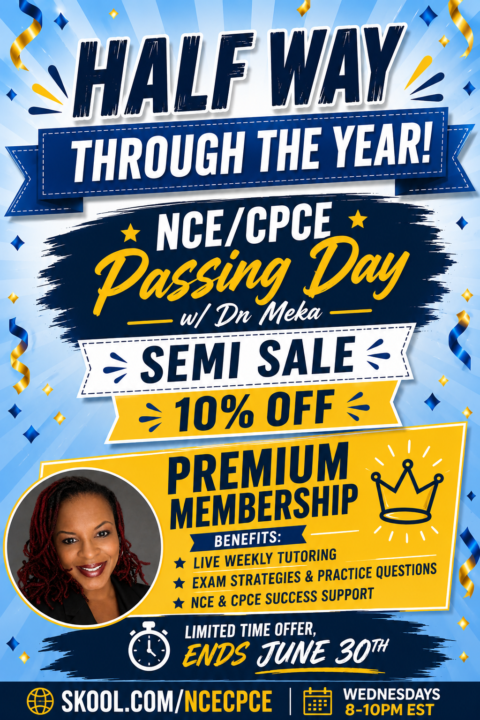
📢 Invest in Your Future. Save 10% Today and Gain the Support You Need to Pass‼️
Tell ALL your friends!
10h •
Tomorrow ‼️
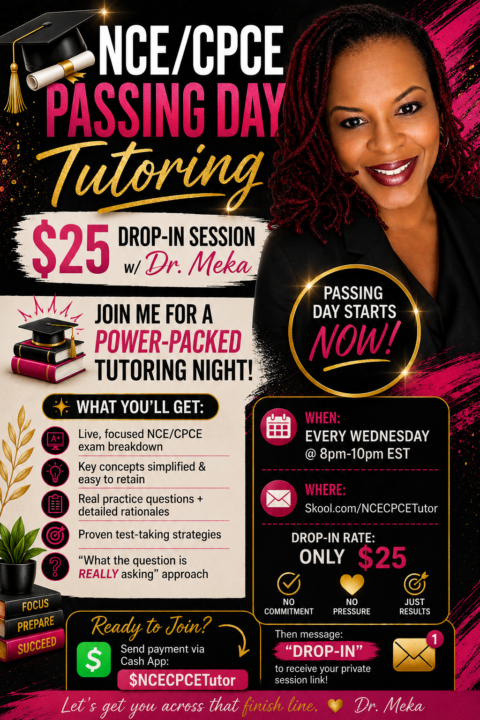
💥 Join Me for a Power-Packed Tutoring Night! ✨ What You’ll Get:• Live, focused NCE/CPCE exam breakdown• Key concepts simplified & easy to retain• Real practice questions + detailed rationales• Proven test-taking strategies• “What the question is REALLY asking” approach 💲 Drop-In Rate: ONLY $25 ✔ No commitment ✔ No pressure ✔ Just results
0
0
1d •
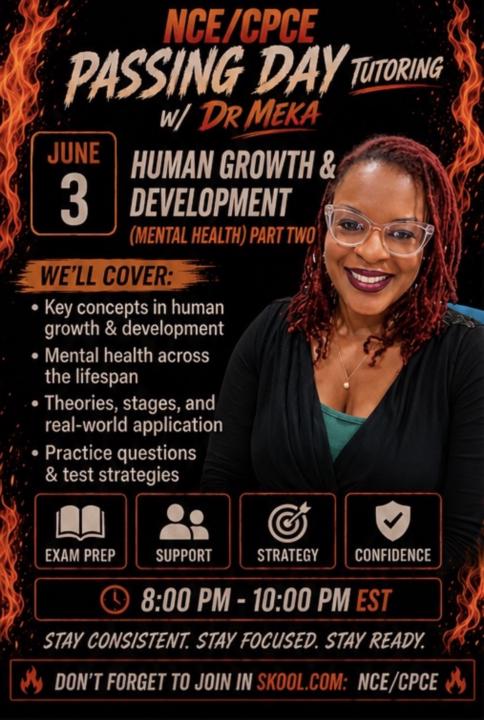
$25 Drop-In Session w/ Dr Meka
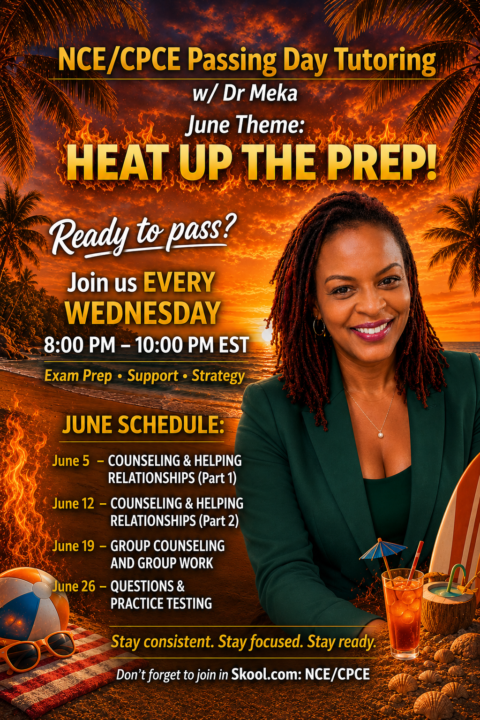
This Wednesday 8-10pm But don’t forget, You can join Premium Membership and catch the 10% off sale NOW!
0
0

3d •
🚨 STOP PAYING $500–$1,000 FOR EXAM PREP COURSES! 🚨
One of my greatest passions is helping future counselors PASS the NCE and CPCE so they can step into their purpose, earn their license, and begin changing lives. For only $100 per month, you receive: ✅ 4–5 LIVE classes every month✅ Study materials included✅ Practice questions and test-taking strategies✅ Accountability and support✅ Access to recordings and resources✅ A community that understands the journey Most prep programs charge $500–$1,000+ upfront. Our members receive ongoing support and proven strategies for a fraction of that cost. 📊 We currently maintain a 90% pass rate among active members. Think about it: You invest $100 a month to prepare for an exam that can help launch a career where many counselors earn tens of thousands more per year than they are earning today. That’s not an expense—it’s an investment in your future. Every time a member sends me a message saying, “Dr. Meka, I passed!” it reminds me why I started this community. I want to see you walk across the finish line, obtain your license, and begin helping others while building the life you’ve worked so hard for. 🎯 Your exam is temporary.🎯 Your license is permanent.🎯 Your future is waiting. Ready to become our next success story? 👇 Upgrade to Premium TODAY - Hit Calendar 📆 & Follow prompts to signup! #NCE #CPCE #CounselingStudent #FutureCounselor #PassTheNCE #PassTheCPCE #CounselorLife #MentalHealthProfessionals #DrMeka #NCEPrep #CPCEPrep #LicensureJourney 💜Dr. Meka 💜 Shan Director
0
0
1-30 of 327
skool.com/nce-cpce-passing-day-tutoring
Your all-in-one NCE support hub with guided study plans, practice exams, memory tricks, and community motivation.
Leaderboard (30-day)
1

+2
2

+1
3

+1
4

+1
5

+1
Powered by