Apr 4 • General discussion
Frozen Fire
In 1997, I picked up fire for the first time.
I didn’t know what I was doing. I only knew I had to do it.
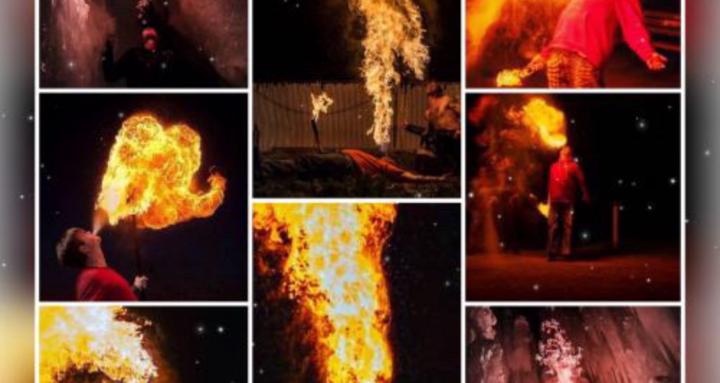
Black and white. Fuel dripping from the wick, catching the light before the light was even there. Flame alive between my palms — not on them, between them — in the hollow that two open hands make when they come together without closing.
I didn’t know then what I was holding.
I know now.
Look at the space between the hands.
Hebrew speakers will see it immediately. Those who learned it the way I did — in the streets of Jerusalem, in the schoolyards, through the ear and the skin and the daily collision of a child dropped into a language not yet his — they will see it without trying.
כ
Kaf.
The letter whose name means palm of the hand. Not like a hand. Not representing a hand. The hand is the letter. The letter is the hand. The fire didn’t create this. The fire just revealed what was already written into the shape of things — what was true before I was born, before Hebrew was a language I would absorb without grammar books, without formal study, without any of the proper tools that were never going to work for me anyway.
I learned Hebrew the way I learn everything. By immersion. By contact. By letting the language enter me the way fire does — through exposure, through proximity, through something that doesn’t ask permission and doesn’t wait for you to be ready.
No one teaches you fire. You pick it up. You feel it. You earn the right to hold it again.
Kaf in Kabbalah is the vessel.
Not the flame. Not the fuel. The vessel — the thing that receives, the hollow that makes holding possible, the curved emptiness that is not a flaw in the hand but the entire point of it.
You cannot hold fire with a closed fist.
I’ve watched people try to hold love that way. I’ve tried it myself. The tighter the grip, the less there is. The more you demand that it stay, the faster it goes. The vessel has to remain open — not passive, not indifferent, but open — curved inward, shaped for receiving, willing to let the fire move.
This is not weakness. The hollow in your palm is not a wound.
It is the architecture of holding.
Look at the dark in this photograph.
People look at a fire photo and they see the fire. I want you to look at the dark. Really look at it. The dark in this image is not the absence of light — it is holding its ground. It is not retreating. It is not waiting to be filled. It is doing what the dark does when it is honest: it stays. It refuses to dissolve. It draws its border and holds it, and because it holds it, the flame has somewhere to be.
Two realities. Neither swallowing the other. Neither asking the other to disappear.
The light does not defeat the dark in this photograph. The dark does not extinguish the flame. They hold their positions — distinct, real, in full contact with each other — and in that tension, something becomes visible that could not exist in pure light or pure darkness alone.
This is not metaphor. This is physics. This is also the hardest thing I know about love.
The love that moves through tension is not broken love. It is not love that failed to reach peace. It is love that is honest enough to stay in contact with what is real — with the weight of another person, their separateness, their unresolvable otherness — and choose, in full knowledge of all of that, to remain open.
Not merged. Not dissolved. Not transcended.
Present.
I’ve been performing with fire for almost thirty years now.
People ask me what it feels like. I tell them: it feels like being asked a question your whole body has to answer at once. There is no separating the thinking from the doing. There is no distance between you and what you’re holding. Fire doesn’t allow negotiation. It is either working with you or it isn’t, and the difference between those two things is not skill — it is attention. Full, present, undivided attention.
Fire burns the person who is somewhere else.
I have been burned. I carry the marks. I do not regret any of them.
Each one was a moment I learned the difference between holding fire and trying to control it — between being in full contact with something alive and trying to make it behave. The scars are tuition. They are receipts from lessons I couldn’t have learned any other way.
The fuel drips in this photograph. You can see it — falling from the wick, catching light as it falls, leaving the flame to find its level. The fuel does not cling. It does not resist the falling. It falls, and in the falling it feeds something larger than itself.
I’ve been thinking about what it means to let go that way — not out of emptiness, but out of fullness. Not because you have nothing left to give, but because what you’re carrying was never meant to be held forever.
This is what fire taught me.
This is what I am still learning.
Not serenity. Not peace. Not the stillness that comes from having resolved everything.
The willingness to stand at the edge of something that could hurt you — something real, something alive, something that asks everything of your attention — and open your hands anyway. Not because you’re unafraid. Because you’ve learned that the hollow in your palm was made for exactly this.
Kaf. The vessel. The palm. The letter written into the shape of the hand.
The hand is the letter. The letter is the hand. The fire just keeps revealing what was already true.
This is Mokism. This is MokiFire.
“The one condition of unconditional love is itself; the duality is real, but the choosing to love and be loved is clear.”
— Tom M Gallagher
#MokiFire #Mokism #FirePerformance #FireDancing #FrozenFire #Kaf #HebrewLetters #Kabbalah #SacredGeometry #DualityIsReal #UnconditionalLove #PhilosophyOfFire #BodyAsVessel #LightAndDark #FireArt #FlowArts #BurnersOfInstagram #BurningMan #Oakland #MokiGallagher #ChooseToLove #FireBreather #AncientWisdom #ModernMystic #HebrewWisdom #IsraelChildhood #LanguageOfFire #OpenHands #TheTensionIsReal #ClaudeAI
0
0 comments
Frozen Fire