🔥
Apr 7 • Prospecting Tips & Skills ⛏️
Tuesday Prospecting Tip: How to Look for Gemstones 💎Like a Pro
Hey community!👋
Tired of just buying pretty stones? Want to hunt your own gems in nature? Here's a quick, beginner-friendly guide to gemstone prospecting that actually works:
Do Your Homework First📚
Research the geology of your area (or where you're heading). Different rocks host different gems — think quartz veins for crystals, ancient riverbeds for sapphires/rubies, or pegmatites for tourmaline and beryl. Apps, local rockhound groups, or sites like (mapplace2 bc)
if you're located in BC canada.
Prime Locations to Search📍
Streams, creeks & riverbanks (especially gravel bars and after heavy rain — water sorts the heavy gems for you).
Dry riverbeds and alluvial deposits.
Old mine tailings or disturbed ground (construction sites, roadcuts, quarries — with permission!).⛏️
Exposed rock faces and slopes where erosion has done the hard work.⛰️
Key Techniques
Surface scanning: Walk slowly, get low to the ground, and look for anything with unusual color, glassy/smooth texture, or flat crystal faces that catch the sunlight.💎
Screening/sifting: Use a mesh screen in creeks or dirt to separate heavier stones.
Panning: Swirl sediment in a pan — gems sink because they're denser.👍
Follow the "float": Spot a promising piece on the surface? Trace it uphill to the source.
Pro move: Bring a UV light — some gems (like certain fluorites or diamonds) glow!
Essential Gear (Keep it light)
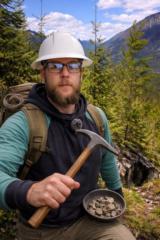
Rock hammer, gloves, safety glasses, spray bottle (to wet rocks and reveal colors), hand lens/loupe, buckets/screens, sturdy boots, and plenty of water.💧
Bonus Tip: Respect the land and leave no trace.🏞
Who's tried gem hunting before?💎
Classroom 101 coming soon. 🚩
Drop a comment! What's one spot near you that might hide gems? Let's swap tips. 👇
#ProspectingTip #GemHunting #Rockhounding #TuesdayTip
3
2 comments
Tuesday Prospecting Tip: How to Look for Gemstones 💎Like a Pro
powered by
skool.com/modern-prospector-academy-9551
Free community for rockhounds, prospectors, crystal hunters, and outdoor explorers. Learn real-world techniques while connecting with others.
Suggested communities
Powered by