5d • General discussion
What I do
Recently, I was asked what I knew about Rife machines and whether they could help with concerns such as menopause, perimenopause, PANS, Lyme, IBS, allergies, etc.
That question reminded me that, although I share about wellness often, at least weekly, I may not clearly explain what I actually do in my practice.
So, I thought I’d take a little time to explain.
Feel free to scroll if this doesn’t interest you.
People come to me with different concerns: menopause and perimenopause, digestive difficulties such as IBS, fatigue, stress, menstrual concerns, or questions about supporting their overall wellness while managing conditions such as high or low blood pressure.
Others are navigating more complex concerns, including PANS, Lyme, etc., with their medical providers but would like some holistic support.
My role is to offer individualized wellness education and support while looking at the whole person: spirit, soul, and body.
The first appointment includes a conversation and a Qest4 bioenergetic assessment scan. I actually run four scans during this appointment, and these scans show the energetic markers in several different areas.
These reports include what Qest4 calls “energetic markers” across several categories. Examples from scans I’ve reviewed include digestion, liver and gallbladder support, lymphatic function, hydration, carbohydrate and sugar metabolism, and hormone-related entries such as progesterone.
There can also be entries related to nutrients, including vitamin B6, folate, minerals, and amino acids. These are energetic scan entries, not measurements of hormone levels, nutrient deficiencies, or organ function.
The reports can also include emotional themes such as fear, worry, grief, frustration, or difficulty adapting to change.
We review these together and discuss whether any of those themes connect with what you’re experiencing. An entry doesn’t tell me what you feel or establish the cause of a symptom; it gives us something to explore in our conversation as we consider your physical and emotional well-being together.
***We discuss what brought you in, what you’ve been experiencing, your daily habits, what your body wants to focus on after reviewing your scans, and what you would like help with.
I use that conversation, your history, and the assessment’s wellness information to help organize the areas we explore.
I’m intentional about the recommendations I make and explain why we’re considering them. That gives us a starting point and a way to review your progress.
It doesn’t mean there is no uncertainty: Qest4 doesn’t diagnose conditions, confirm infections, or tell us with certainty what your body needs. It does give us a visual of what the body is communicating and how we can help bring it back into balance.
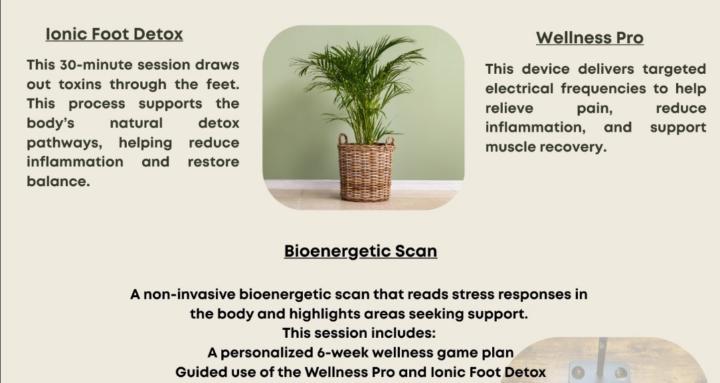
I also have a Wellness Pro Plus, which uses frequencies and is similar in concept to a Rife machine. I love having it as part of my practice!
***Depending on the person’s goals, I may select programs related to a particular organ system of involvement, menstrual wellness (I keep mentioning this because many women who have come to my practice have been having issues with this since getting the “v-cine” back in 2020), digestive support, or other areas we’re exploring.
We also spend time discussing the emotional side of wellness.
Grief, fear, frustration, ongoing stress, past trauma, and the weight of everyday responsibilities deserve attention.
We explore how those experiences may connect with sleep, appetite, tension, and daily habits, without assuming that a particular emotion caused a particular illness, but realizing that these experiences can be related to how our body is responding.
From there, we discuss practical next steps involving nutrition, hydration, movement, rest, and emotional well-being.
Follow-up visits give us time to discuss what you’ve noticed, what has been manageable, and what needs adjusting.
Depending on your goals, sessions may also include Wellness Pro with an ionic foot detox session, movement instruction, infrared sauna, or pressure point massage sessions.
When clients come to me, they commit to the six-week protocol because I create the program specifically for them for those six weeks.
Clients who not only commit but also come every week for six weeks AND work on the changes we discuss see a difference.
Those who don’t, don’t see a difference.
This is not a quick-fix program. It takes time. A holistic approach is not a quick fix, and sometimes it does look like you’re taking steps back, but the body is responding, working, and looking for balance.
But there is something I want to make very clear: your willingness to participate matters.
I can listen, educate, help you develop a plan, and support you along the way. But no matter how carefully a protocol is laid out, another tool, another piece of nutritional advice, or more supplements cannot make the everyday choices for us.
Supporting the body’s ability to heal begins with our willingness to care for it consistently. Sometimes that means eating regularly, drinking water, making room for rest, moving a lot more, or addressing something emotionally difficult.
That doesn’t mean every symptom is within your control or that ongoing illness means you haven’t tried hard enough. It means your participation is an important part of the care you receive.
You don’t have to arrive with everything figured out. A willingness to begin and take manageable steps is enough for us to start working together.
I am sharing this here because, like I mentioned before, several people have been asking me exactly what I do or if I know someone who can help with “such and such.”
Yes, I can help, and hopefully I’ve made it clear exactly what I get to do.
I am not a medical doctor. I am a Doctor of Naturopathy. I get to use incredible tools to help us get to the root cause of your health concerns.
There is a different approach to health care, and it will not look like what you have always done.
“If you always do what you’ve always done, you’ll always get what you’ve always gotten.”
Maybe, just maybe, it’s time to start thinking about things in a different way.
0
0 comments
What I do
powered by
skool.com/made-whole-9441
Educational wellness content focused on root-cause insight, nervous system support, and honoring each body’s unique healing journey.
Suggested communities
Powered by