Lesson 1: The "Boat" Family & The Pillar
In Arabic, many letters share the same "skeleton" or base shape and are only distinguished by dots.
0%
Lesson 2: Expanding the "Boat" Family - More Dots!
In this lesson, we'll encounter two more letters that share the same underlying "boat" shape as Baa (ب) and Taa (ت), but with different dot configurations.
0%
Lesson 3: The "Belly" Family - Warm Curves
0%
Unlock at Level 1
Lesson 4: The Stubborn Pair (The "D" Family)
Focus: Visual recognition of "Stubborn" behavior and the "D" sounds. 1. The Concept: The "One-Way" Handshake.
Imagine these letters have a "No Touching" zone on their left side. This creates a tiny gap in words, which is a key secret to reading Arabic fluently.
0%
Lesson 5: The Radical Racers
Now, we are going to glide. The Physics: These letters start a tiny bit above the line and "kick out" down to the left.
The Stubborn Rule (Continued): Just like Lesson 4, these letters are Stubborn. They will connect to the right, but they never hold hands with the letter to their left. They are too fast to stop!
0%
Lesson 6: The "Tooth" Twins
The Theme: Ocean Waves, Teeth, and Shushing. The Colors: Ocean Blue & Deep Forest Green. his family is famous for having three little teeth (three vertical strokes) followed by a big "Belly" bowl.
The Connection Rule: Because they are friendly, when they connect to a letter on the left, they "sacrifice" their big belly and stay flat on the line, keeping only their three teeth!
0%
Lesson 7: The Bold & Strong
The Theme: Muscle, Earth, and Deep Echoes. The Colors: Burnt Orange & Charcoal Grey.
1. The Vibe: "The Heavyweight Champions"
These letters don't just make a sound; they fill your whole mouth. They are called Emphatic letters. When you say them, your tongue pushes against the roof of your mouth to make the sound "thick" and "heavy."
0%
Lesson 8: The Towering Titans
The Theme: Skyscrapers, Tall Trees, and Echoes. The Colors: Sunset Coral & Midnight Navy.
1. The Vibe: "The Reach for the Sky"
These letters are also "Emphatic" (Heavy) sounds. They are basically the "Muscle" letters but with a vertical extension that makes them look like they are reaching for the clouds.
Connection Rule: Unlike the letters in Lesson 7, these letters do not have a belly bowl. They stay flat on the line, which makes them very easy to connect to their neighbors!
0%
Lesson 9: The Throat Travelers
The Theme: Deep Canyons, Echoes, and Gargling. The Colors: Golden Ochre & Royal Purple.
1. The Shape: The Hook and Eye
The shape of these letters is very distinct. It starts with a small "head" (like a half-circle) and ends with a wide, sweeping "tail" that curves deep below the line.
The Connection Rule: When these letters are at the start or middle of a word, they "cut off" their long tail to stay on the line, leaving only their small head.
0%
Lesson 10: The Lookout & The Deep Diver
The Theme: Periscopes, Deep Oceans, and Bubbles. The Colors: Ruby Red & Emerald Green.
1. The Vibe: "The Round Heads"
These two letters look very similar because they both start with a small, circular "loop" or "head." However, the way they sit on the line—and their dots—sets them apart.
0%
Lesson 11: The Royal Reach
The Theme: Kings, Crowns, and Tall Hooks. The Colors: Sandstone Gold & Silver Mist.
1. The Vibe: "The Tall & Gracious"
This lesson features two of the most common letters in Arabic. They are tall, elegant, and love to lead the way.
0%
Lesson 12: The Midnight Flow
The Theme: Moonlight, Night Skies, and Rolling Waves. The Colors: Indigo Night & Pearly White.
1. The Vibe: "The Smooth Operators"
These letters are the "circles" of the Arabic alphabet. They are characterized by round heads and smooth, sweeping tails that feel very natural to write.
0%
Lesson 13: The Whispering Winds
he Theme: Deep Breaths, Gentle Breezes, and Valleys. The Colors: Sage Green & Misty Teal.
1. The Vibe: "The Airy Letters"
These letters focus on breath. One is a soft "H" from the chest, and the other is a semi-vowel that sounds like "W."
0%
Lesson 14: The Final Gem
The Theme: The River’s End and Hidden Treasures. The Color: Iridescent Blue.
0%
Lesson 15: The Grand Review (The Alphabet Rainbow)
The Theme: Completion and Celebration.
0%
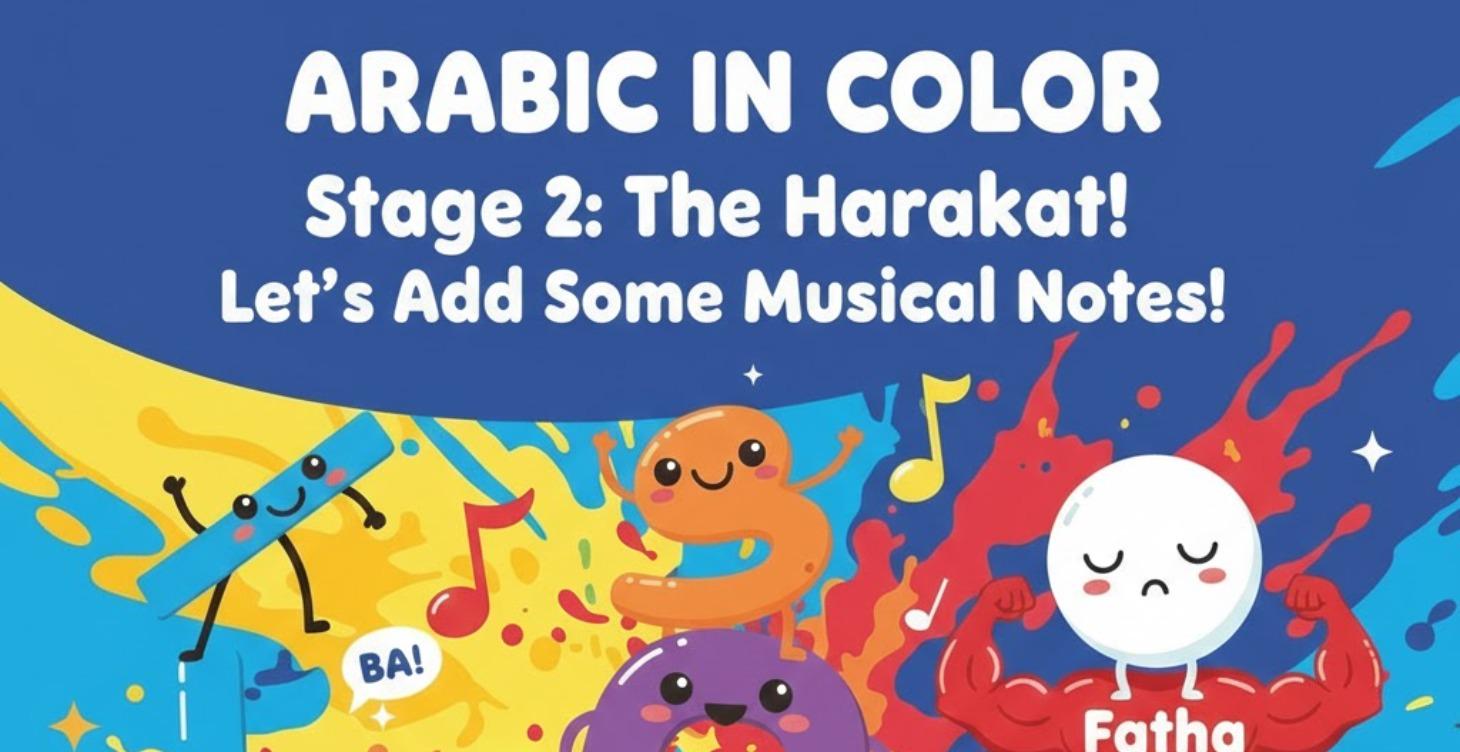
Stage 1 The "Harakat" (Short Vowels)
To move from just "sounds" to "reading," we use the Harakat. These are tiny, colorful marks that sit above or below the letters to tell you which vowel sound to make. Think of them as the musical notes for the alphabet.
0%
Stage 2 The Long Vowel Flow (Al-Muduud)
Now that we’ve mastered the quick splashes of the Harakat, it’s time to find our rhythm. In Stage 3, we learn how to stretch those short sounds into long, beautiful melodies. We call these the Sound Stretchers.
0%
Stage 3: The Silent Stop & The Echo (As-Sukun)
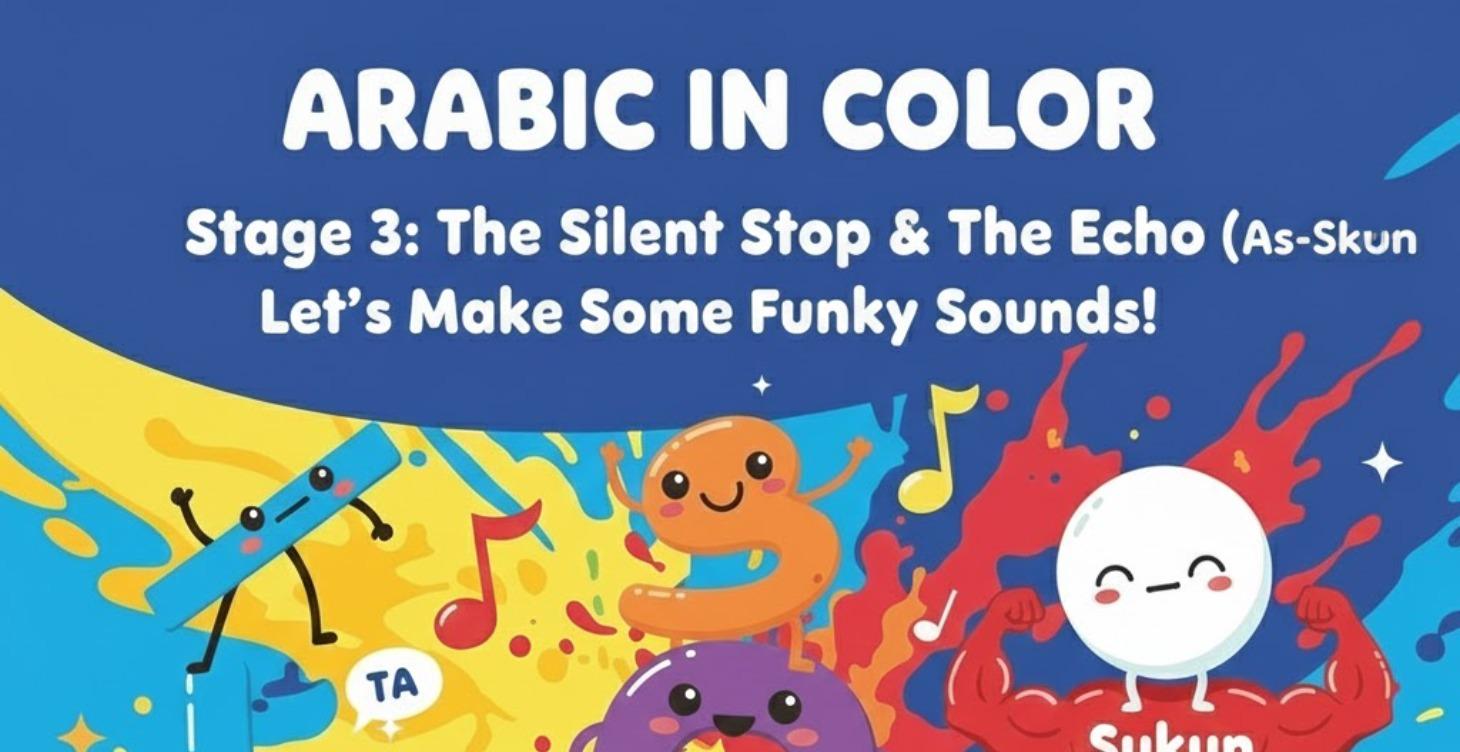
Welcome to the quietest, yet most powerful stage of our journey! In Stages 1 through 3, we learned how to move and stretch our letters. In Stage 4, we learn how to make them stop.
The Sukun (سُكُون) is a small circle ( ْ ) that sits above a letter. It acts like a "Stop Sign," telling you to pronounce the letter’s pure sound without any vowel attached.
0%
Stage 4: The Long Vowels (Al-Madd Letters)
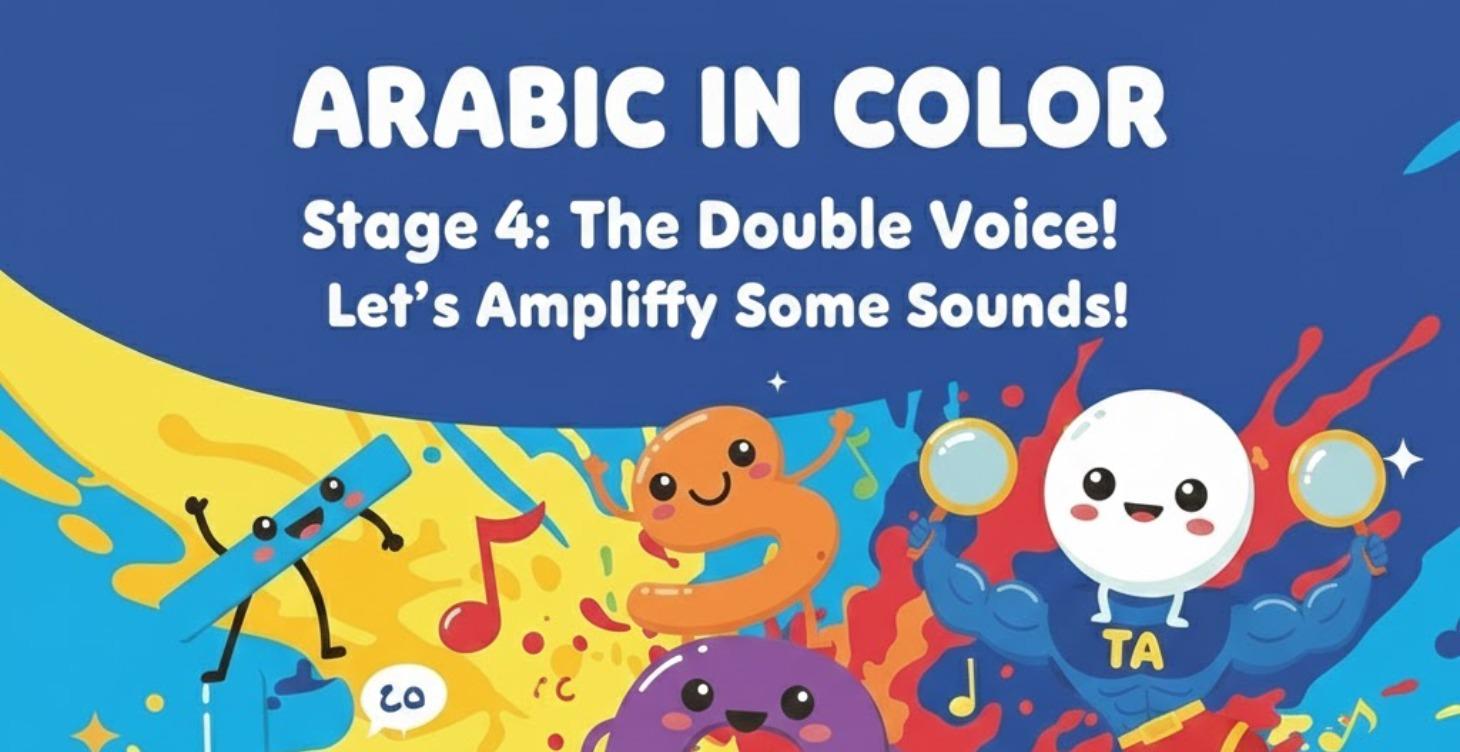
In an Arabic reading curriculum, Stage 4 typically moves from single letters and basic stops to The Long Vowels (Al-Madd). This is a crucial stage because it teaches students how to stretch sounds, which is essential for correct pronunciation and meaning.
Here is a structured lesson plan for Stage 4: The Long Vowels (Al-Madd Letters).
0%
Stage 5: The Shaddah (Emphasis & Doubling)
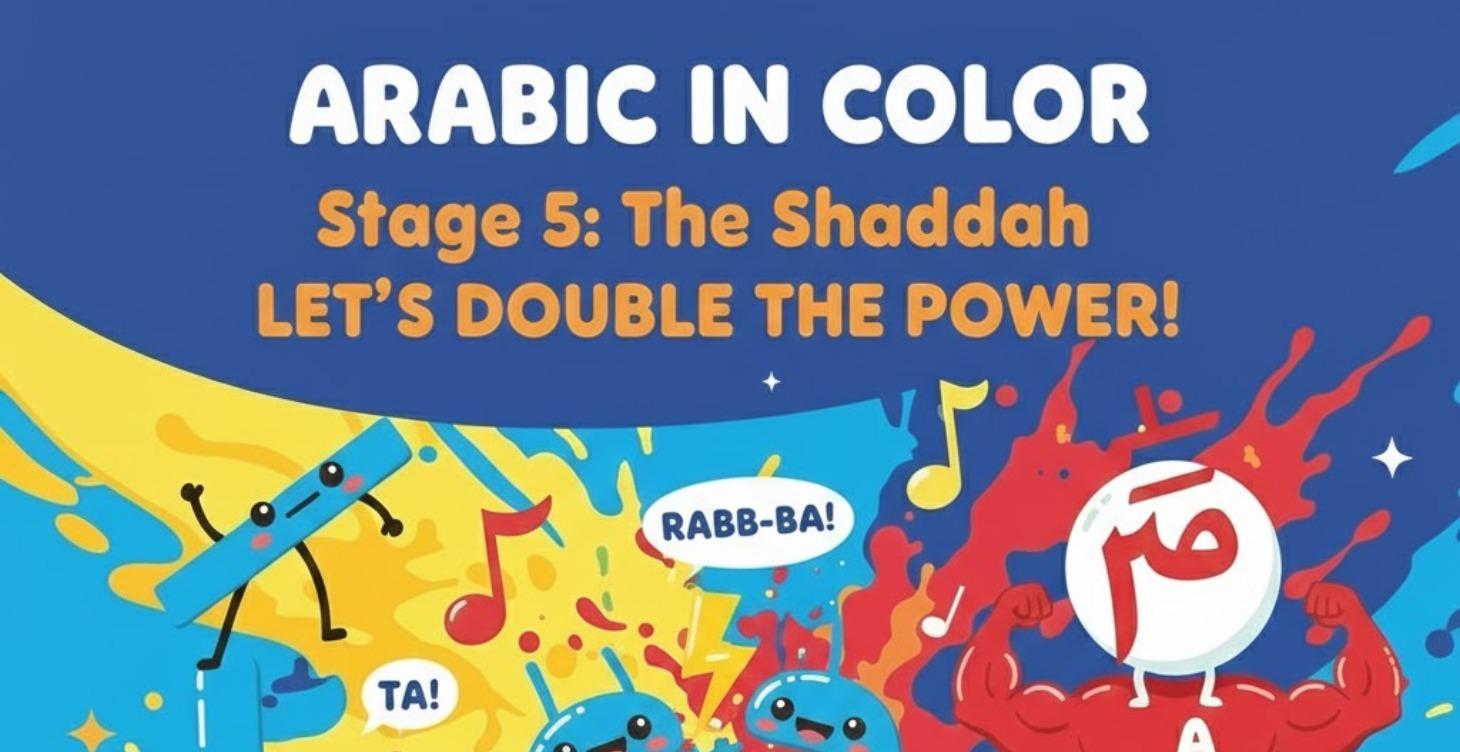
Following the natural progression of learning Arabic reading (Tajweed and phonetics), Stage 5 introduces one of the most important symbols: The Shaddah (Emphasis).
This stage teaches students how to double a letter's sound, creating a "strong" or "heavy" pronunciation.
0%
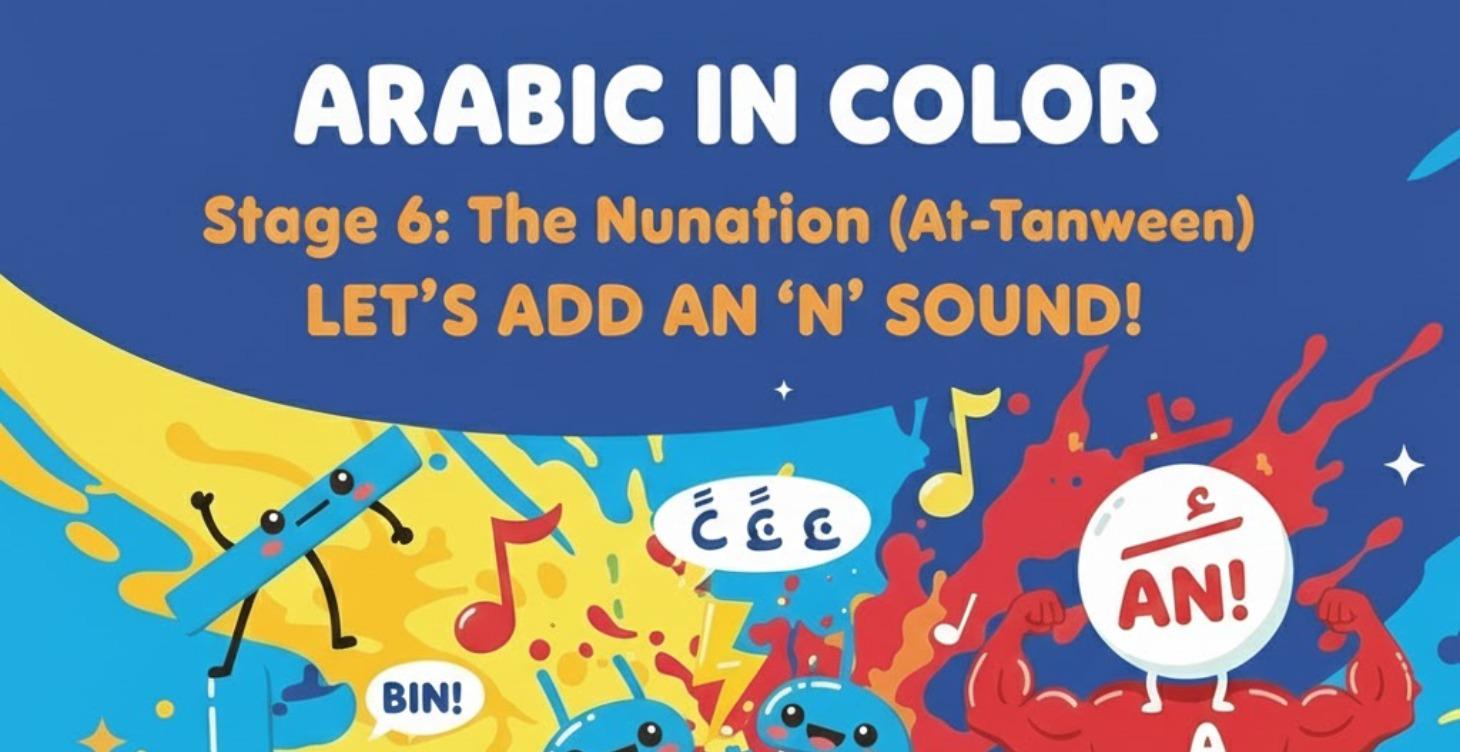
Stage 6: The Graduation (Tanween & Linking)
1. What is Tanween?
Tanween is the "N" sound added to the end of a noun. It is represented by doubling the vowel sign. Even though you hear an "N," you don't write the letter Nun (ن).
0%
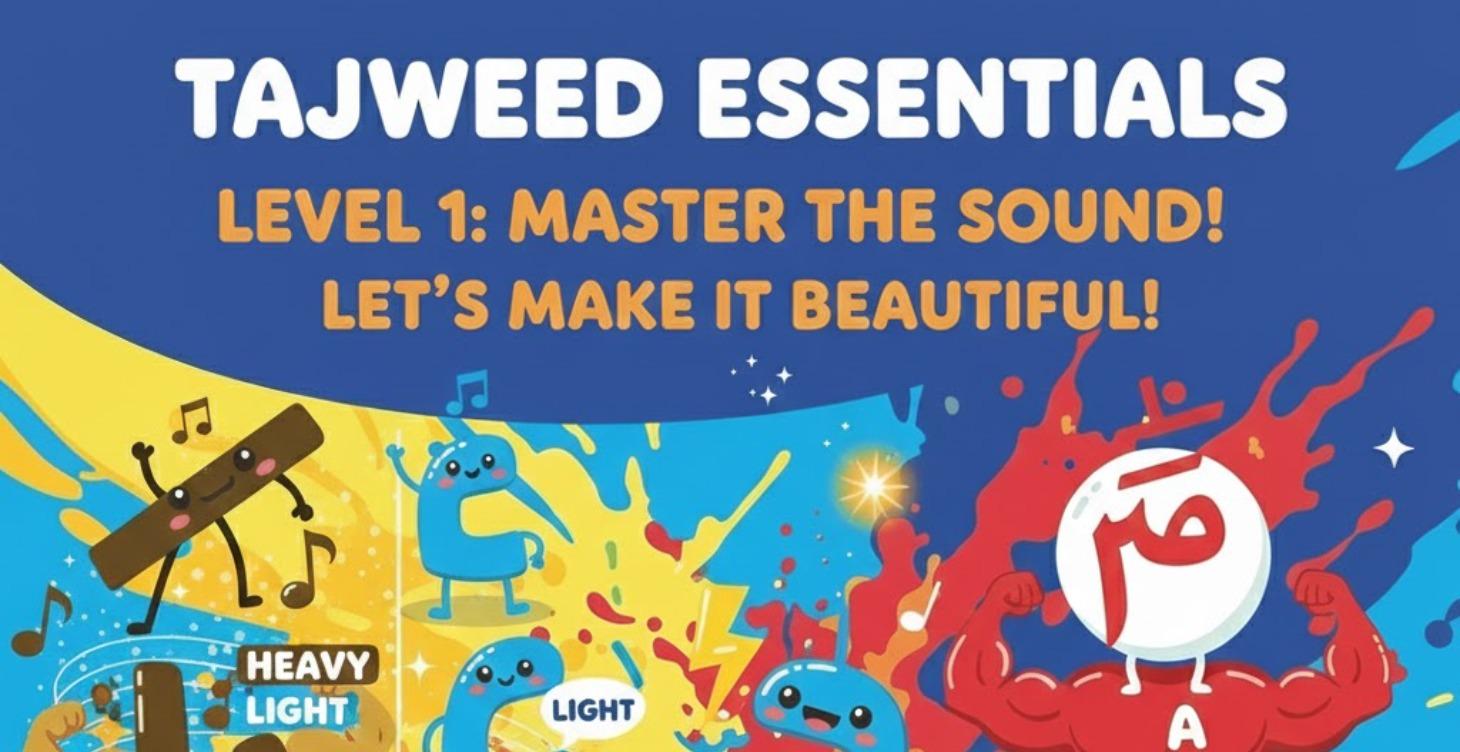
Level 1 Tajweed Essentials
Moving from just reading to reading with melody and precision.
0%
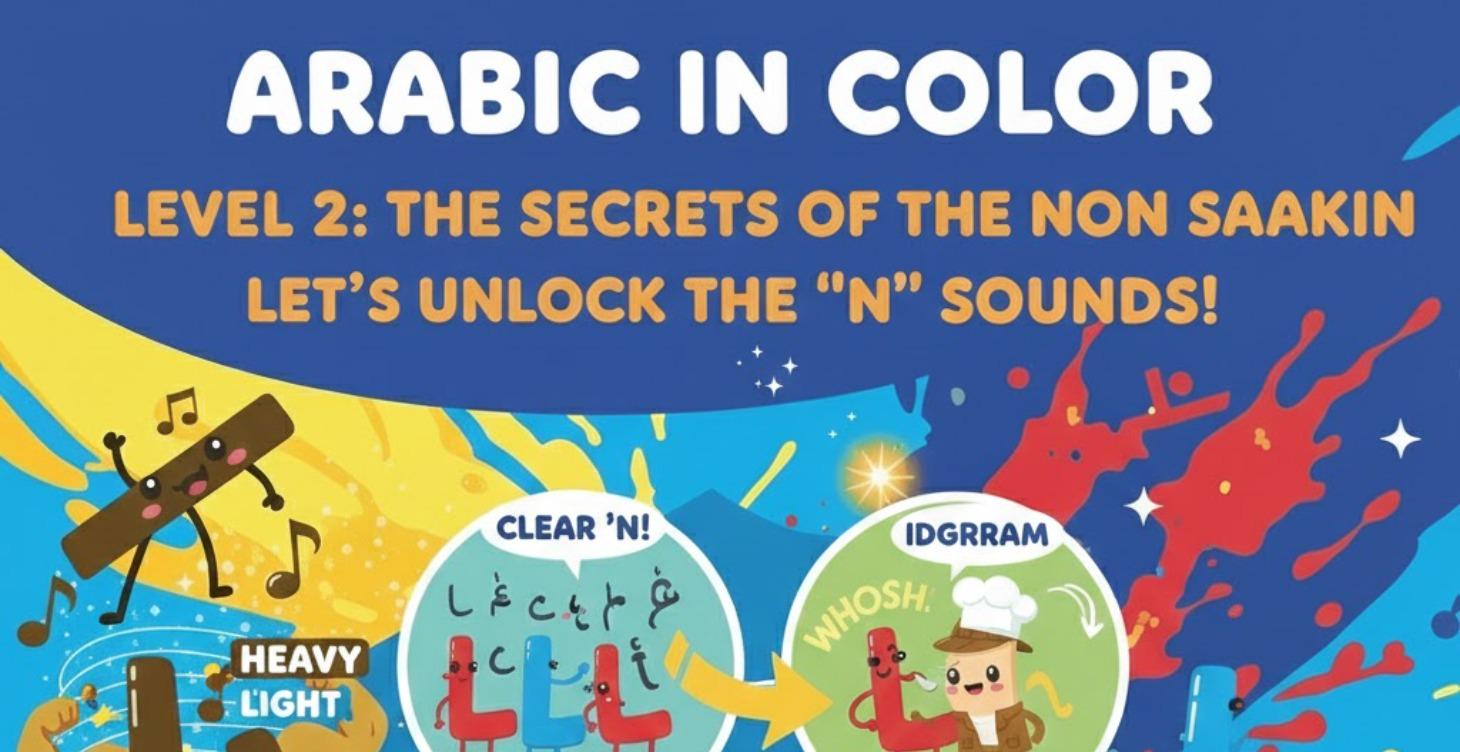
Level 2: The Art of the 'N' Sound
Moving up to Level 2: The Rules of Noon Saakin & Tanween, we transition from basic mechanics to the "heart" of beautiful recitation. This level teaches students how the sound of the letter N (the hidden 'N' in Tanween or a silent Noon) changes depending on what follows it.
0%
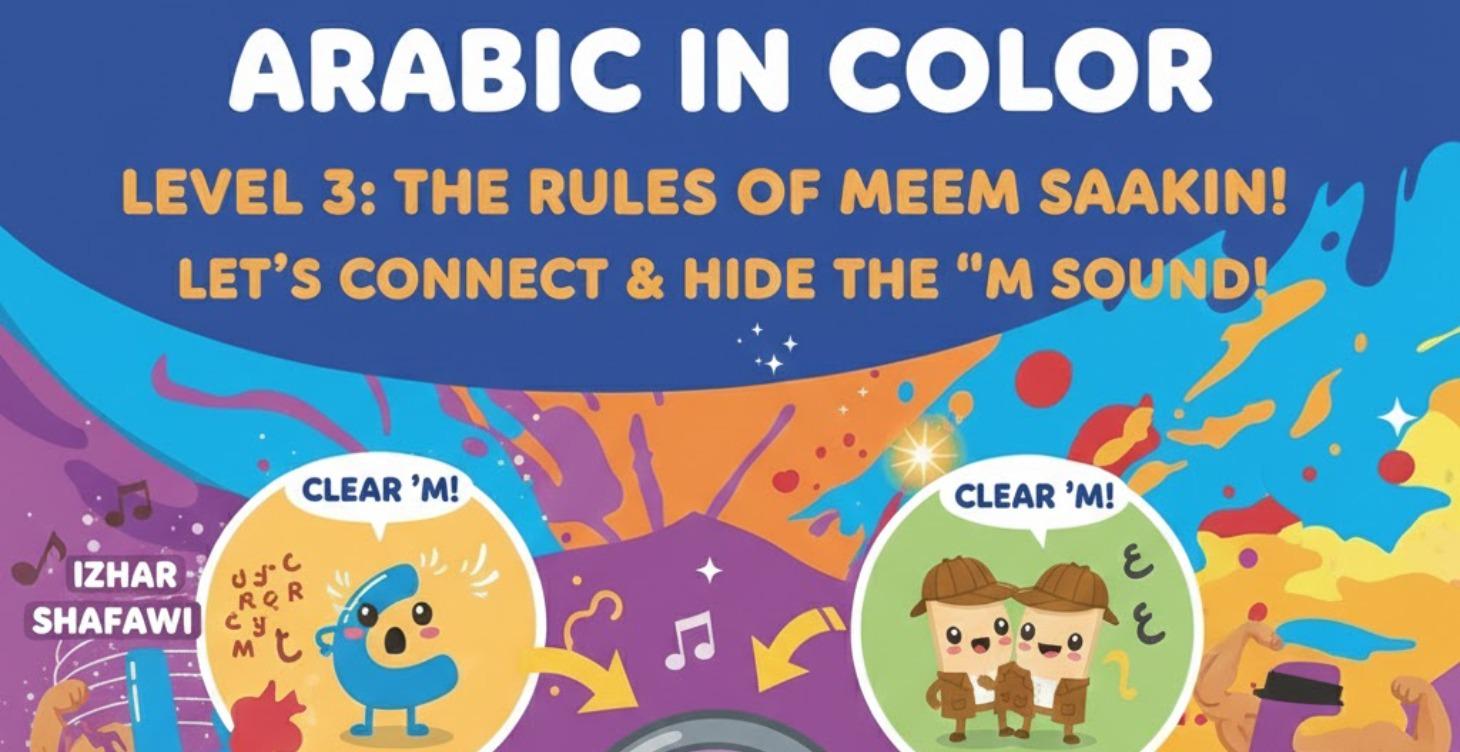
Level 3: The Rules of Meem Saakin (Silent M)
1. The Concept: The Silent 'M'
A Meem Saakin (مْ) is a Meem with a Sukun. Just like the Noon, the Meem changes its "personality" based on the letter that comes after it. The good news for students? There are only 3 rules for the Meem, making this a shorter but very impactful stage.
0%
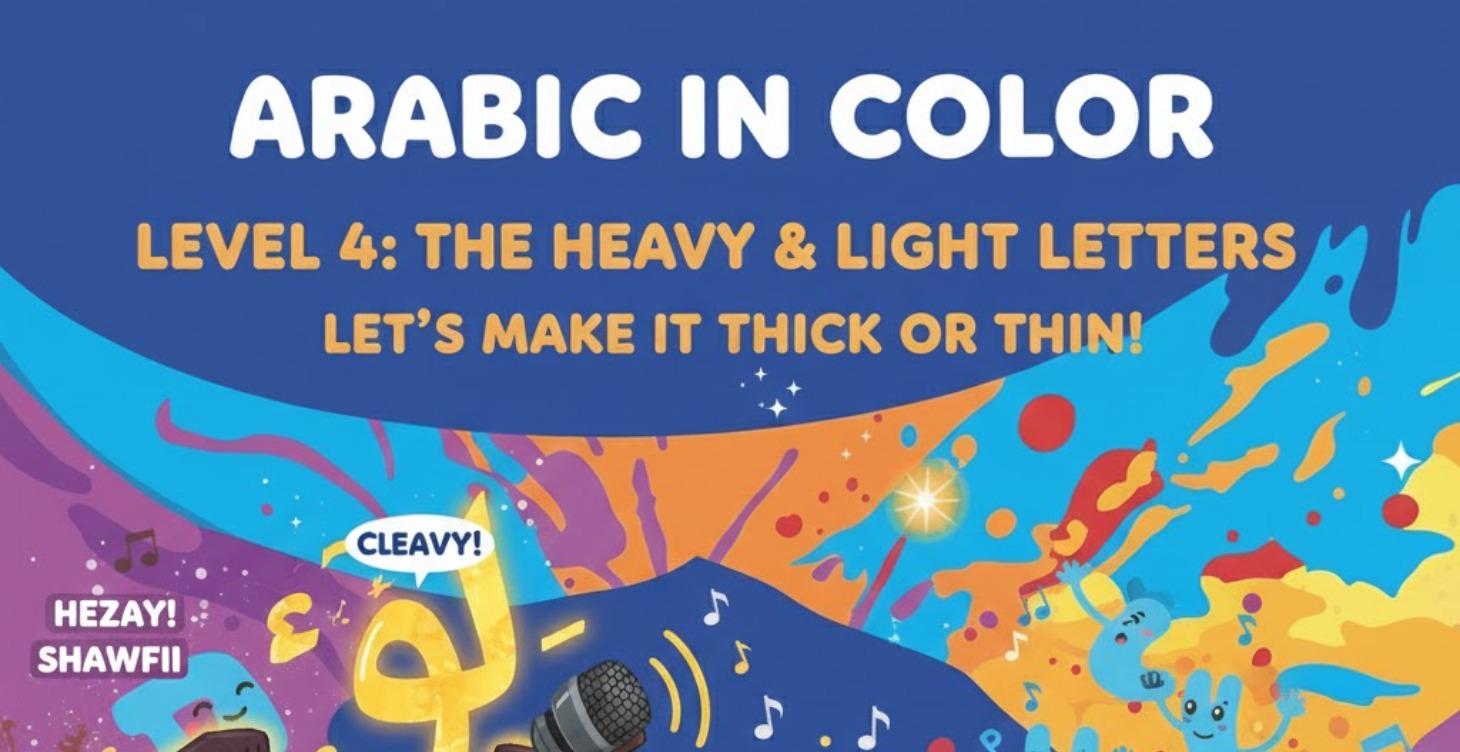
Level 4: Heavy & Light Letters Tafkheem & Tarqeeq
1. The Concept: The Echo in the Mouth
Heavy Letters (Tafkheem): When you say these, the back of your tongue rises, and the sound echoes against the roof of your mouth, making it sound "fat" or "full."
Light Letters (Tarqeeq): The tongue stays flat and relaxed. The sound is thin, like a smile.
0%
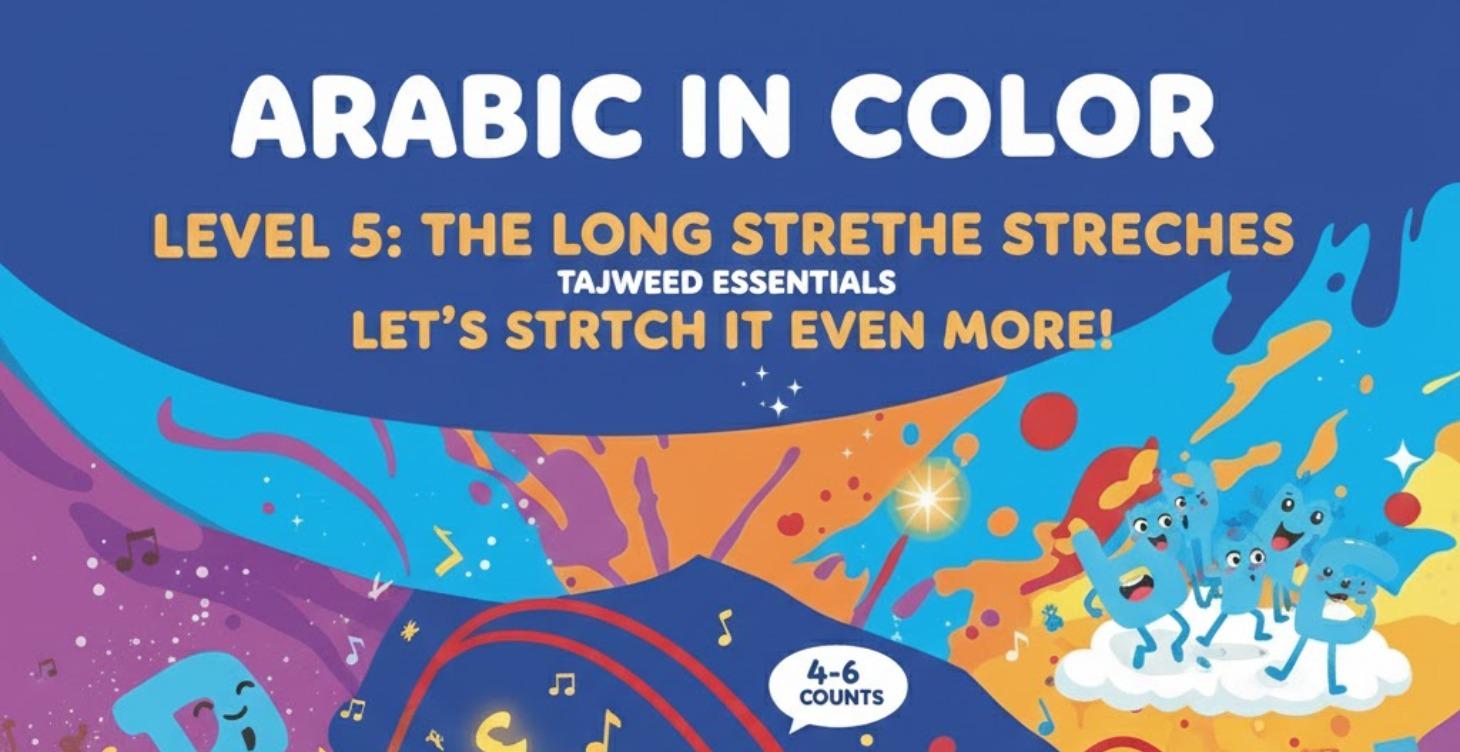
Level 5: Rules of the Long Stretch (Advanced Madd)
1. The Concept: The Wave ($\sim$)When you look at a Quranic text, you will often see a "wave" or "cloud" symbol ($\sim$) above a Madd letter ($ا , و , ي$). This is a signal that 2 counts are not enough. You must stretch the sound for 4, 5, or even 6 counts.
0%
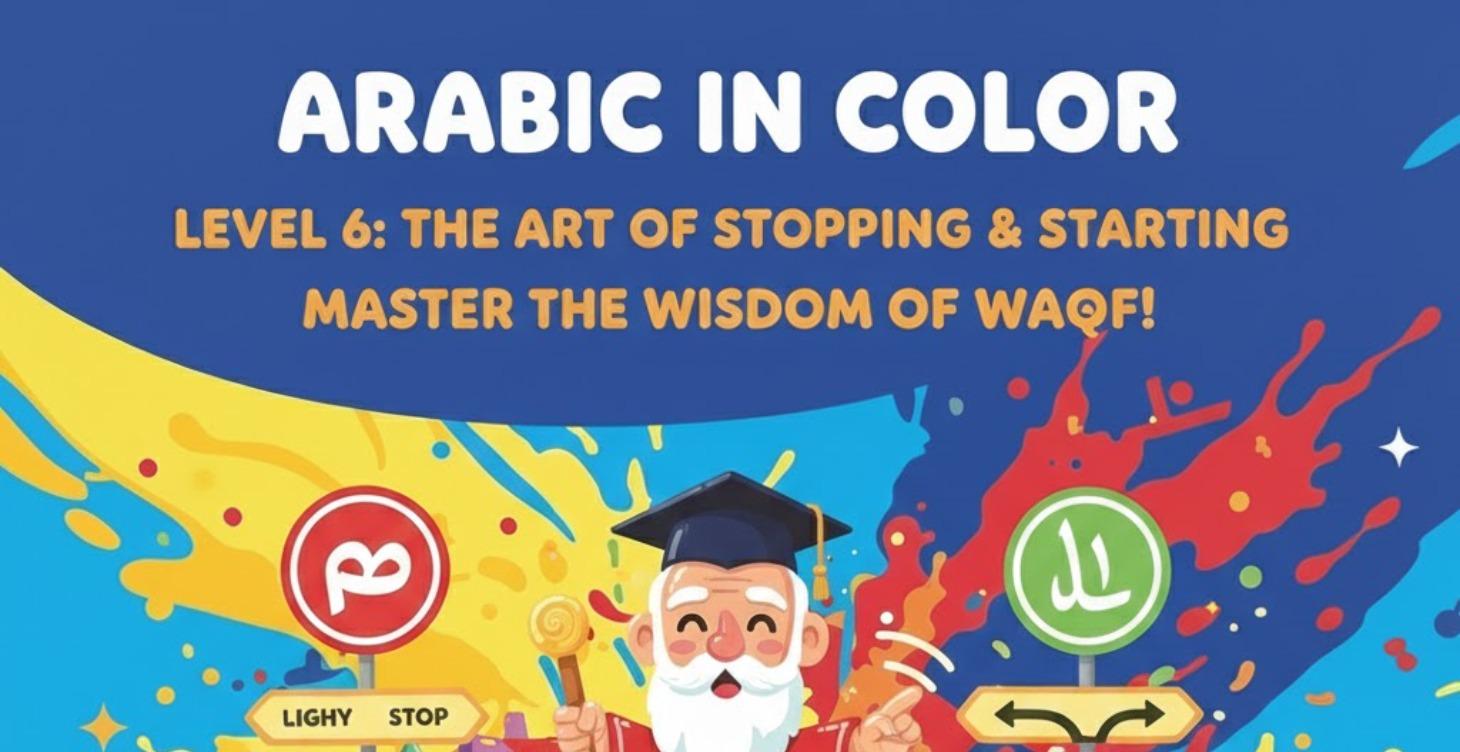
Level 6: The Art of Stopping & Starting
1. The Concept: Reading with Wisdom
Arabic is a language where a pause in the wrong place can completely change the message. Level 6 teaches you to navigate the Quran’s "punctuation marks." These are small letters placed above the text to guide your breath.
0%
The Tajweed Master Guide: Levels 1-6
Here is a Master Reference Sheet that condenses all 6 levels of Tajweed into a single, easy-to-use guide. This is the ultimate tool for a student to keep in their Mushaf (Quran) for quick checking during recitation.
0%
1-28 of 28