User
Write something
Pinned

[START HERE] Welcome to Japanese in Real Life
Welcome! We’re glad you’re here. This community is for people who want to use Japanese confidently in real life — not just study grammar or memorize vocabulary. If you’re coming from Japanese Lessons with Native Teachers on Facebook, this is the next step: a more structured space with clearer guidance, practical lessons, and ongoing support from native teachers. 🎯 What This Community Is About Inside this group, we focus on: - Japanese as it’s actually spoken - Practical phrases for daily life, travel, and work - Building speaking confidence - Clear explanations from native teachers - Steady, realistic progress Short lessons, real examples, and usable Japanese — no fluff. 🧭 How to Use This Community - Check in regularly for new lesson topics and practice prompts - Ask questions — no question is “too basic” - Practice actively (even short answers are valuable) - Learn from both teachers and other learners Consistency matters more than perfection here. ✅ Start Here (Important) Please reply to this post and introduce yourself: 1. Your current Japanese level (beginner / intermediate / other) 2. Why you’re learning Japanese 3. One situation where you want to use Japanese more confidently This helps us shape lessons around real member needs.
Pinned
Real-Life Japanese Learning App for Community Members!
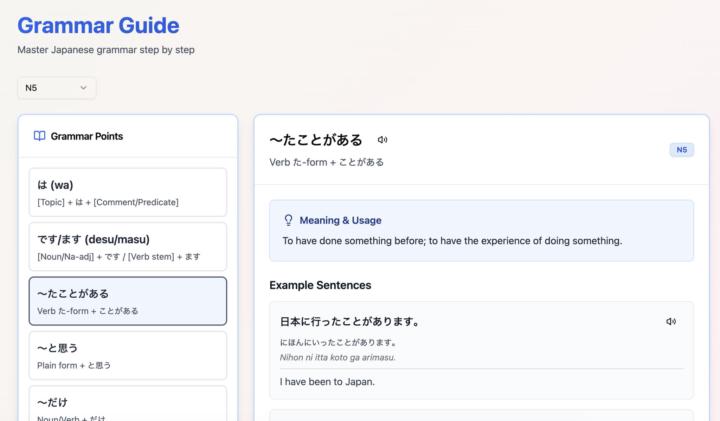
We’re excited to share that members of our Skool community, Japanese in Real Life, get free access to the Japanese Native (Sakura Sensei) app! This beginner-friendly web app helps you practice everyday Japanese with: - Daily words and phrases for real-life situations - Interactive conversation prompts to practice speaking and thinking in Japanese - Support for reading and recognizing hiragana, katakana, and basic kanji - Progress tracking so you can see your improvement over time The app is designed to complement our Japanese in Real Life lessons, giving you a practical, hands-on way to reinforce what you learn in the community. It’s perfect for beginners or anyone who wants more confidence speaking and understanding Japanese. Access the app for free as a community member: https://sakura-sensei-01a7581a.base44.app
1
0
Real-Life Japanese Learning App for Community Members!
💬 New Course Now Available: Japanese Relationships in Real Life
We’re excited to announce a brand-new course series is now live in the Japanese in Real Life SKOOL community. Japanese Relationships in Real Life: From First Hello to Official Couple is a 7-part course that walks you through how relationships actually work in Japan—from breaking the ice and making friends, to dating, avoiding common mistakes, and understanding 告白 (kokuhaku). You’ll learn: - Natural Japanese phrases with romaji - Real cultural expectations (not textbook rules) - How feelings are expressed subtly in Japan - What “official” really means in Japanese relationships If you want practical, real-world Japanese you can actually use, this course is for you. 👉 Join the course here:https://www.skool.com/japanese-in-real-life-1835/classroom/a848a91a?md=194a8bdecf954902b8eb98d8aba934e0
1
0
🏠 Japanese House Styles: Traditional, Modern, and Where People Really Live
When people think about houses in Japan, they often imagine old wooden homes with tatami mats and sliding doors. While those still exist, modern Japanese housing is very diverse. In this blog, we’ll look at traditional houses, modern homes, and where most people actually live today—including the famous Japanese use of the word “mansion.” 🏯 Traditional Japanese Houses(伝統的な日本の家) でんとうてき な にほん の いえ(dentō-teki na Nihon no ie) Traditional houses are often called 民家みんか (minka) Common features: - 畳(たたみ) – tatami mats - 障子(しょうじ) – paper sliding doors - ふすま – sliding room dividers - 木造(もくぞう) – wooden construction Traditional houses are designed to adapt to Japan’s climate, especially humid summers. 📌 Today, these homes are rare in big cities and are more common in: - 田舎(いなか) – countryside - Older neighborhoods - Tourist areas and heritage towns 🏠 Modern Japanese Houses(現代の日本の家) げんだい の にほん の いえ(gendai no Nihon no ie) Most new houses in Japan are modern and compact. Typical characteristics: - Steel or reinforced concrete - Smaller rooms - Efficient use of space - Earthquake-resistant design Even single-family houses are often built very close together, especially in cities. 一戸建ていっこだて (ikkodate) = single-family house People who own an ikkodate usually live: - In suburbs - Outside major city centers - In quieter residential areas 🏢 Apartments, Condominiums, and “Mansions” This is where Japanese housing vocabulary gets interesting. アパート (apaato) - Usually low-rise - Cheaper - Often older buildings - Thin walls are common マンション (manshon) ⚠️ This does NOT mean a luxury mansion! In Japan:マンション = condominium Mansions are: - Reinforced concrete buildings - Better sound insulation - Often newer - More expensive than apartments Many people buy or rent mansions, especially families. 🏙️ Where Do Most People Live? In urban Japan, especially cities like Tokyo or Osaka: - マンション → very common - アパート → common for students and singles - 一戸建て → less common in city centers
0
0
🎉 New SKOOL Course: The 100 Most Commonly Used Japanese Words with Practice Modals
If you’ve ever wanted to speak real Japanese confidently — without needing a huge vocabulary first — we have great news for you! Our new SKOOL course Real Japanese Conversation Practice 2: Speak More with Less is now live and ready for you to join. This course helps you build real conversational ability using only the 100 most common Japanese words — no grammar overwhelm, just real communication practice. ➡️ Join the course here:https://www.skool.com/japanese-in-real-life-1835/classroom/ecdf628a?md=b6c4b3f10b454ba58963ecdcdf42b16b 🧠 Why This Course Is Different Most traditional language lessons focus on grammar rules or long word lists. That’s great — up to a point. But in real life in Japan, especially in everyday situations like talking with friends, ordering food, asking for directions, or traveling, simple, high-frequency words are what you need most. This course takes that idea seriously. Instead of adding more vocabulary, we use the same 100 most common words in lots of different contexts so that you get comfortable speaking naturally and quickly with what you already know. It’s about confidence more than complexity. 🗨️ What You’ll Practice In Conversation Practice, you’ll move beyond basic yes/no responses and start having longer, more natural exchanges using simple Japanese. The course includes: 🔁 Warm-Up Activities Quick responses to build speed and accuracy. 💬 Short Dialogues Mini conversations you might actually hear or use in real life. ✅ Yes/No + Reason Practice Respond in natural Japanese without thinking in English first. 👥 Everyday Role-Play Real situations like meeting a friend, talking about time or place, and confirming understanding — all with only common words. 🔊 Speed Drills Push yourself to speak fast with familiar vocabulary. Every activity is designed to help you think in Japanese instead of translating from English. That’s the key to fluency!
0
0
1-14 of 14
powered by
Japanese in Real Life
skool.com/japanese-in-real-life-1835
Learn practical, real-life Japanese with native teachers. Clear guidance, speaking-focused practice, and steady progress.
Build your own community
Bring people together around your passion and get paid.
Powered by