
Write something
Pinned
Jul 10 •
Island Life
Our islands are fragile ecosystems. It does not take much to completely wipe out species. I remember reading in National Geographic years ago the rate of extinction on species on these islands. There are many reasons. The loss of these birds on Kauai are devastating. I know what it is like to experience the sudden silence where the birds sang their beautiful songs. I live in an alpine forest where flocks of birds used to flutter from tree to tree. And then our next door neighbor bulldozed the entire forest behind her hale (house) so she could walk back there. I could not believe she laughed as she shared that with one of her friends at the post office. I cried inside. What took hundreds of years to grow from barren lava to the ohi’a tree sprouting, to the leaves falling making soil for all the other species like ferns and all the native plants, making homes for all the insects and snails and on. Gone in one day. And then the devastating silence. Where is the cries on i’o, where is the screech at night of pueo? Where are the flocks of birds? It has taken years and slowly a few of the birds return. But not like before. People move to Hawaii and love the beauty and then buy a lot a bulldoze it down! When I moved here 34 years ago, people created narrow pathways through the forest to walk through creating a beautiful experience becoming one with the forest. What is your mana’o of this?
Pinned
May 1 •
Kōkua — The First Question You Ask
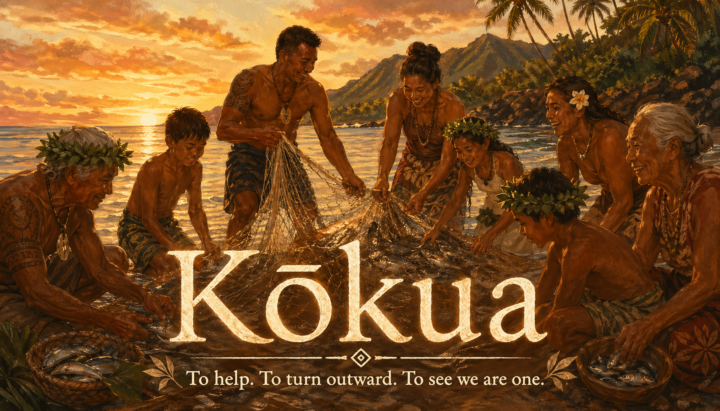
Something happened at work recently that I haven't been able to stop thinking about. Our entire refrigeration system went down. Master controller failure. No warning. Just — gone. While my coworkers and I were scrambling, stressed, trying to do right by everyone — customers came through the door. And what I heard stopped me cold. "Are you going out of business?" Not — "Are you okay?" Not — "Is there anything I can do?" Not — "Here's my number if you need help." Just concern for themselves. Their cheese. Their schedule. Their inconvenience. And I thought — this is exactly what we've been losing. There's a word for what was missing in that moment. Kōkua. It means to help. But more than that, it means you already understand that we are connected — that your neighbor's problem is worth your attention, that when something goes wrong around you, the first question you ask is not "what do I lose?" but "How can I help?" This is one of the foundational ways of life here in Hawaiʻi. It comes from knowing we are not just I — we are we. ʻOhana. And ʻOhana doesn't stop at your front door. It reaches into the neighborhood, the community, the store where you shop, the beach you share. It's why we call each other Bradah and Sistah. Uncle. Auntie. Tūtū — even with people we've just met. Because we already see each other as part of the same whole. I'm not telling this story to shame anyone. Many people who've moved here simply were never taught this. The culture they came from centers the individual — my needs, my comfort, my bottom line. But that's not how we do things here. When things go down — when the power goes out, when the store floods, when your neighbor's roof comes off in a storm — you turn outward, not inward. It costs nothing. And it means everything. 💬 Was kōkua modeled for you growing up — or did island life teach it to you? Share your story below. Let's keep this alive together.
Pinned
Mar 31 •
🌊 Vision Post Welcome – The Vision 🚀
[IMPORTANT READ] Mahalo nui loa! I want to take a moment to thank each and every one of you who has already joined Loke’s Hale of Inspiration. 🌺 We are all on the same canoe, my late husband Bruddah Kei would say...everyone called him Bruddah Kei because they could not say his name, Keihanaikukauakahihulihe'ekahauanele Together, the goal is simple… As our island goes through the changes with many of our local people unable to afford to live here and move away. At the same time, the people moving here do not know yet the local ways and how we live as us and we. We need to create a space that feels like a home, like on Bruddah Kei and my lanai where everyone were welcome to share kaukau and talk story. Or like how we did old time days at the boat ramp at Honaunau where my hanai Bruddah Johnny Mahoe Cho had his picnic table where he fed everyone and we all listened to each other's stories. A place where we all can share what is happening in our world and how we can kokua, we all can collaborate and inspire each other to Kui I Kanu'u, strive for the highest. A place where people can come to slow down, reconnect, and experience the beauty of life through the lens of us and we. This is more than a group. It is a feeling.A rhythm.A return to what matters. Think of this space as your daily exhale. Our online picnic table next to the ocean. A place where you can step away from the noise and reconnect with something deeper—through nature, reflection, and the art of noticing. What you'll experience in this community where locals can be locals • Moments of beauty inspired by Hawaii 🌊 • Gentle reminders to slow down and be present 🌿 • Reflections that shift perspective and bring clarity 💫 • A supportive space where you can simply be 🤍 Together we’re building a community of people who want to live more intentionally, notice more deeply, and feel more connected. With that in mind, this is our first main focus as a group: 🔥 Practice the art of maka'ala, observing your environment in everyday life
Apr 17 •
Words of Wisdom our Tutu (Grandparents) Taught Us
I would like to invite you to share an ‘olelo (Hawaiian word) or a phrase you grew up hearing at home and what it meant to your ‘ohana (family) Drop it in the comments with the story behind it…🤙🏽🌺🤙🏽
Mar 31 •
🌴 How Do You Care for the Places You Love?
Mālama means to care for and protect. 👇 Share one way you’ve shown respect for the land, culture, or community in Hawaiʻi (or anywhere). Examples: • Supporting local businesses • Respecting sacred places • Traveling more consciously Let’s learn from each other and do better together.
1-12 of 12
skool.com/island
Join a space that honors Hawaiʻi 🌺 UNLOCK local insight, DISCOVER hidden gems, and help preserve the true spirit of the islands.
Powered by