
Write something

Jul 11 •
Ancient but powerful....
✨ What if one of the most powerful wellness tools isn't found in a bottle... but in nature? 🌿🌊 After spending time in places like Glastonbury Tor, Chalice Well, Tintagel Castle, and other ancient landscapes, I was inspired to look at what the research actually says about nature, grounding, and our connection to the world around us. The findings are fascinating... 🌳 Time in nature really does support our wellbeing. Research into the Japanese practice of Shinrin-yoku (forest bathing) has consistently shown that spending time immersed in natural environments can help reduce stress and anxiety, improve mood, lower blood pressure and heart rate, decrease cortisol (our primary stress hormone), and enhance focus and mental clarity. 👣 What about walking barefoot? Known as earthing or grounding, walking barefoot on natural surfaces has been linked in some small studies to improvements in sleep, perceived stress, circulation, pain, and overall wellbeing. While the proposed mechanism involving the Earth's electrical charge is still being investigated and remains debated, there is little doubt that slowing down, engaging your senses, and reconnecting with the natural world can have a calming effect on both body and mind. 🌊 The healing power of water. Psychologists have coined the term "blue space" to describe the restorative benefits of being near rivers, lakes, springs, and the sea. Research suggests that these environments can promote relaxation, reduce stress, improve mood, and leave us feeling mentally refreshed. Sometimes simply listening to flowing water or waves can help quiet a busy mind. 🏛️ Why have people been drawn to ancient sacred places for thousands of years? Sites such as Glastonbury, Tintagel, and Stonehenge have served as places of pilgrimage, ceremony, and reflection for centuries. Archaeologists believe many were chosen because of their striking landscapes, proximity to springs or rivers, astronomical alignments, and importance as gathering places.
0
0

Mar 24 •
Lithium as an essential nutrient?
Lithium is a naturally occurring trace element found in small amounts in water, soil, plants, and some foods. In the human body, it is present at very low levels in tissues and body water. Researchers are still studying its nutritional role, and it is not currently officially recognized as an essential nutrient for humans in the same way as iron, zinc, or selenium. However, evidence suggests lithium may influence the nervous system, mood regulation, neuroprotection, and cellular signalling. https://pmc.ncbi.nlm.nih.gov/articles/PMC3151375/ What lithium may do in the body Lithium appears to be involved mainly in the brain and nervous system. Research suggests it may affect neurotransmitter activity, nerve-cell signaling, and mechanisms linked to brain resilience and neuroprotection. Some studies also suggest dietary lithium could play a role in supporting cognitive function, though this area is still being actively researched. https://pmc.ncbi.nlm.nih.gov/articles/PMC6443601 https://www.nature.com/articles/s41586-025-09335-x Is lithium essential? This is the important nuance: lithium is often described as a potential or candidate trace nutrient, but there is no universally accepted dietary requirement for it at present. Some researchers have proposed a provisional intake level, but major nutrition authorities have not established an RDA for lithium. https://pmc.ncbi.nlm.nih.gov/articles/PMC10888284/ https://pmc.ncbi.nlm.nih.gov/articles/PMC3151375/ Where small amounts come from: Low amounts of lithium can come from drinking water, grains, vegetables, and legumes, but the amount varies a lot depending on the soil and water where food is grown. https://www.sciencedirect.com/science/article/abs/pii/S0048969721043229
0
0
Mar 16 •
How the sound of waves affect us..
🌊✨The sound of ocean waves is far more than a relaxing background noise. It is a complex natural frequency spectrum that interacts with the human body and its electromagnetic field. When waves break, they create millions of tiny bubbles, each vibrating at different frequencies. Together they produce a layered sound ranging from very low infrasound vibrations (below 20 Hz) to higher audible frequencies above 1,000 Hz. This broad range forms what scientists call pink noise, a type of sound known to calm the nervous system and stabilize brain activity. Ocean waves also move in slow rhythmic cycles, usually every 4–10 seconds. This rhythm closely matches natural patterns in the body, such as relaxed breathing and heart rate variability. When we sit near the sea, our breathing and heart rhythm often begin to synchronize with the waves, helping shift the body into a deeply restorative state. The human heart generates the body’s strongest electromagnetic (magnetic) field, which extends several feet around the body. Stress and anxiety can make this field irregular, while calm states make it more coherent and balanced. The rhythmic sound of waves helps regulate the nervous system, allowing the heart’s magnetic field to become more stable and harmonious. Breaking surf also releases large amounts of negative ions into the air. These ions have been linked to improved mood, reduced stress hormones, and increased oxygen absorption. Combined with the sound of the waves and the conductivity of salt water, the seaside environment can help restore the body’s electrical and magnetic balance. For many people, time by the ocean feels like an energetic reset. The combination of natural sound frequencies, rhythmic motion, ionized air, and the Earth’s magnetic environment creates a powerful space for relaxation, clarity, and renewal. In this way, the ocean is not only beautiful to experience — it acts as a natural sound therapy for the body and its magnetic field. Ocean waves are not one single frequency. They produce a broad mix of frequencies.

Mar 16 •
What is bioresonance therapy?
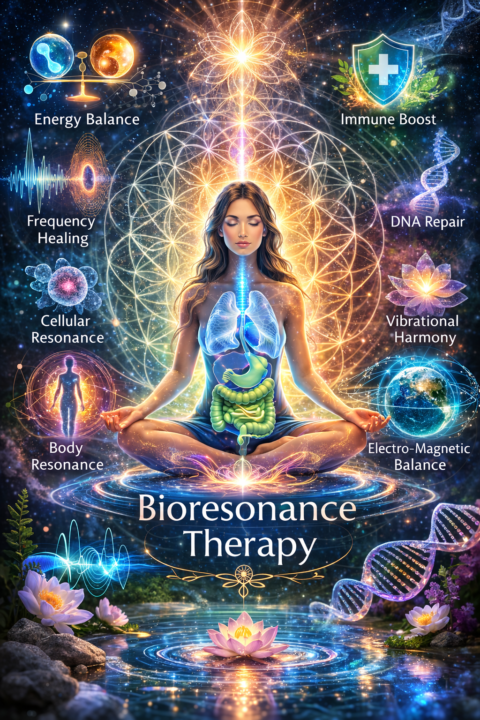
Bioresonance therapy is an intriguing form of complementary medicine based on the idea that the human body communicates through electromagnetic frequencies. Every cell, organ, and tissue generates tiny electrical signals as part of normal biological activity. Practitioners believe that illness or stress may disrupt these signals, and that correcting these frequency imbalances may help support the body’s natural healing processes. During a bioresonance session, small electrodes are placed on the skin or a headset is used and connected to a device that measures the body’s electromagnetic signals. The device is designed to identify irregular frequency patterns and send modified signals back to the body to encourage energetic balance. The therapy is non-invasive, painless, and drug-free, which is why it is popular among people interested in holistic health approaches. You can think of the body like a musical orchestra. When all instruments are tuned correctly, the music flows beautifully. Bioresonance aims to retune the body’s energetic signals so biological systems can function in harmony again. Here some studies for further reference 🙏🏻 https://www.researchgate.net/publication/333138522_The_Effectiveness_of_Bioresonance_Method_on_Human_Health https://www.researchgate.net/publication/387239024_Bioresonance_Therapy_as_an_Innovative_Method_of_Bioquantum_Medicine
1
0
Mar 15 •
Welcome to Frequency Medicine
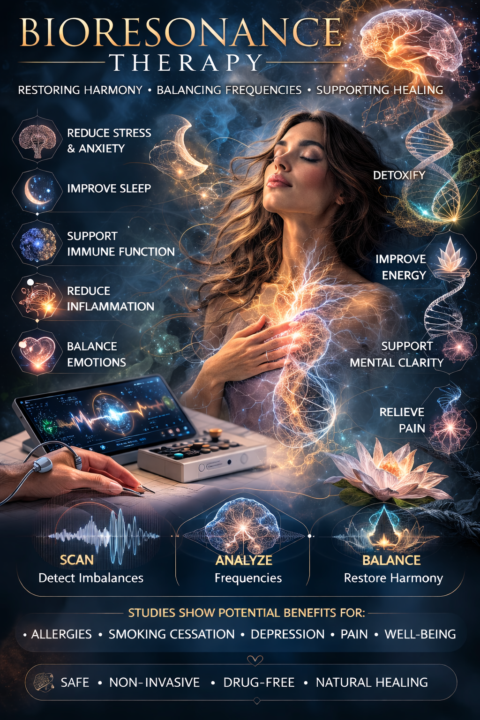
Many people are familiar with nutrition, detox, and supplements… but fewer people know that the body also communicates through electromagnetic frequencies. Every cell in the body produces tiny electrical signals that help regulate biological functions. Some practitioners believe that when these signals become disrupted, it may reflect stress in the body. This is where bioresonance therapy comes in. Bioresonance devices aim to: • measure the body’s energetic signals • identify imbalances • identify potential pathogens • identify nutrtional deficiencies • support energetic harmony While research is still evolving, many people explore bioresonance as part of a holistic wellness approach. 💬 Question for the community: Before stumbling upon my post, have you heard about frequency medicine before?
2
0
1-6 of 6
powered by

skool.com/inner-harmony-9305
I'm hoping to connect with like-minded people help eachother to learn about holistic therapies and natural remedies. I hope you will join me!
Suggested communities
Powered by