
Write something

Jun 28 •
The Truth About Telegram and Cheating: Why People Choose the App
Hello everyone, this is Sumit, and today we are diving deep into a question that has been circulating in my DMs and across relationship forums: "Is my partner using Telegram to cheat?" It’s a valid concern in 2026, given how this app has evolved. While Telegram is a fantastic tool for privacy, news, and community building, its specific features have unfortunately made it a haven for secrecy. Today, we will separate fact from fiction, discuss why people use it, and—most importantly—how you can find the truth if you suspect something is wrong. The Reality Check: Legit Use vs. Secretive Use First, let’s get one thing straight: Telegram is not inherently a "cheating app." In fact, the vast majority of its over one billion users utilize it for completely legitimate purposes. Legitimate Reasons People Use Telegram Work and Business: Many professionals use Telegram for team communication, file sharing (up to 2GB for free users), and large group chats that can hold up to 200,000 members. News and Communities: It has become a massive broadcasting platform. People follow channels for news, crypto updates, gaming, and tech. Privacy and Security: Some users simply value end-to-end encryption and cloud storage, using it to avoid data-harvesting by other social media giants . The Dark Side: Why Cheaters Like It However, we cannot ignore the "elephant in the room." The same features that make Telegram great for privacy also make it great for hiding infidelity . Secret Chats: These are end-to-end encrypted and do not sync to the cloud. They leave no trace on other devices. You can also set messages to self-destruct after being read, leaving no evidence. Username vs. Phone Number: You can communicate with someone without ever exchanging phone numbers. This makes it hard to trace who they are talking to. Archived Chats: You can archive conversations so they disappear from the main chat list. Unless someone knows exactly where to look, these chats are invisible. Large File Sharing: This allows for easy sharing of photos and videos that are often stored in the cloud, not on the device.
Poll
1 member has voted
0
0

Jun 27 •
From Zero to Paid Community: Make Money on Skool in 2026
Before I get into this, let me be upfront about something. I'm new to Skool myself. My community is completely free right now. Making money isn't my main goal—I just want to spread information and help people. But I've been researching this platform like crazy, and I know a lot of you are wondering if you can actually build something profitable here. So let me break down what I've learned. First Thing First - Can You Actually Make Money on Skool? Short answer: Yes. People are doing it. Skool has verified at least 11 communities that have crossed the $1 million mark in revenue. And get this—they're not all AI gurus or business coaches. The lineup includes a plumber, a cyclist, a barber, a spiritual healer, and a fitness coach for women over 40 . So yeah. Regular people. Regular niches. Big money. Here's the thing though—most people rush to monetize too quickly and fail. The smarter play? Start free, build trust, gather data on what your members actually want, and THEN introduce a paid offering . How Skool Communities Actually Make Money Skool handles the payment stuff for you through Stripe integration. You can set up monthly or annual subscriptions, offer free trials, create discount codes, and even build affiliate programs . Here are the main pricing models that work: Simple monthly subscription - The most common approach. Typical range is $29-$199/month. Best for communities with regular content updates and active engagement . Annual option with discount - Give 2 months free on annual. Better retention, predictable revenue, fewer payment processing fees . Tiered pricing - Basic ($49/month for community access), Pro ($99/month for community + courses), Premium ($299/month for everything plus coaching) . Free community + paid upsells - This is what I'm doing. Build a large free community, then monetize through paid courses, a premium tier, one-on-one coaching, or affiliate commissions . The free-to-paid funnel converts 5-15% of active free members when done right. Without a system, most communities convert under 2% .
0
0
Jun 11 •
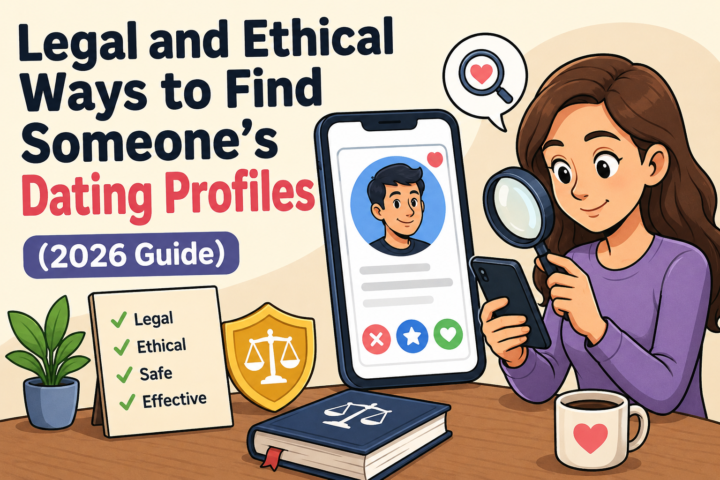
Legal and Ethical Ways to Find Someone's Dating Profiles (2026 Guide)
Okay so I'll be honest — I never thought I'd be the person writing this article. But here I am, sitting in my apartment in California, writing about something that I think a lot of people are too embarrassed to even Google. And look, if you're reading this, you already took the first step. No judgment from me. Whether you're suspicious about a boyfriend, wondering about your husband, or just got a weird gut feeling about someone you've been seeing — this is a real thing that real people deal with. I've spent a pretty good chunk of time actually testing different methods, and I want to share what I found, including what works, what doesn't, and what you absolutely should NOT do (legally and ethically speaking). Let me be clear upfront: I only recommend legal methods here. I'm in California, and spy apps, unauthorized account access, and hacking are not just unethical — they can actually get you in serious legal trouble. Not worth it. So let's get into it. Why People Even Want to Know Before I get into the methods, I just want to say — if you're here because something feels off in your relationship, that feeling is valid. You don't need to justify wanting to know. A lot of people find themselves in situations where trust has been broken before, or where they've noticed some behavioral changes in their partner and they just want clarity. That said, finding out someone is on a dating app doesn't automatically tell you the full story. People sometimes have old accounts they forgot to delete. Context matters. Keep that in mind as you go through this. Start With the Free Stuff (And Understand Its Limits) My first instinct — like most people I think — was to look for completely free methods before spending any money. Google Image Search and Bing Images Both Google and Bing have reverse image search features where you can upload a photo and see where else that image appears on the internet. In theory, if someone is using the same profile photo on Tinder or Bumble that they use on their regular social media, reverse image search could surface that.
Poll
1 member has voted
0
0
Jun 11 •
How Google and Bing Image Search Help You Find People Online (And Who's Actually Using Them in 2026)
I remember the first time I used reverse image search to find someone. A friend had been talking to this woman online for weeks. Her photos looked professional – like, too professional. Something felt off. So I took one of her pictures, dropped it into Google Images, and within seconds found the exact same photo on a stock photography website. Turned out my friend wasn't talking to a woman at all. He was talking to someone using stolen pictures. That night, I realized how powerful these tools really are. Most people don't know this, but Google and Bing aren't just for finding product images or vacation photos. They're some of the most effective people-search tools you can use – and they're completely free. The Numbers Are Bigger Than You Think Here's something that surprised me when I looked into the data. Google Lens – the technology that powers Google's image search – now processes over 20 billion searches per month. That's not a typo. Billion with a B. To put that in perspective, that's more visual searches happening in a single month than the entire population of the United States and Europe combined. And it's not just Google. While Google dominates about 92% of all search traffic worldwide, Bing holds around 3%. That might sound small, but when we're talking about billions of searches, three percent is still massive. What's really interesting is who's using these tools. About 40% of Gen Z and Millennials now start their searches with images instead of typing keywords. Think about that. Nearly half of younger people would rather snap a photo than type a sentence. Why? Because it's faster, especially on a phone. And because sometimes you don't even know how to describe what you're looking for. What Kind of Images Can These Tools Actually Search? This is where people get confused. Google and Bing don't just look for exact copies of a photo. They're way smarter than that. When you upload a picture, here's what the search engines are actually doing: Facial recognition (kind of). Google Lens can identify faces and find other places where that same face appears online. It's not perfect – it struggles with side profiles, blurry shots, or people wearing masks. But for clear, front-facing photos? It works surprisingly well.
0
0
Jun 9 •
Is Someone on Plenty of Fish? Here's How I Found Out Without Logging In
Plenty of Fish hides everything behind a login wall. No browsing, no searching, no checking if someone has a profile — not without creating an account first. That's just how they've built it. But there are ways around this. I've been digging into people-search tools for about three years now, trying different methods for different reasons, and I want to share what genuinely works versus what wastes your time. Some of these are completely free. One costs less than a dollar. A couple are more expensive but go deeper if you really need them. Here's everything, in the order I'd recommend trying it. Start With Google — It Takes Two Minutes Before doing anything else, run a quick Google search. It's free and occasionally delivers exactly what you need with zero effort. Try searching: - "firstname lastname" site:pof.com - "firstname lastname" "plenty of fish" - "firstname lastname" pof profile POF profiles created before roughly 2019 sometimes got indexed by Google before the platform tightened its privacy settings. Those old profiles can still show up in search results today. Newer accounts almost never appear this way, but it costs nothing to check and takes under two minutes. If Google comes up empty, don't give up — it just means you need to go a step further. Reverse Image Search — Yandex Is the One to Use If you have a photo of the person — from their Facebook, Instagram, LinkedIn, anywhere — reverse image search can find where else that same photo appears online. Dating profiles included. Most people go straight to Google Images for this, but honestly Yandex is better. It's a Russian search engine and their image recognition technology is noticeably stronger than Google's when it comes to finding where a face appears across the web. I've found profiles on Yandex that Google completely missed. Go to yandex.com/images, click the camera icon, upload the photo, and see what comes back. Then run the same photo through Google Images at images.google.com and Bing Visual Search at bing.com/visualsearch. Each one indexes slightly differently, so running all three takes maybe five extra minutes and covers more ground.
1
0
1-8 of 8
powered by

skool.com/identity-search-academy-8607
Learn to find dating profiles, run background checks & remove your data. No scams. No hacking. Real methods. Run by Sam.
Suggested communities
Powered by