
Write something

Aug '25 •
Members pick a course
Pick a course you wish to learn about shhot us a message and we will work on that area. The standard membership covers all basic courses and questions pertaining to the courses. Advanced courses will be priced individually and come with comprehensive advice and mentorship.
0
0
Aug '25 •
D.r.t explanation
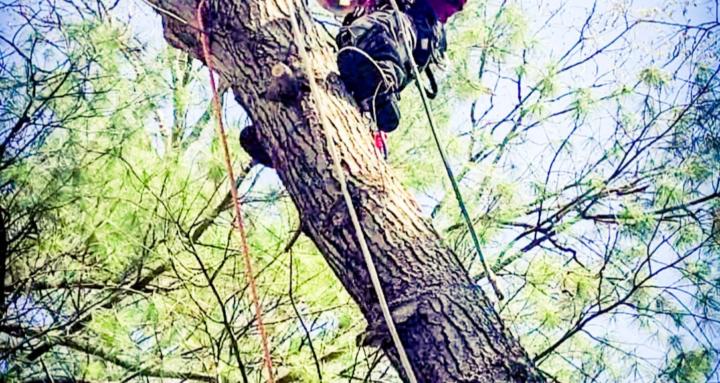
Climbing a tree with a hitch climbing setup, often a Double Rope Technique (DRT) or Moving Rope System (MRS), is a fundamental skill for arborists and recreational climbers. This system relies on a friction hitch, which is a knot tied with a smaller cord around the main climbing rope, to allow you to ascend, descend, and position yourself in the tree. 🌳 Setting Up the System First, you must set up your climbing system. The most common setup involves a hitch climber pulley, which keeps the system tidy and efficient. * Throw your climbing line over a secure anchor point in the tree, like a strong limb. The rope should be long enough to reach the ground on both sides. * Attach the climbing line to your harness. The "working" end of the rope will go through a ring or attachment point on your harness. * Tie a friction hitch on the climbing line, such as a Distel or VT hitch, using a shorter cord. This hitch is a key part of your system, as it's what you'll use to control your movement. * Connect the friction hitch to your harness with a carabiner or a hitch climber pulley. A hitch climber pulley is a popular choice because it has multiple attachment points and a pulley that helps the friction hitch to self-tend, or move up the rope more easily. The Climbing Technique To climb, you'll need to use both your legs and arms to create upward movement. * Ascending: The most common method involves a combination of pulling and "footlocking." * Pulling: Grasp the rope above the friction hitch with one hand and pull down, while simultaneously pulling on the "tail" of the rope (the part of the rope below the hitch) with your other hand. This helps to take up slack and move the hitch up the line. * Footlocking: This technique is often used in combination with the pulling method. You lock the rope between your feet, stand up, and use your legs to push yourself upward. As you stand, you can slide your friction hitch up the rope with your hands. * Tending the Hitch: As you move up, you'll need to "tend" the hitch, which means manually pushing it up the rope. The hitch climber pulley is designed to help the hitch move smoothly, but you will still need to guide it.
0
0
Aug '25 •
Introduction warning tree climbing can be dangerous
Welcome to the course! We're thrilled to have you join us on this journey to master the art and science of professional tree climbing. Over the next several weeks, we'll dive deep into the essential techniques that form the foundation of safe and efficient climbing. Our curriculum is designed to transform you from a novice into a confident climber, or to help experienced climbers refine their skills and stay up-to-date with the latest industry standards. Here’s a sneak peek at what you'll learn: * Climbing Techniques: From basic knots and hitches to advanced ascent methods, we’ll cover everything you need to navigate the canopy with confidence. You’ll learn how to properly use and care for your gear, ensuring every climb is as safe as it is successful. * Rigging Techniques: Discover the physics and mechanics behind effective rigging. We'll teach you how to safely and efficiently dismantle trees, manage ropes, and control the descent of heavy limbs and trunks. Understanding these principles is crucial for protecting property and ensuring crew safety. * Safety and Professionalism: Safety is our top priority. We'll instill a deep understanding of industry best practices, risk assessment, and emergency procedures. We'll also cover the professional conduct and communication skills necessary to succeed in the arboriculture industry. This course is more than just a series of lessons; it's a community. We encourage you to ask questions, share your experiences, and learn from one another. Let's grow together and reach new heights, safely and professionally. Ready to climb? Let's get started!
0
0
1-3 of 3
powered by
skool.com/how-to-climb-a-tree-srt-or-drt-8976
All you need to know to safely ascend and decend in a tree. Either S.R.T or D.R.T also basic and advanced knotts both for climbing and rigging.
Suggested communities
Powered by