

Dec '25 •
When Brother Flame Feels Invisible: The Silent Pain Behind His Intensity
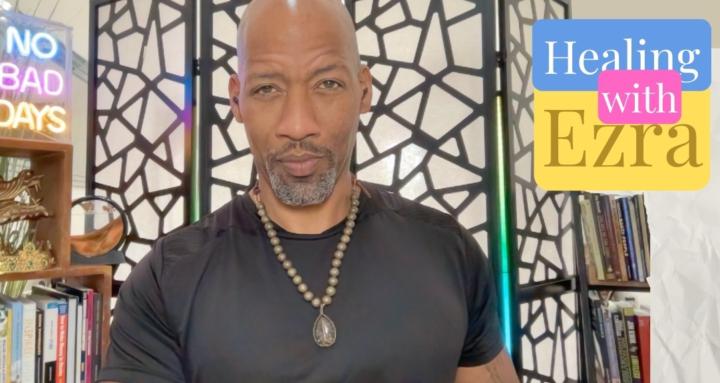
Brother Flame is passion in human form — expressive, emotional, driven, energetic, and deeply alive. But there is a misunderstood truth beneath his fire: Flame feels invisible more often than anyone realizes. Not unseen in the physical sense —unseen in the emotional sense. People hear Flame’s volume,but miss his vulnerability.They see his intensity,but miss his sensitivity.They feel his energy,but miss his loneliness. Ezra Masters often reminds Flame men that their fire isn’t a mask — it’s a message. A call for connection. A call for understanding. A call to be met with the same emotional depth they bring to the world. But when Flame is repeatedly misunderstood, he begins to internalize the wrong story: “I’m too much.”“No one gets me.”“My emotions are a problem.”“My passion pushes people away.” So he withdraws.He quiets his fire.He stops expressing.He starts doubting himself. Flame’s pain doesn’t come from intensity —it comes from expression with no safe receiver. He needs an environment that can hold his heat without shrinking away from it. He needs people who understand that fire is not chaos — it’s clarity. It’s direction. It’s truth. This is the environment the Healing With Ezra Tribe creates:a place where Flame men aren’t told to tone down, calm down, or be less — but are shown how to channel their fire into identity, purpose, and emotional strength. Flame becomes unstoppable the moment he feels seen and his flames properly controlled, not managed.
0
0
Dec '25 •
The Sacred Pause: Why Regulation Is Your Spiritual Duty
Brothers and sisters, let me tell you something most people won't: Your emotions are not the enemy. Your lack of regulation is. I spent years in the fire—corporate boardrooms, reality TV sets, therapy sessions with people at their breaking point. You know what I learned? The strongest people I ever met weren't the ones who never felt. They were the ones who felt everything and still chose their response. That's not suppression. That's sovereignty. The Gap Between Stimulus and Response Viktor Frankl said it best: "Between stimulus and response there is a space. In that space is our power to choose our response. In our response lies our growth and our freedom." That space? That's regulation. When your brother disrespects you and you feel the heat rising—that 11-millisecond window where your amygdala screams "DESTROY"—regulation is what keeps you from becoming the monster you're trying to defeat. When life knocks you down and the depression whispers "stay here forever"—that moment when your nervous system wants to shut down completely—regulation is what keeps you from abandoning the mission God gave you. This is spiritual warfare, disguised as brain chemistry. Two Different Battles, Two Different Weapons For my Brother Flames who stay running hot: Your rage is rocket fuel. But rocket fuel in the engine moves you forward. Rocket fuel on the ground? Explosion. You need techniques that cool the system WITHOUT killing the fire. Your anger isn't wrong—your timing is. Regulation gives you back the wheel. For my sisters sinking low: Your depth is your gift. You feel what others can't. But feeling everything without a life raft? That's drowning, not wisdom. You need techniques that lift you WITHOUT denying your truth. Your sadness isn't weakness—it's unprocessed information. Regulation helps you sort it. The Divine Design God gave you emotions for a reason. Fear protects. Anger defends. Sadness signals loss. Joy confirms alignment. But here's the revelation: God also gave you a prefrontal cortex. That's the part that's made in His image—the part that can observe your emotions, understand them, and choose what to do with them.
0
0
Nov '25 •
You’re Not Lost — You’re Being Redirected.
Pause. You’re Not Lost — You’re Being Redirected. To anyone who feels off today… Scattered, low-energy, uncertain… Let me say this with clarity: You’re not lost. You’re just between chapters. Sometimes the page turns slower than expected. Sometimes the silence is the instruction. And sometimes, the delay is actually protection. So before you spiral, disconnect, or go numb trying to “fix” what isn’t wrong — Breathe. You’re still aligned. You’re still chosen. You’re still called. This is just a sacred redirection — A divine invitation to let go of what no longer fits… And open your heart to what does. Let’s check in: What’s one thing you’re releasing this week? And what are you ready to receive more of? Comment below. Let this be your reset. We move better when we’re grounded in truth. And the truth is — You’re still on path. You’re just in a holy pause. — Ezra
0
0
Nov '25 •
How Much Can You Unload?
Let’s get real for a second. You’re not too emotional. You’re not too intense. You’re not too deep. You’ve honestly just been carrying too much, for too long, by yourself. I KNOW, I've been there! You’ve had to be strong in rooms where no one knew you were breaking. You’ve had to keep giving from a cup no one stopped to refill. And now, here you are — still standing. Still showing up. Still seeking God. That’s not weakness.T hat’s sacred endurance. But hear this: Even endurance has a limit if it’s not replenished. So let’s slow it down today. - Where are you running on empty? - What do you need that you keep telling yourself you can go without? - What part of you needs to be held, not hidden? Comment with one word or sentence that feels honest right now.You don’t need to be fixed. Just witnessed. This space is safe. This tribe sees you. And you don’t have to carry all of it anymore. — Ezra
Nov '25 •
Living Loops
Sometimes we say we want peace… But we’re still defending the habits, relationships, mindsets, and distractions that create our storms. We say we want clarity…But keep going back to the same confusion for comfort.We ask for healing…But won’t release the very wound we keep calling “personality.” So today’s post is not a rebuke —It’s a return. A sacred pause to ask yourself: - What am I still defending that’s actually draining me? - Where am I making peace compete with my patterns? You don’t have to fix it all today.But you do need to name it. Drop one word in the comments that represents something you're ready to release.Let this be the moment you stop protecting what’s been poisoning you. You’re not here to live in loops. You’re here to rise in rhythm. Let’s grow, together. — EzRã
1-19 of 19
powered by
Suggested communities
Powered by