
Write something

10h •
The Body Repair Peptides:
PEPTIDE INTELLIGENCE · ARTICLE FIVE · REPAIR & RECOVERY How BPC-157 and TB-500 Actually Work Most people use these peptides because someone told them to. This is what's actually happening inside your body when you inject them — and why that matters for how you use them. Walk into any serious gym, any performance medicine clinic, or any well-populated biohacking forum in 2025 and BPC-157 and TB-500 are two of the most frequently mentioned peptides. They're discussed together so often that people assume they're variations on the same thing. They're not. They work through completely different mechanisms. They target different stages of the repair process. They have different half-lives, different ideal administration routes, and different evidence bases. Understanding the distinction doesn't just satisfy intellectual curiosity — it directly determines how you use them, when you use them, and whether stacking them makes sense for your specific situation. This article covers the actual biology. Not the forum hype. Not the supplement marketing copy. What's happening at the cellular and molecular level when you inject either of these compounds — and what that means in practice. First: understand how the body repairs itself Before you can understand what these peptides do, you need a working model of the healing cascade. Most people think of healing as a linear process — injury happens, body fixes it, done. The reality is a precisely sequenced multi-phase biological programme that, when it goes wrong, results in either chronic injury or poor-quality repair (scar tissue, fibrosis, adhesions). The three phases of tissue repair: Phase 1 — Inflammation (0–72 hours post-injury) Blood vessels dilate. Immune cells (neutrophils, macrophages) flood the site. Inflammatory cytokines are released. The area becomes red, swollen, hot, painful. This is not the enemy — it is the essential first responder. Without inflammation, the cleanup and signalling that initiates repair cannot happen. The problem is when this phase doesn't resolve and becomes chronic.
0
0
4d •
PEPTIDE INTELLIGENCE
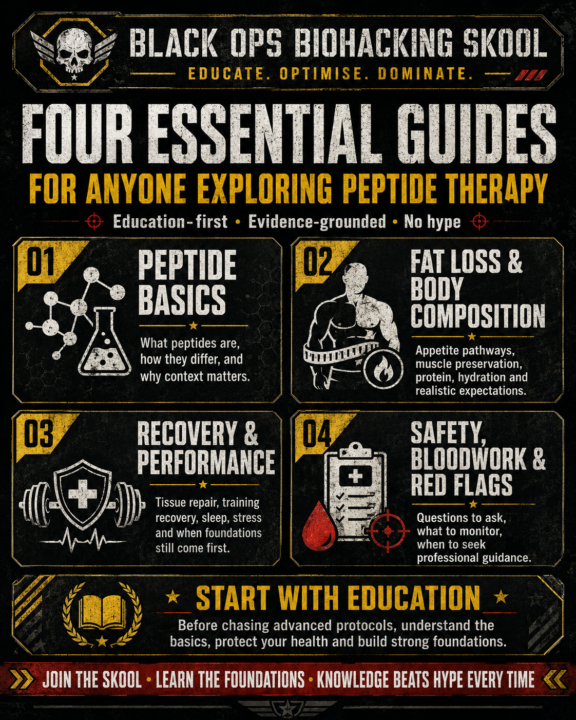
Four Essential Guides for Anyone Exploring Peptide Therapy Education-first · Evidence-grounded · No hype CONTENTS Article 1 · [Peptides 101] What Are Peptides and Why Is Everyone Talking About Them? Article 2 · [Fat Loss] The Beginner's Guide to Fat Loss Peptides — What Works, What Doesn't Article 3 · [Skin & Recovery] GHK-Cu and the Glow Stack — The Science Behind the Hype Article 4 · [Stacking & Safety] How to Stack Peptides Safely — The Rules Nobody Tells You
0
0
5d •
The Beginner’s Peptide Fat-Loss Cheat Sheet
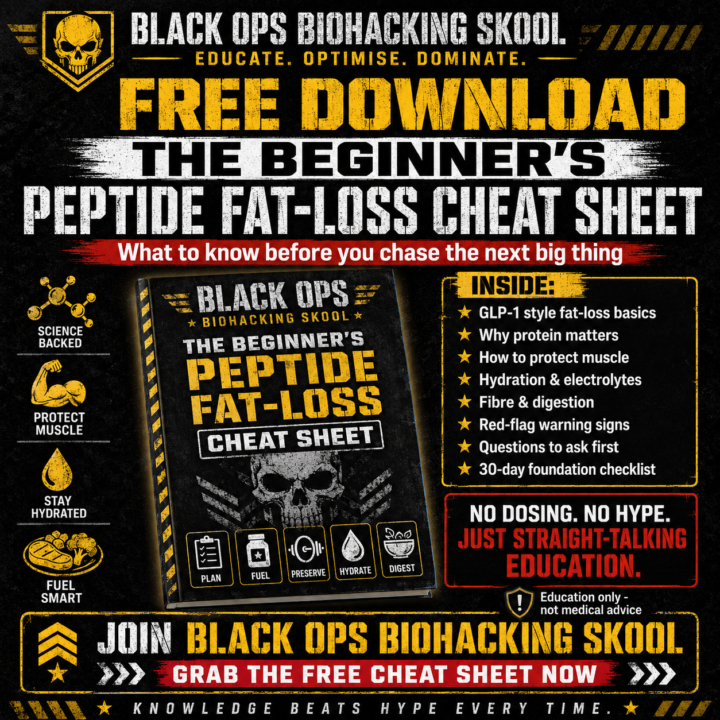
What to Know Before You Chase the “Next Big Thing” Peptides and GLP-1-style weight-management medications are everywhere right now. Everyone is asking about them. Everyone has seen the before-and-after photos. Everyone knows someone who knows someone who “lost loads of weight.” And, because the internet is the internet, plenty of people are now trying to play doctor with a screenshot, a vial and the confidence of a man who once watched half a podcast. This cheat sheet is here to slow the madness down. It is not a dosing guide. It is not medical advice. It is not a “stack this with that and hope your pancreas forgives you” protocol. This is a beginner’s guide to understanding the categories, the foundations, the red flags and the lifestyle rules that matter before anyone even thinks about advanced fat-loss tools. 1. First Things First: What Are People Talking About? When people talk about “peptides for fat loss,” they are usually lumping lots of different things together. That includes: - GLP-1 receptor agonists - Dual or triple incretin-style medications - Growth hormone secretagogues - So-called research peptides - Online “fat-loss stacks” - Unlicensed products sold as “research use only” Not all of these are the same. Some are licensed medicines used under medical supervision. Some are investigational. Some are not approved for human use. Some are banned in tested sport. Some are sold online by people whose business model appears to be “trust me, bro, I own a label printer.” This is why education matters. 2. The Main Fat-Loss Medication Category: GLP-1 Style Compounds The most talked-about weight-loss medications usually work through appetite and blood sugar pathways. The GLP-1 pathway may help with: - Appetite reduction - Feeling fuller for longer - Slower stomach emptying - Blood glucose control - Reduced food noise - Reduced calorie intake This is why people often lose weight. But here is the part people ignore: Lower appetite does not automatically mean better nutrition.
1
0
7d •
Retatrutide: The Next Generation of Weight Management?
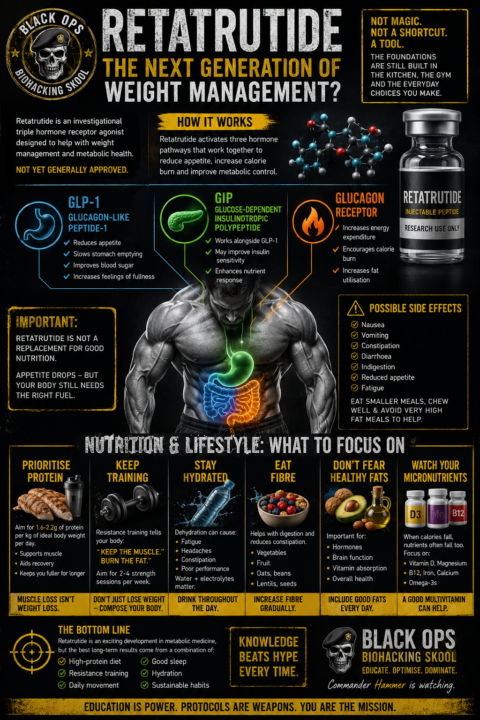
Retatrutide is one of the most talked-about peptide medications currently being investigated for obesity and metabolic health. Although it is still undergoing clinical trials and has not yet received general regulatory approval, the results seen so far have generated enormous interest. So what makes it different? How Does Retatrutide Work? Unlike first-generation medications that work on a single pathway, Retatrutide activates three different hormone receptors involved in appetite and metabolism. These are: GLP-1 (Glucagon-Like Peptide-1) - Reduces appetite - Slows stomach emptying - Helps improve blood glucose regulation - Increases feelings of fullness GIP (Glucose-Dependent Insulinotropic Polypeptide) - Works alongside GLP-1 - May improve insulin sensitivity - May help enhance the body's response to nutrients Glucagon Receptor - Increases energy expenditure - Encourages the body to burn more calories - May increase fat utilisation The combination of all three pathways is why many researchers believe Retatrutide could become one of the most effective weight-management medications developed to date. But Here's the Important Part... Retatrutide is not a replacement for good nutrition. In fact, eating properly becomes even more important because appetite often falls dramatically. Many people simply stop eating enough, which can create a whole new set of problems. Prioritise Protein Protein should become the foundation of your diet. Aim for approximately: 1.6-2.2g of protein per kilogram of ideal body weight per day Good choices include: - Chicken - Turkey - Lean beef - Fish - Eggs - Greek yoghurt - Cottage cheese - Whey protein - Plant proteins if preferred - Adequate protein helps support: - Muscle maintenance - Recovery - Satiety - Healthy metabolism - Remember... Weight loss is great. Muscle loss isn't. Keep Resistance Training One of the biggest mistakes people make whilst losing weight is relying solely on the medication.
1-4 of 4
powered by

skool.com/gym-squad-black-ops-biohacking-5710
Elite biohacking community covering SARMs, SERMs, peptides, risks, rewards, and real industry insight for serious performers.
Suggested communities
Powered by