
Write something

26d •
The Mozambique Drill - When Center Mass Isn't Enough
"Speed is fine, but accuracy is final." — Wyatt Earp That old gunfighter wisdom captures exactly why I teach the Mozambique Drill to every executive protection client who comes through Grey Man Academy. Two shots to the chest, one to the head. It's not about being flashy—it's about being final. The Mozambique Drill trains you for the moment when your "A-game" still isn't stopping the threat. Here's the tactical logic: It’s good practice to always engage center mass first—the chest presents the largest target with vital organs. Under stress, when your fine motor skills diminish and threats are moving unpredictably, you need the highest probability of effective hits. Simple physics and anatomy. But what happens when those chest shots don't stop the threat fast enough? Maybe body armor is involved—increasingly common in active shooter situations. Maybe the threat is chemically enhanced or is running body armor. This is where hope becomes a liability. The head shot isn't random. I'm targeting the ocular region specifically—the area between the eyebrows and upper lip. This provides the most direct path to the medulla oblongata at the brain stem. A hit here means instant incapacitation without muscular clenching reflexes. The technical execution matters as much as the concept. Trigger reset discipline, minimal travel between shots, and rapid target transition from chest to head. My cold demonstration time of 2.37 seconds isn't my best time, and it sure isn’t showing off—it's about proving the technique works under realistic conditions. For armed professionals and responsible citizens, the Mozambique Drill isn't about tactical theater. It's about building systematic problem-solving habits when stopping a determined threat becomes absolutely necessary. Because in a real defensive encounter, speed might get you started, but accuracy—at the right target—is what gets you home. Mozambique/Failure Drill Creator: Mike Rousseau (experience), popularized by Jeff Cooper Target Setup:
21d •
The Bill Drill - Where Speed Meets Truth
"Under pressure, you don't rise to the occasion—you sink to your level of preparation." - U.S. Navy SEALs The SEALs understand a fundamental truth about human performance: when the stakes are high and time is short, all pretense disappears. You become exactly what you've trained to be, nothing more. The Bill Drill applies this principle with surgical precision—six rounds from the holster into the USPSA A-zone at seven yards, as fast as humanly possible while maintaining fight-stopping accuracy. This isn't just another drill. It's a pressure cooker that strips away excuses and reveals exactly where your fundamentals stand when it matters. In 1.96 seconds, everything you've practiced either works or it doesn't. The Diagnostic Power What makes the Bill Drill brutally honest is how it combines multiple skills simultaneously under time pressure. Your draw stroke must be crisp. Your grip must survive rapid recoil cycles. Your trigger control must remain disciplined while your brain screams "faster." Your sight acquisition must be instant and reliable. Most importantly, it reveals the weakest link in your shooting chain. A loose grip shows up as vertical stringing. Poor trigger control appears as horizontal dispersion. Inadequate sight acquisition creates random hits outside the A-zone. The target doesn't lie about your preparation level. The Standard Sub-2 seconds with all hits in the A-zone represents solid fundamentals. Anything under 1.8 seconds approaches mastery level. But here's the key insight: a perfect 1.5-second run with three misses is worthless. A 2.1-second run with six center-mass hits wins fights. The Bill Drill teaches the essential balance between speed and precision that SEALs know intimately. When your life depends on stopping a threat quickly and decisively, you'll sink to your level of preparation. Make sure that level is high enough. Train the Bill Drill not just for time, but for truth. Let it reveal your weaknesses, then fix them one fundamental at a time.
3
0
Jan 15 •
The Science Behind Force-on-Force Training
"Warriors win first in their minds, and then they go to war." - Miyamoto Musashi This ancient wisdom finds its modern expression in the Navy SEALs' hooded box drills - a training methodology that transforms the mind before the first shot is fired. By placing operators in a boxed area, hooded before suddenly exposing them to unknown scenarios, this training creates what neuroscientists call "stress inoculation." The genius lies not in the physical skills developed, but in the fundamental rewiring of the brain's fear response. Research shows that trainee’s amygdalas - the brain's alarm system - actually process threats differently after this training. Where untrained individuals experience panic and paralysis, trained operators maintain rational decision-making even as their bodies flood with adrenaline. What we witnessed in these twelve scenarios represents a civilian adaptation of this methodology. Each interaction forces split-second decisions: Is that hand movement reaching for a wallet or weapon? Is this person having a mental health crisis or preparing to attack? Can this be de-escalated, or has the window for words already closed? The value extends beyond the individual scenarios. Participants report that after force-on-force training, their entire approach to personal protection changes. They stop focusing solely on marksmanship and begin understanding the complete defensive encounter - from pre-assault indicators through post-incident response. While the static range can develop shooting skills; the scenario training develops trained responses that are not only put under a microscope but under tactical pressure. Perhaps most critically, this training reveals uncomfortable truths. That perfectly tight group at the range means nothing when someone's rushing you with a knife. Your sub-second draw is worthless if you can't distinguish between an iPhone and a pistol under stress. Years of square range practice can't replicate the chaos of multiple people screaming contradictory information while you're trying to process threats.
2
0
Jan 14 •
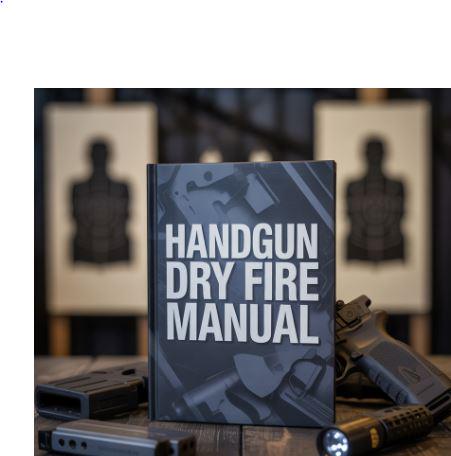
Dry Fire Manuel
In keeping with this month's theme, I'm working on a dry fire manual, a 30 day program with drills for the following topics. 1. Firearm Safety 2. Grip 3. Stance 4. Trigger Control 5. Sight/Vision 6. Drawstroke 7. Reloading 8. Ready Positions 9. EDC Considerations This project is in Beta, so I need honest feedback guys. If you want access to this special project available nowhere else, there's no charge, but it's with the understanding that you will provide timely feedback before the end of January if at all possible. Just looking for your honest input! If you're interested in getting access, just interact with this post.
Jan 15 •
The 80% Rule: Why Perfect is the Enemy of Good Enough
"Do nothing which is of no use." - Miyamoto Musashi Musashi's principle of eliminating the unnecessary finds perfect expression in modern defensive training through what we call the 80% rule. This counterintuitive truth challenges everything we've been taught about giving maximum effort, yet it remains one of the most critical concepts separating competent shooters from those who fail when it matters most. The distinction is simple but profound: In training, push your boundaries and discover your limits. Accept the misses, embrace the failures, map the edges of your capability. But when lives hang in the balance - whether in competition or combat - dial back to 80% capacity. This isn't weakness; it's wisdom. Why does trying harder make us perform worse? At 100% effort, we experience what sports psychologists call "cognitive overload." The conscious mind attempts to control every micro-movement, creating a split-mind syndrome where nothing flows naturally. Fine motor skills degrade, decision-making stutters, and that perfect technique you've drilled thousands of times suddenly falls apart. The very act of trying to be perfect destroys the performance. Consider Andrew's target pattern - shots scattered across the acceptable zone rather than clustered in a tight group. Traditional marksmanship says this is inferior to a ragged hole in the center. Modern defensive doctrine says otherwise. Those scattered hits represent maximum sustainable speed while maintaining combat-effective accuracy. A perfect center group might impress at the range, but it reveals you're leaving speed on the table - speed that could save your life. The 80% rule isn't about being lazy or accepting mediocrity. It's about operating within your proven capability envelope when failure isn't an option. Champions don't win by giving everything; they win by consistently delivering what they know they can achieve. In training, find your limits. When it counts, stay well within them.
2
0
1-19 of 19
powered by

skool.com/grey-man-academy-3923
Tradecraft, international travel safety hacks, digital security and all things Grey Man are discussed and promoted.
Suggested communities
Powered by