
Write something

Mar 17 •
Summer Storms at the Shore
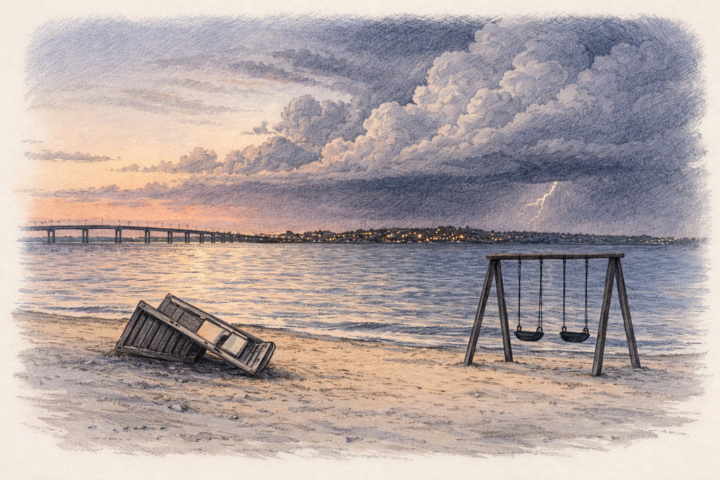
Summer Storms at the Shore There’s a very specific kind of tired that only comes from a full day in the ocean. Salt still in your hair. Skin warm and a little sunburned. The outdoor shower rinses the sand away, but the smell of the sea stays with you. The night is thick and muggy, the kind where the air barely moves. You walk the boulevard for ice cream. Maybe a round of mini golf. Nobody is in a hurry. Somewhere far away, thunder rolls. A thin flash of lightning crosses the sky, so you wander down to the bay where the swings sit by the water. The storm moves slowly across the dark surface, lighting the horizon every few minutes. On the island the thunder sounds different. It travels across the water and echoes in a way it never does at home—deeper, louder, almost theatrical. Eventually the lightning gets close enough that it’s time to leave. Back to the little cottage. Windows open. No air conditioning. Just the breeze and the storm passing overhead. By morning the air is cooler. The beach is quiet. The storm has scattered its small gifts along the wrack line—shells, bits of sea glass, maybe a horseshoe crab molt. For a little while, before the chairs and umbrellas appear, it feels like the island belongs only to the tide again.
Mar 11 •
Campfire Morning
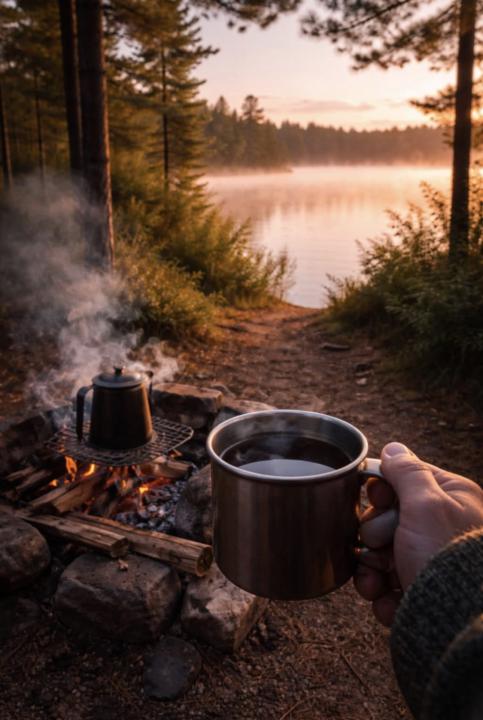
It’s quiet in the morning. A few leaves rustle overhead. Somewhere in the trees a white-throated sparrow calls its clear, whistling note. Farther off, the hollow knock of a pileated woodpecker echoes through the woods as it searches for breakfast. You peek your head out of the tent. The air is cold enough that you can see your breath drifting away in pale clouds. Time to build a fire. You step out onto the damp ground, the chill waking you instantly. The air feels sharp and clean against your face. It’s a fresh morning. Crisp in the way only early mornings outdoors can be. Building a fire is a strangely cathartic task. You start small—tiny twigs, dry needles, a careful nest of kindling. Then a few slightly larger sticks. There’s a method to it. Fire is delicate at the beginning. It needs patience. Small, then bigger. Bigger still. Eventually the flame grows strong enough to feed itself. This morning it only has one job: coffee. Coffee brewed over a campfire smells different. It tastes different too. Not burnt exactly, but touched by the smoke. Campfire coffee has its own flavor—something earthy, something wild that doesn’t exist in a kitchen. You take the mug and wander down the trail toward the lake. The water is warmer than the morning air, and a low fog rises from the surface. A thin mist hangs over the lake like a veil. The early light turns the whole scene pink and gold. It’s the kind of moment that feels almost staged, as if the world arranged it just for this morning. You take a picture. But as beautiful as the photo is, it doesn’t quite capture it. It never does
Mar 8 •
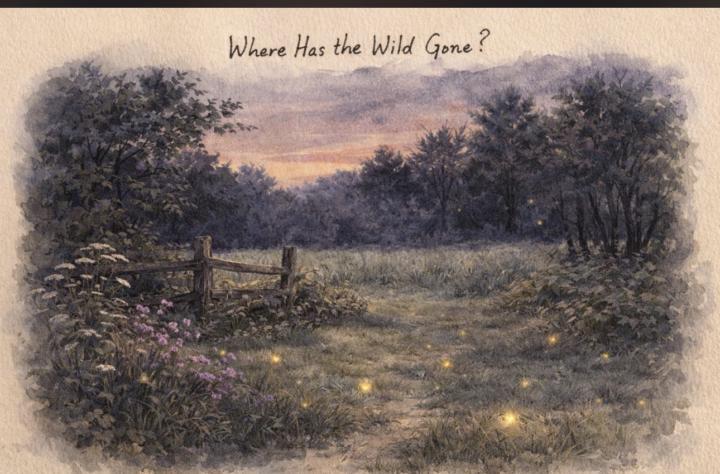
Where Has The Wild Gone? By Alaina Golden
Lightning bugs used to be the event of the season, the symbolic end to every summer evening. Where have all the lightning bugs gone? We all know the simple answers—pesticides, light pollution, lawn culture. But that’s another rambling for another time. What I’ve been thinking about lately is something quieter: where has the wild gone? Ever since I was a kid I’ve been prone to curiosity and observation. I examined every plant, every flower. They all seemed to carry a mythology of sorts. You’d hold a buttercup under your chin to see if you liked butter. Clover flowers—white and purple—grew everywhere. Someone always claimed the purple ones were edible. Walking barefoot through the yard meant watching carefully so you didn’t step on the bees hovering over the blossoms. We pulled honeysuckle flowers apart to taste the tiny drop of sweetness hidden inside. The edges of the woods were lined with bramble berries and wild grapes that we would gather in bowls and jars. On rainy afternoons we would turn them into jam. I spent so much of my childhood outside. Even later, through my college years, I chased the same feeling—blueberry festivals, butterfly gardens, cranberry bogs. New Jersey is full of wild places if you know where to look: the shore, the Pine Barrens, the farmlands stretching between towns. I’ve always loved the abundance those places hold. The world has changed in small ways since then. Fields have become neighborhoods. Farm roads lead past rows of convenience stores and parking lots. It isn’t really a complaint. Progress reshapes the landscape the way it always has. I simply miss the wildness. And yet it hasn’t disappeared completely. Every spring, on a damp evening when the air first begins to warm, I hear the spring peepers calling somewhere in the distance. In the fall, when the cold starts creeping in, the honk of geese echoes across the early morning sky. Sometimes the hollow knock of a woodpecker carries through the trees. In late August the cicadas rise into that electric hum that fills the heavy afternoon heat. After a long day swimming in the ocean, thunder sometimes rolls across the horizon as the night cools.
1-3 of 3
powered by

skool.com/geek-girls-collective-1951
A classic naturalist club with a modern online structure—share observations, ask questions, and explore nature together.
Suggested communities
Powered by