
Write something
Pinned

Mar 29 •
Welcome to Fertility Master Circle! 🌸
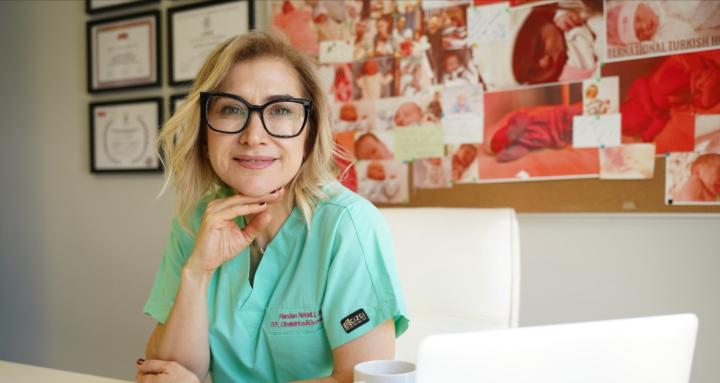
Hi, I'm Dr. Handan Namlı, OB-GYN and fertility specialist with 25 years of experience and over 10,000 patients. I created this community for one reason: most people trying to conceive are given incomplete, confusing, or dismissive information. You deserve better. What you'll find here: - Structured, science-based fertility education — step by step - Honest answers to questions your doctor may not have time to answer - A supportive community of people who understand what you're going through How to get started: 1. Go to the Classroom tab 2. Start with Week 1, Lesson 1 3. Introduce yourself in the comments below, tell us where you are in your journey I read every comment. You are not alone here. Dr. Handan Namlı dr.handannamli.com
Apr 6 •
Doctor, am I fertile?
Hey friends, our first lesson is live. And I want to start with the question that sits behind almost every message I receive: "Doctor, am I fertile?" It sounds simple. But the honest answer is: fertility is not a yes or no. It is a system. And once you understand how that system works, everything else starts to make more sense. In this first video, I walk you through exactly what fertility means in real life, not just in a textbook. Here is what we cover: First, what fertility actually is. Most people think fertility means "can I get pregnant?" But in clinical practice, we look at three things together: egg quality and ovulation, sperm quality, and the environment, meaning the tubes, uterus, lining, and hormones. If one part of that system is not working well, pregnancy can take longer. That does not mean it is impossible. It means we need to find which part needs support. Second, the monthly story of conception. I walk you through what happens inside your body each cycle, from the first hormone signal in your brain all the way to implantation. Most people have never seen this explained simply and in order. Once you see it, you cannot unsee it. Third, the fertile window. This is one of the most common misconceptions I see. The egg lives only 12 to 24 hours after ovulation. But sperm can survive 3 to 5 days. That means your real fertile window is 5 to 6 days, and it starts before ovulation, not on ovulation day itself. Timing matters more than most people realize. Fourth, the five biggest factors that affect fertility: age, ovulation regularity, sperm, the tubes and uterus, and lifestyle. I also want to say this clearly: lifestyle is one piece of the puzzle, not the whole story. Please do not blame yourself. We look at the full picture together. Fifth, how fertility is actually evaluated. Which tests matter, what they can tell you, and just as importantly, what they cannot. AMH, antral follicle count, semen analysis, progesterone, and when a tube evaluation makes sense.
May 25 •
Have You Ever Actually Been Taught How to Read Your Own Cycle?
😊I put together a new video this week, and I want to share it here before I share it anywhere else. It's about something most women have never been taught, and I mean that literally. Not "rarely discussed." Actually not taught. 👍Your body produces a biological signal every single cycle that tells you, in real time, when your fertile window is open. No app. No device. Just your own biology. Most women have been walking around with this information their whole lives and had no idea what it meant. The video walks through all four phases of your cycle. Not just the hormones, what you actually feel in each phase, and why. The energy shift in the follicular phase. Why you sleep badly before your period. What that discharge around ovulation actually is and what it's doing. Why a luteal phase shorter than 10 days matters if you're trying to conceive. I also made a free worksheet to go with it. It's the same tracking format I use with my own patients. Download it from the link in the video description and use it for two cycles. You will learn more about your body from those two cycles than from years of app predictions. 👩⚕️I have two questions for you after you watch. First one is easy: what's one thing about your cycle that nobody ever properly explained to you? Could be anything. Second: have you ever tracked cervical mucus, BBT, or LH strips? If yes, what surprised you? If no, what stopped you? 🙏 I read everything you write here. And honestly, your answers often become my next video.
1
0
May 14 •
PCOS has a new name. And it's not just a rebranding.
The new name is: PMOS Polyendocrine Metabolic Ovarian Syndrome For years, this condition was framed as an "ovarian cyst problem." That framing caused real harm. Women were told to wait and see. Symptoms were dismissed. And many walked away from appointments feeling like they were overreacting, when in fact, they were underdiagnosed. Here is what we now understand more clearly: many women diagnosed with PCOS never had cysts at all. Because this condition was never only about the ovaries. PMOS affects the entire body. Hormones, metabolism, skin, weight, menstrual cycles, ovulation, fertility, cardiovascular health, mental health, all connected. Insulin resistance is present in a significant proportion of cases. Anxiety and depression are part of the clinical picture, not side effects of "being stressed about it." The name change does not alter your diagnosis. What you have been living with is the same condition. But an accurate name changes how it gets taught in medical schools, how it gets recognized in clinics, and how seriously it gets taken at every step. A better name can mean earlier diagnosis. Less dismissal. More complete care. That matters. If you have irregular cycles, signs of high androgens, acne, excess hair growth, hair thinning, or difficulty getting pregnant, you do not need to wait for cysts to appear before asking for a full evaluation. You never did. Did the name "PCOS" ever make you feel like your condition was being minimized or misunderstood? I would genuinely like to hear your experience. Sources: Society for Endocrinology, 2026 / Teede et al., The Lancet, 2026

Mar 29 •
A little about me, and a question for you 👋
Hi everyone, I'm Dr. Handan Namlı. I'm an OB-GYN and fertility specialist based in Tirana, Albania. I've been working in this field for 25 years and have had the privilege of supporting over 10,000 patients through their fertility journeys. I built Fertility Master Circle because I kept seeing the same thing in my clinic: women who had been trying for months, sometimes years, who had never been given a clear, honest explanation of what was actually happening in their bodies. They had tests done, but didn't understand the results. They had been told "just relax" or "come back in 12 months." They were doing everything right, but still felt lost. That's what this community is here to change. A few things about how I work: - I teach with evidence, not opinions - I flag what science knows and what it's still debating - I believe you deserve real answers, not reassurance Now I'd love to hear from you. Tell me in the comments: 🌸 Where are you in your journey right now? 🌸 What is the one question you most wish your doctor had answered properly? 🌸 What would make this community truly useful for you? Your answers will shape how I build this, so please don't hold back. Every response helps. Welcome. I'm glad you're here. Dr. Handan Namlı dr.handannamli.com
1-6 of 6
powered by
skool.com/fertility-master-circle-3800
A step-by-step, science-based fertility roadmap.
Understand your body and take your next right step, with expert guidance and real support.
Suggested communities
Powered by