
Write something
Pinned

Mar 8 •
Welcome
👋 Welcome to the English Mastery Club! I’m really glad you’re here. This community is designed to help you grow your English in a way that feels practical, supportive, and motivating. Whether you’re learning for work, travel, confidence, or personal growth, you’re in the right place. This is not a traditional classroom. It’s a space where you can practice, ask questions, connect with others, and build real‑world English skills week by week. 🌱 What You Get Inside This Community - Weekly live conversation classes - Weekly vocabulary or grammar challenges - Monthly workshops on useful topics (job interviews, email writing, travel English, etc.) - Printable worksheets and resources - Speaking practice rooms - A supportive group of learners from around the world - A clear path to improving your fluency and confidence Everything here is designed to help you use English in real life, not just study it.
0
0
May 4 •
Modals of Deduction in The Past
https://copilot.microsoft.com/shares/artifacts/d8Zy8TGLRtTbTpbRMrpuj
0
0
May 1 •
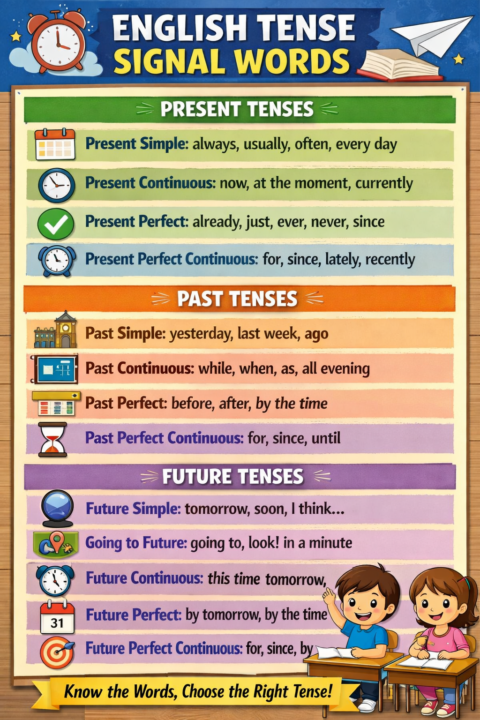
Signal Words Help You Use the Right Tense in English Grammar!
Why Signal Words Matter (and Why Your Students Should Love Them) Signal words are tiny, powerful clues that tell learners which tense the sentence wants. Instead of memorizing long grammar rules, students can train their eyes to spot these “time markers” and instantly choose the correct structure. Why they’re so helpful: - They reduce guesswork — yesterday points to Past Simple, already points to Present Perfect. - They build confidence — learners feel like detectives who can “read the clues.” - They improve accuracy — fewer tense mistakes, more natural communication. - They make reading and listening easier — students understand timelines faster. If you want your learners to level up their grammar intuition, start teaching them to hunt for signal words. It’s one of the simplest, most effective upgrades you can give them.
0
0
Apr 22 •
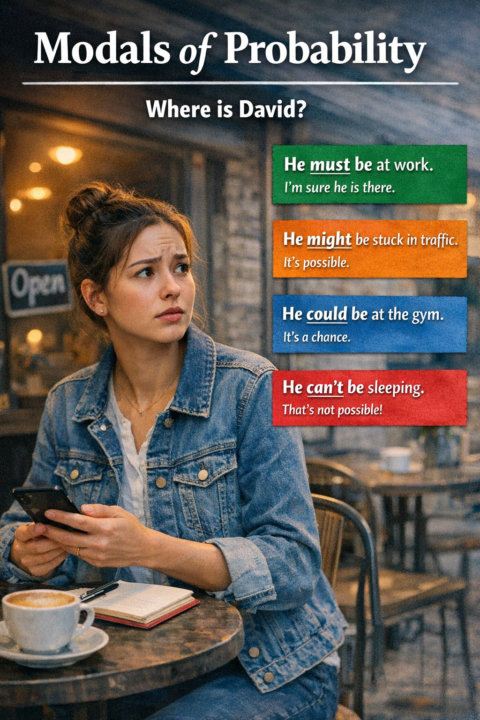
Know your Modals of Probability!
⭐ High Probability must → strong belief “He must be tired after that flight.” 🟡 Medium Probability may / might / could → possible, but not certain “She might join the call later.” “It could rain this afternoon.” ❌ Low Probability can’t → almost impossible “They can’t be at home—they just posted from the airport.”
0
0
1-6 of 6
powered by

skool.com/english-mastery-with-allen-8635
Boost your confidence with real‑world English, weekly practice, and a supportive global community. Learn, grow, and speak with power.
Suggested communities
Powered by