Write something
Pinned

Oct '25 •
🚑 NREMT-Style Next Generation EMT Question
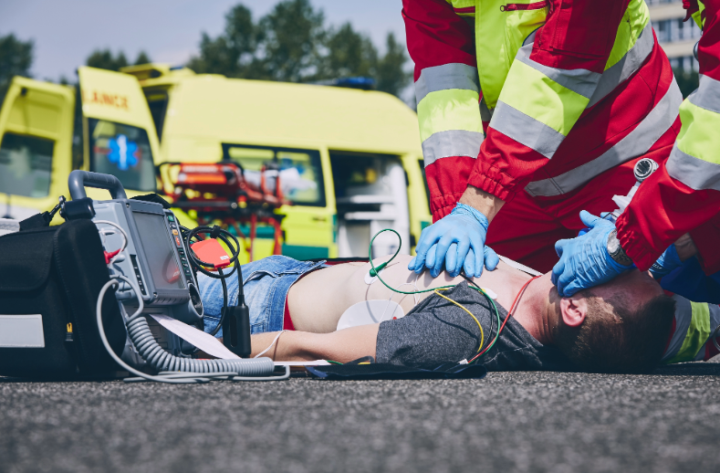
Scenario:You and your partner arrive on scene to find a 45-year-old male lying unresponsive in a parking lot. He is pulseless and apneic. Your partner immediately begins high-quality chest compressions while you apply the monitor/defibrillator pads. The cardiac monitor shows a coarse ventricular fibrillation (VF). After confirming the rhythm and ensuring no one is touching the patient, you deliver one shock and immediately resume compressions. After two minutes of CPR, the rhythm check shows asystole. (Primary Decision-Making) What is your next best action? A. Deliver another defibrillation shock immediately B. Resume CPR for two minutes and prepare to administer epinephrine C. Check for a pulse before resuming CPR D. Initiate transport to the nearest hospital immediately Comment and leave your answer:

Oct '25 •
These are my notes maybe they will help someone
Capstone/NREMT study guide Thursday, September 18, 2025 9:55 AM 🔹 1. Airway, Respiration & Ventilation (18–22%) Adult Airway • Upper airway structures: nose, mouth, pharynx, larynx • Lower airway: trachea → bronchi → alveoli • Techniques: head tilt–chin lift, jaw-thrust (if trauma) • Adjuncts: OPA (unconscious, no gag reflex), NPA (conscious or semi-conscious, no head injury) • Suctioning: no more than 15 sec adult, 10 sec child, 5 sec infant • Ventilation rates: ○ Adult: 1 breath every 5–6 sec (10–12/min) ○ With advanced airway during CPR: 1 breath every 6 sec (10/min) continuous compressions Pediatric Differences • Larger tongue, smaller airway diameter • Epiglottis is floppier and U-shaped • Narrowest point: cricoid cartilage (not vocal cords as in adults) • Higher oxygen demand → faster desaturation • Ventilation rates: ○ Child/Infant: 1 breath every 3–5 sec (12–20/min) • BVM size: infant, child, adult → always check chest rise 🔹 2. Cardiology & Resuscitation (20–24%) Adult • CPR: 30:2 compression to ventilation ratio (single rescuer, all ages) • Compression depth: 2–2.4 in (5–6 cm) • Rate: 100–120/min • AED: use ASAP • Shockable rhythms: VFib, pulseless VTach Pediatric • Compression depth: ○ Child: about 2 in (5 cm) ○ Infant: about 1.5 in (4 cm) • Two-rescuer CPR: 15:2 ratio • First line of cardiac arrest cause = respiratory failure, not cardiac disease (opposite of adults) 🔹 3. Trauma (14–18%) Bleeding • Arterial: bright red, spurting • Venous: dark red, steady flow • Capillary: oozing • Control: direct pressure → tourniquet if uncontrolled Shock • Early signs (peds): tachycardia, delayed cap refill, poor perfusion • Early signs (adults): restlessness, tachycardia, cool clammy skin • Late signs: hypotension, altered LOC Head & Spine Trauma • Cushing’s triad: bradycardia, hypertension, irregular respirations → ↑ ICP • Spinal precautions: C-collar + manual stabilization Chest Trauma • Tension pneumothorax: absent breath sounds, tracheal deviation, JVD, hypotension
1
0
Oct '25 •
EMT Training Videos
I have been in the studio, creating content to upload inside of the app. Please, if you would each one of you respond to me and let me know what you would like me to make a video of and what you’re struggling with so that I can create content specifically for you.
Oct '25 •
Going Live Tomorrow Night
Going LIVE online tomorrow night @ 8:30 pm eastern standard time… Have your questions answered… Let me know if your interested in attending… RSVP…
0
0

1-11 of 11