
Write something

Nov '25 •
The Caliphate of Córdoba — A New Light in Al-Andalus
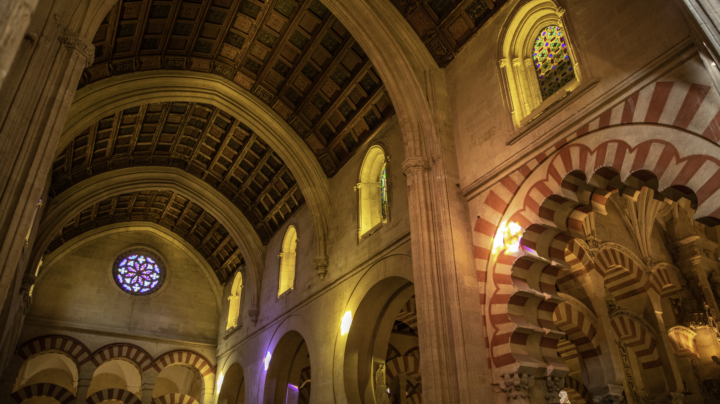
Standing beneath these arches, it’s hard to imagine the transformation this city underwent in the 10th century. In 929 CE, Abd al-Rahman III declared himself Caliph, breaking from the Abbasids in Baghdad and the Fatimids in North Africa. With this single act, Córdoba became the capital of a new, independent Caliphate, a centre of power, learning, and artistic ambition in the western Islamic world. The mosque expanded with it. New arches, new domes, new courtyards, and new decorative programmes reflected a civilisation confident in its identity. The red-and-white arch you see here is part of that era, echoing Damascus while expressing its own Andalusi character. Above it, later Christian vaults and stained glass rise in contrast, evidence of how the site evolved after 1236.Two architectural languages meet here: one flowing and geometric, the other vertical and Gothic. Yet together they create something unique to Córdoba:a place where history does not overwrite itself, but accumulates layer by layer, like light across stone.
0
0
Nov '25 •
The Arches of the Mezquita — Geometry of a Golden Age
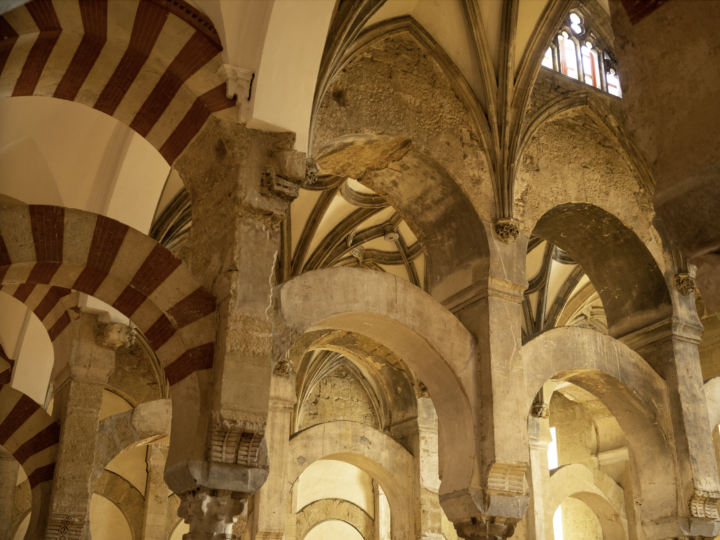
The iconic arches of the Córdoba Mosque are more than decoration, they are the structural and artistic language of Al-Andalus.Their distinctive double-tiered form was an architectural innovation of the 8th century, introduced by the Umayyads when they began expanding the mosque under Abd al-Rahman I. Why two arches? The builders needed height, but the reused Roman and Visigothic columns were too short.Their solution was ingenious: - a lower horseshoe arch (an inherited Visigothic form, perfected under Islamic rule) - a second, higher arch above it, lifting the ceiling and allowing light to flow across the hall This created the rhythm of red-and-white voussoirs, alternating stone and brick—that became the signature of Andalusi architecture. A fusion of influences These arches reflect a meeting of worlds: - Roman engineering - Visigothic forms - Umayyad aesthetic tradition from Damascus - local Andalusi craftsmanship Rather than replacing older cultures, they wove them together.
0
0
Nov '25 •
The Bell Tower of Córdoba — Layers of Voices
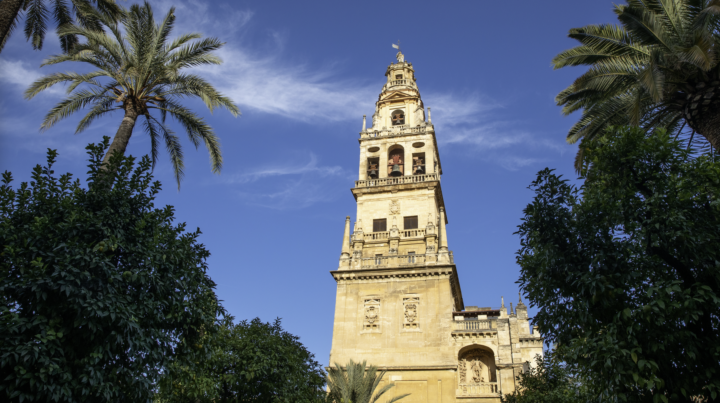
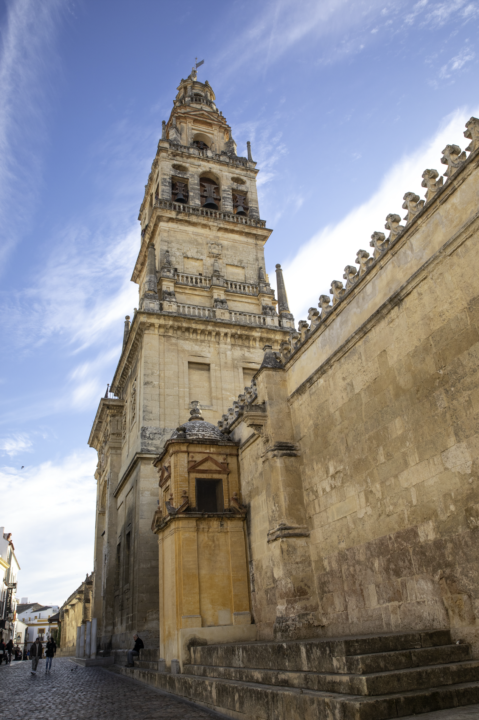
Rising above the Patio de los Naranjos, the bell tower of Córdoba stands on the foundations of a much older structure: the minaret of the original mosque.Built in the 10th century under Caliph Abd al-Rahman III, the minaret once called the faithful to prayer with a clear voice across the city. Its form, elegant, geometric, and crowned with copper spheres, reflected the height of Umayyad power in Al-Andalus. After the Christian conquest in 1236, the minaret was gradually encased and reshaped into the bell tower we see today. The Islamic structure still survives hidden within, encircled rather than erased—one tower inside another, like a memory protected by stone. Even now, the tower carries two histories at once. Muslim call to prayer. Christian bells. Two traditions layered vertically, meeting in the Andalusian sky. Photographically, its warm stone and surrounding palms create a striking contrast against the deep blue light of Córdoba’s afternoons.
0
0
Nov '25 •
The Fountain of Santa María — Patio de los Naranjos
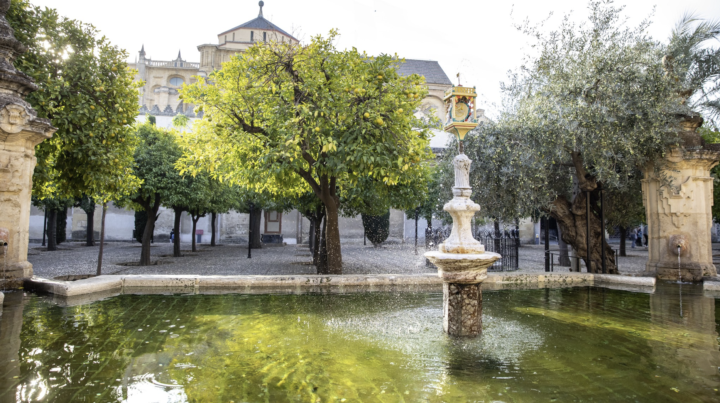
In the shadow of the Mezquita stands the Patio de los Naranjos, once the great forecourt of the mosque.For centuries, worshippers gathered here beneath citrus trees and open sky, washing hands, faces, and feet in ritual ablution before entering the prayer hall. This quiet fountain marks the heart of that practice, a reminder that purification was not only physical, but spiritual. The courtyard’s layout, with its long channels, pools, and orderly rows of trees, reflects early Islamic garden design: geometry, water, and shade arranged to create calm. Even today, the sound of water against stone softens the space, carrying an echo of the rhythm that once preceded prayer. Photographically, the light here is gentle and shifting. The bright leaves, the still water, and the weathered stone invite a slower way of seeing, one that honours both the beauty and the memory held in this courtyard.
0
0
Nov '25 •
A mosque that became a cathedral — and somehow remained both.
Córdoba’s La Mezquita–Catedral began in 785 CE under the Umayyad dynasty, once the second-largest mosque in the world, rivaling even Mecca in splendor. Centuries later, after the Christian reconquest in 1236, it was consecrated as a Catholic cathedral, and a Renaissance nave was built right through its heart. Emperor Charles V supposedly said, “You have destroyed something unique to build something commonplace.” Yet standing here, it’s hard to see anything ordinary, only beauty layered upon beauty, faith upon faith. Islamic arches embrace Christian altars. Arabic calligraphy still frames Latin crosses. It’s as if two worlds decided not to erase each other, but to coexist in stone. A reminder that history isn’t just about conquest, sometimes, it’s about conversation.
0
0
1-7 of 7
powered by
skool.com/echoes-of-al-andalus-2760
A community for lovers of Al-Andalus and thoughtful photography. Share images, learn, and explore its light, architecture, and history.
Suggested communities
Powered by