
Write something
Pinned

Jun 7 •
Interaction and diversity are our strength.
Hello everyone, our community focuses on interpersonal communication and bringing together people from different cultures without boundaries, where everyone can express themselves comfortably, exchange ideas, discuss current topics, and foster development. Thank you all for being here; together we will grow and learn new things.
3
0
Pinned
May 6 •
Welcome to our team
Welcome 👋 This is not just a community. This is a place to express your thoughts. Start here: 1. Introduce yourself (Where are you from?) 2. Share one idea you’ve been thinking about 3. Write it in 3-5 sentences No pressure. Just start. Let’s build clarity together.
4
0
13h •
Why do people want to belong to a group?
Family and friends give us a sense of belonging; could this need to belong to a group stem from our evolutionary past? Why do you think belonging is so important to people?
0
0
1d •
change
Where do you see yourself and the world in five years? What changes will occur—and what will be lost—due to advancing technology?
0
0

6d •
What exactly is religion?
Is religion simply a matter of faith? Or could religion also be understood, at least partly, as a human response to fear, uncertainty, and the things we don't understand? Here’s something I’ve been thinking about: When we don't have enough data, evidence, or knowledge to explain something, humans often try to fill that gap with beliefs, assumptions, stories, or explanations. So can religion also be studied from the perspective of human behaviour? Think about ancient humans. They didn't have modern science to explain death, diseases, lightning, earthquakes, natural disasters, or even the existence of the universe. Did humans develop religious explanations partly because they needed a way to understand things they couldn't explain? And if that's true, then another interesting question comes up: Do we believe something because we have reasons to believe it is true, or do we sometimes believe it because that belief gives us comfort and reduces our fear of the unknown? But there's an important distinction here: If we don't have scientific evidence for something, does that automatically mean it is false? Or are these two statements completely different? "I don't have evidence for it." vs. "It doesn't exist." I'm not trying to argue for or against religion. I'm genuinely interested in understanding the psychology behind human belief. From the perspective of psychology, philosophy, neuroscience, or religious studies: Why do humans believe? How important has fear been in the development of religion? And where exactly is the line between faith and blind belief? I'd genuinely like to hear different perspectives.
1-30 of 80
powered by
skool.com/dusunce-atolyesi-thinkforge-6845
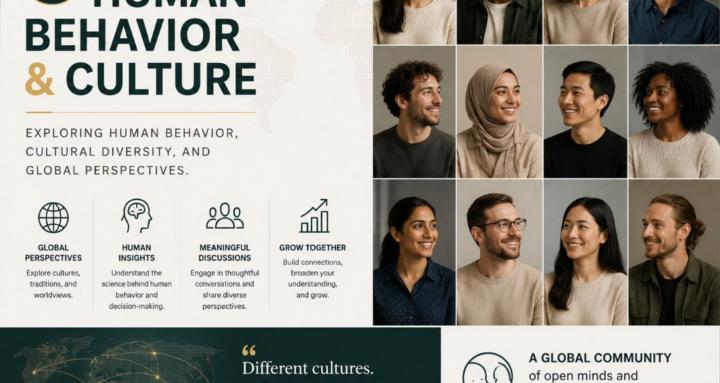
Explore human behavior, cultures, and social connections from around the world. Learn how people think, communicate, and live.
Suggested communities
Powered by