Write something

Jul 11 •
Analysis of a tampered flash drive in my lab.
I received a tampered USB drive and performed a detailed analysis on it. 1. Why Does the USB Drive Appear to Have 2 TB? All of these tools read the information reported by the device firmware. They do NOT verify the physical storage capacity. They simply display what the USB controller claims. Command What it checks Expected result on a counterfeit USB drive lsblk -d -o NAME,SIZE,MODEL,VENDOR,TRAN Displays the reported size, model, vendor and transport type. SIZE = 1.9T sudo fdisk -l /dev/sda Reads the disk geometry reported by the firmware. Disk /dev/sda: 1.91 TiB sudo blockdev --getsize64 /dev/sda Returns the total size (in bytes) reported by the kernel. ≈ 2097152000000 bytes cat /sys/class/block/sda/size Shows the number of sectors reported by the device. Value corresponding to ~2 TB sudo hdparm -I /dev/sda (if supported) Displays ATA/USB device information. May report the advertised capacity sudo parted /dev/sda print Reads the disk geometry reported by the device. Disk ≈ 1.91 TiB Conclusion These tools are not wrong. They simply display the information provided by the device firmware. If the firmware has been modified to report a fake capacity, every one of these tools will display the fake size. 2. How to Verify the REAL Capacity These tools actually write and read data to verify that the storage physically exists. These tools verify the actual physical capacity of the device. ⚠ WARNING: Commands marked as destructive will erase all data on the USB drive. Command What it does Expected result sudo f3probe --destructive /dev/sda Writes test patterns across the device and measures its real capacity. (Destructive) Reports the actual usable capacity. f3write /mountpoint + f3read /mountpoint Fills the filesystem with test files, then verifies them. (Non-destructive to the partition layout, but requires free space.) Detects fake capacity and data corruption. h2testw (Windows) Writes and reads the entire device. Detects counterfeit flash drives. Fight Flash Fraud (F3) Complete Linux/macOS toolkit for testing flash media. Detects fake-capacity firmware.
0
0

Mar 7 •
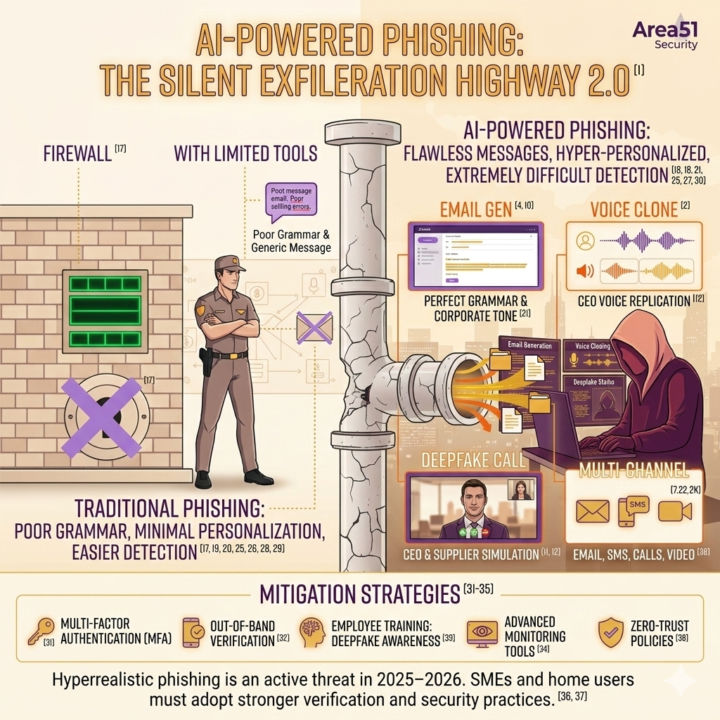
Hyperrealistic Phishing with Generative AI (2025–2026)
Executive Summary Phishing has transformed into a new generation of attacks powered by generative AI. Fraudsters now deploy flawless emails, cloned voices, and deepfake video calls to bypass traditional defenses. This evolution poses severe risks for small and medium-sized enterprises (SMEs) and home networks, where verification processes are often minimal. How It Works - Generative AI models produce corporate-style emails and chat messages indistinguishable from legitimate communication. - Voice cloning replicates executives’ voices using publicly available recordings. - Deepfake video calls simulate real-time meetings with avatars of CEOs or suppliers. - Multi-channel campaigns combine email, SMS, and calls to reinforce credibility. Documented Cases (2025–2026) - Kaspersky Q2 2025 Report: Recorded a 41% increase in phishing attempts in Europe, blocking over 142 million malicious clicks in a single quarter. Many campaigns used AI-generated content and voice cloning. - Trend Micro 2025 Analysis: Identified spear-phishing campaigns infiltrating ongoing email threads, generating context-aware replies with AI. - Europol Cybercrime Centre (2025): Issued warnings about deepfake-enabled Business Email Compromise (BEC), where fraudsters impersonated executives in video calls to authorize wire transfers. Impact on SMEs and Home Networks - Financial losses: Fraudulent transfers ordered via cloned voices of CEOs. - Credential theft: Employees tricked into revealing login details. - Operational disruption: Malware delivered through convincing attachments. - Reputation damage: Customers and partners deceived by fake communications. Recommendations 1. Multi-factor authentication (MFA): Prevents stolen credentials from granting access. 2. Out-of-band verification: Confirm financial requests via independent channels. 3. Employee training: Awareness of deepfake calls and AI-generated fraud. 4. Advanced monitoring tools: Detect anomalies in communication patterns. 5. Zero-trust policies: Limit access privileges to reduce attack surfaces.
1
0
Feb 18 •
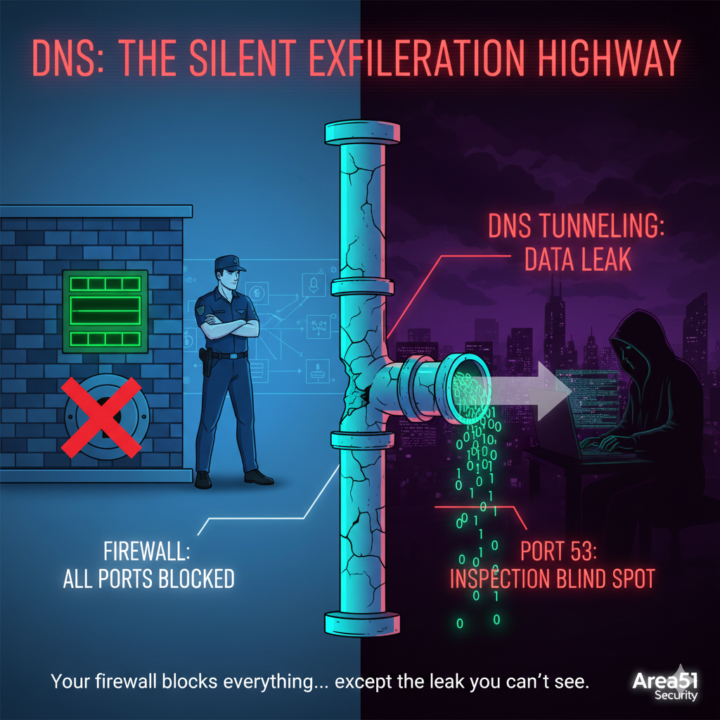
DNS: The Silent Exfiltration Highway
The Hook: Your firewall is blocking everything... except the one port that's leaking your data. - The Core: Most companies leave Port 53 (DNS) wide open. Attackers use "DNS Tunneling" to sneak data out of your network, one small query at a time. It looks like normal web traffic. - The Insight: If you aren't inspecting DNS traffic, you're flying blind. - The Question: Do you know which domains your servers are talking to right now? - - ----🍿 developing solutions, and earlier partnership inside the Area51 group.” -
1
0
Feb 18 •
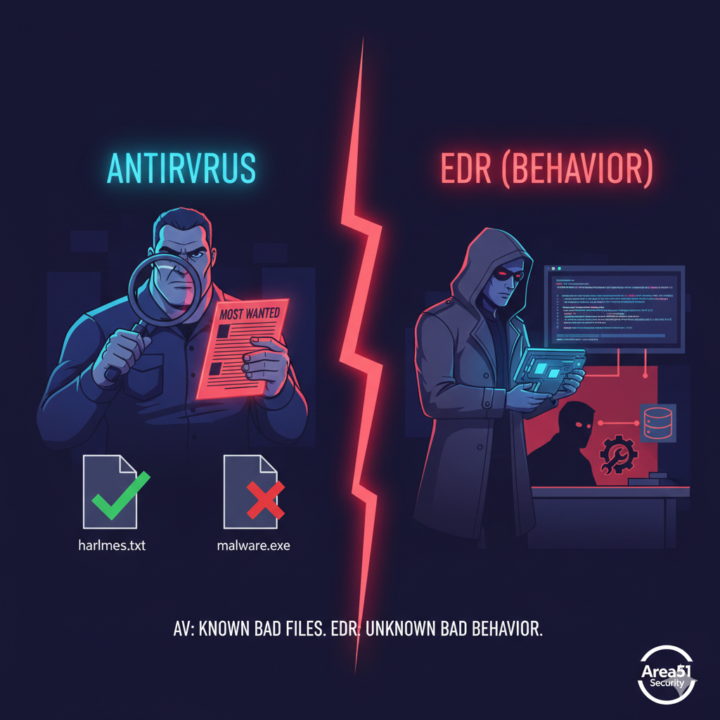
The "EDR vs. AV" Reality Check
The Hook: An Antivirus is a security guard with a "Most Wanted" list. An EDR is a private investigator. - The Core: If an attacker uses PowerShell to encrypt your drive, the AV sees a "trusted Windows tool" doing its job. The EDR sees a suspicious pattern of behavior. - The Insight: Prevention is ideal, but detection is mandatory. - The Question: If a legitimate admin tool started behaving like a wiper, would your system even blink? - - ----🍿 developing solutions, and earlier partnership inside the Area51 group.”
1
0
Feb 18 •
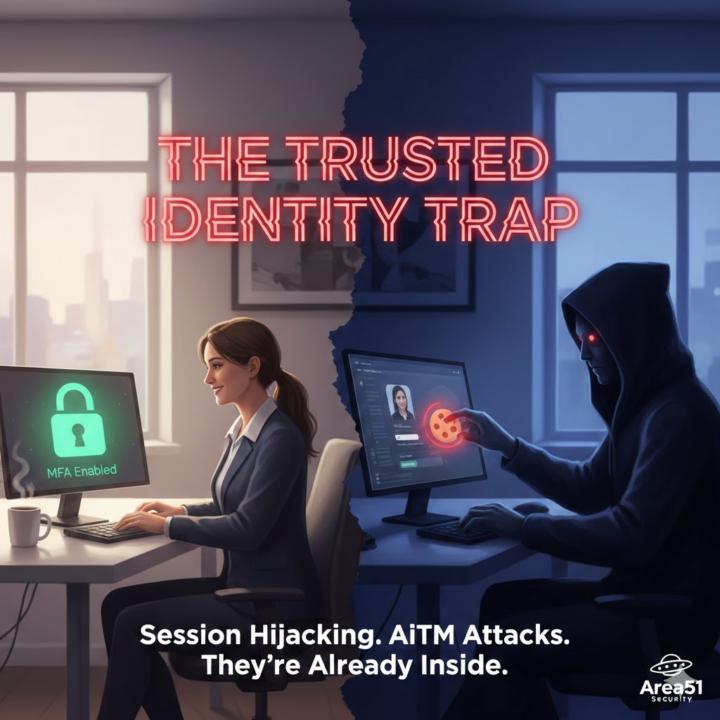
The "Trusted Identity" Trap
The Hook: Your biggest threat isn't a hacker. It's your most trusted employee's login at 3:00 AM. - The Core: MFA is no longer a "silver bullet." Session hijacking and Adversary-in-the-Middle (AiTM) attacks can bypass traditional MFA by stealing browser cookies. - The Insight: Attackers don't "break in" anymore; they "log in." - The Question: Are you monitoring where logins come from, or just assuming the password + code is enough? - ----🍿 We’re diving deeper into this inside the Area51 group.
1
0
1-9 of 9