
Write something

9d •
The Quest for Authenticity
I have a different take on this. - DON'T! I was recently reminded by a great speaker coach, Miriam Chancellor (whom I met several years ago at the New Zealand Public Speaker Association, where I was presenting). Miriam suggested that focusing first on Effectiveness is far more important than focusing on Authenticity. I agree. But I would go further. As long as you are focused on your message and not trying to be someone else, you never have to think about Authenticity. You may have heard that writers take some time to find their 'voice'. -That is how they 'sound' or feel in their writing. Are they being inauthentic because their writing doesn't match their day-to-day speaking voice? Not at all. We all have different voices in our lives. We have our work voice, our sports voice (for whatever pastime you pursue), our family voice, our Zoom voice, our big occasion voice, our intimate voice. And yes, our stage voice. We will talk a little differently from the stage than we will in other contexts. That is to be expected. And that voice we use is still our voice if we are true to ourselves and our message and we are not trying to be someone else. The fact that we each have this multitude of 'voices' does not make us inauthentic. It makes us versatile. - Go have a great day. 😃 And see how many voices you use over the course of the day.

8d •
Emotion in Your Presentation is Critical NOT Cringe
We're taught that the best decisions are logical, unemotional ones. But neuroscience tells a different story. Neurologist Antonio Damasio studied a patient, "Elliot," who lost his ability to feel emotions due to a brain injury. Elliot was a successful businessman, husband, and father. After a brain tumour was surgically removed from his ventromedial prefrontal cortex, his life fell apart. His intelligence, memory, and language skills were completely intact. He could solve complex logic puzzles and discuss the philosophical implications of various scenarios. But he lost the ability to use emotions to guide his decision-making. He became pathologically indecisive. Elliot would spend hours deliberating over simple decisions like which pen to use, what restaurant to eat at, or which socks to wear. He could list the pros and cons of every option rationally, but he had no internal "nudge" telling him which one was better. He was stuck in an endless loop of analysis. Damasio developed the Somatic Marker Hypothesis from his work with Elliot, which suggests that emotions serve as a biological value system. - When facing a decision, our brain rapidly associates past outcomes with emotional signals. A gut feeling, a flash of fear, or a surge of excitement. - A negative feeling steers us *away* from a potentially bad choice. - A positive feeling draws us *toward* a potentially good choice. - These emotional signals act as a mental shortcut, allowing us to make efficient decisions without having to painstakingly re-analyse every single variable every time. They are the mechanism that "tells you when to stop thinking and act." The lesson here is that emotions aren't the opposite of rationality; they are its essential partner. They are the value function that tells us when to stop thinking and ACT. Too often, I see business owners, founders, or academics who believe that adding an emotional element to their talk is window dressing. A nice-to-have. In reality, it is essential if you want any action to be taken as a result of your talk.

21d •
Tēnā koutou katoa 🌸
Kia Ora, Thanks for having me on board! I'm a Hamilton-based educator and entertainer. My 23 year old twins and I have been here nearly 5 years, but I was brought up in Edgecumbe and spent 30 years in Christchurch before the earthquakes, 3.5 years in Bluff, and 6 years in Auckland. I'm qualified in Primary, Early Childhood and most recently, Tertiary teaching. I've been a professional musician for 35 years and have gradually morphed into an english/te reo Māori recording artist with a global following building up behind the scenes. I'm also a stand-up comedian/MC and comedy show producer. I like learning and growing within supportive groups of like-minded people and can't wait to try out the intricacies of keynote speaking. Even though I found myself making people laugh during my Mum's funeral speech and making someone else feel a bit sad during parts of my comedy set, I still knew I had something worth working on somehow! I'm looking forward to getting to know you on this exciting new journey! Ngā mihi e te whānau 🙏 https://linktr.ee/JaqiTaimana

17d •
Updates:
Just an update on what is happening with the community. I am currently working on re-recording the intro to TEDx speaking course. I want this to be a strong valuable free course that will absolutely help anyone who is considering doing a TEDx or TEDx-style talk. I also intend to do a similar starter course for founders and business owners based on my 'Pitching Pyramid' framework. I have recorded a couple of testimonial videos with speakers from TEDxUoWaikato 2025, and will get to editing those together before the end of the year. - Please book a time if you want to record one of these videos. 🙏 My priority is the TEDx Course but close behind that is to get some useful videos done for my YouTube channel which I will share with you as well - of course! I have lined up a couple of people to do some hot seats, on live calls which will be recorded and will be available for the community. -It is amazing how much we can learn by looking at someone else's talk, and the feedback for them. I want to set up a regular monthly schedule for these calls, which will be added into the calendar tab in the community (currently this is hidden as I have nothing scheduled). Ultimately I want to offer some paid courses and coaching options, but I first want to build the community to be a valuable free resource, that is better than many of the paid ones already out there. The biggest part of that will be a community that is not afraid to ask for help and to offer assistance or feedback to those wanting it. - And that comes down to you. So if there is anything you would like to see here, leave a comment below. This isn't my community, it is your community, you get to shape it.

Sep 22 •
So You Want to do a TEDx Talk?
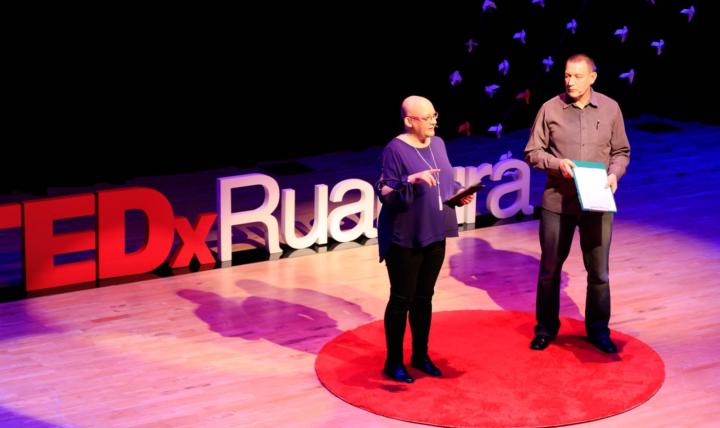
For those of you who want to know a bit more about the whole TEDx process, pros and cons of doing a TEDx talk, I have put together a few short videos in a classroom for anyone who joins this free community. I am working on a similar free classroom for pitching. Please feel free to give me feedback on them, anything you think I need to include there that I have missed. Enjoy.
1-27 of 27
powered by
skool.com/compelling-communicators-3405
A group for people who are passionate about compelling verbal communication and want to learn more about speaking or pitching from the stage.
Suggested communities
Powered by