
21h • 🚨 Help & Troubleshooting
Hand Them the Keys, Not a Wrench
I've seen the same worry come up in here a few times: how do I roll ICM out to my team when they don't know what ICM is?
What I found onboarding my own team: don't teach them ICM.
I drive a truck. I couldn't tell you much about what the catalytic converter is doing, and I've never needed to. That's the manufacturer's problem and the mechanic's problem. What I need is the turn signal, the brake, the gas, and how to parallel park.
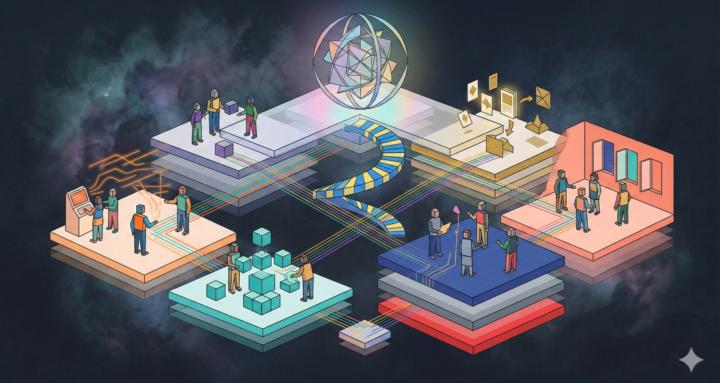
Same split in my ICM workspace. My teammates have never seen the routing table. They don't know there are four context layers or how the skills load.
What they got instead:
- A blueprint workspace that installs the structure for them. Folders, agents, and conventions already in place.
- A short list of commands I built: sync to GitHub, archive your session.
- The furniture: inbox for raw files in, outbox for deliverables out, writing room for drafts.
- The agent roster: Who they can talk to and what each one owns.
- Client folders: the source of truth for each client.
What I still teach is driver's ed: session hygiene, prompting, security discipline. How to use the system, not how the system works.
The proof landed this week. Tom, my podcast co-host — an English major, first time ever in VS Code — built his own writing agent in about 15 minutes. He didn't learn the engine. He drove the car. Almost 2 years worth of of doctrine and structure underneath were already there, and he never had to open the hood.
We're the manufacturers and the mechanics. Our job is to build systems where the people we hand the keys to never have to think about the transmission.
14
17 comments
Hand Them the Keys, Not a Wrench
skool.com/cliefnotes
Jake Van Clief, giving you the Cliff notes on the new AI age.
Leaderboard (30-day)
1

🔥
+1603
2

+1442
3
+1146
4

+620
5

+415
Powered by