

3h •
Collaboration over Competition | Wins Every damn time.
This is my new saying!! We were taught to compete way before we were taught to collaborate. Somewhere along the way, a lot of us learned that if someone else is building something similar, they must be a threat. If they are winning, it means there is less room for us. If they have a skill we do not have, we should feel behind. If they are in the same space, we should watch them instead of talk to them. And honestly, that mindset keeps people building alone way longer than they need to. One of the biggest shifts I have been sitting with is this idea of “who, not how.” Instead of asking, “How am I going to figure all of this out by myself?” the better question is, “Who already understands this? Who can I learn from? Who can I support? Who is on a similar mission, but bringing a different piece of the puzzle?” That does not mean you hand your business to random people. It does not mean every person in your industry is your bestie. And it definitely does not mean ignoring discernment, because some people are not collaborators, they are extractors with a smile. But the right people? The aligned people? The people who care about the mission, the work, the service, and the bigger picture? Those people are not competition. They are leverage. They are mirrors. They are bridges. They are referral partners. They are sounding boards. They are the “who” that helps you stop drowning in the “how.” When you collaborate with good people, everyone gets stronger. You share perspective. You shorten learning curves. You make better introductions. You help each other see blind spots. You build trust faster. You create more value than either person could have created alone. And that is the part people miss. Collaboration is not about giving away your edge. It is about realizing your edge gets sharper when you are in relationship with people who are also building, learning, and serving. We do not need more people silently competing from across the room. We need more people saying, “I see what you are building. I respect it. How can we support each other?” There is enough opportunity for good people doing good work. There is enough room for different voices, different strengths, different offers, and different paths.
1
0

5d •
"New classroom just dropped inside Business Lab"
This one is for the people who have 47 tabs open in their brain and somehow still feel like they are missing the one thing they actually need. 💥The new Gemini Workshop: Tools, Tips, Tricks is now live!!!💥 And the whole point is simple: business owners do not need more random AI noise. You need better questions, cleaner workflows, and simple ways to use these tools without turning your whole day into a tech scavenger hunt. Inside the classroom, you’ll find help with asking better questions, turning the messy starting point into something usable, building a workflow blueprint with easier steps, and even a Gemini avatar video prompt you can use as a starting point. This is not “go learn another tool and good luck.” This is “bring the mess, ask the better question, build the next step, and actually use what you learn.” If your ideas are scattered, your content is half-started, your systems are living in your head, or AI still feels like a giant drawer full of random buttons, go check out the new classroom. Start with the first lesson, then tell us this: What is one thing you want Gemini or AI to help you make easier this week?

5d •
"We are not short on ideas"
We are most likely drowning in half-captured ones. The random note in your phone. The voice memo you forgot about. The screenshot you took because it “might be useful later.” The thing you told AI at 11:47 PM and never came back to. The conversation in a community that sparked something good, then disappeared under the next notification. That is not a creativity problem. That is an idea-handling problem, and this is where a lot of people accidentally turn AI into another junk drawer. They brain dump into ChatGPT, Gemini, Notebook, Claude, whatever they are using, then think the work is done because the thought is “saved.” But saved is not the same as usable. A messy brain dump becomes valuable when it gets turned into one of three things: a decision, a system, or a next step. If it does not become one of those, it is just digital clutter wearing a better outfit. The move is simple, when you dump an idea into AI, do not stop at “organize this.” Ask it: 👉“What is the actual business problem inside this?” 👉“What decision do I need to make from this?” 👉“What should I do with this in the next 7 days?” 👉“What can become a post, process, offer, email, or conversation?” 👉“What should I ignore for now?” That is where the leverage is. AI is great at catching the mess, but you still need a way to move the mess through the business. Capture it. Sort it. Decide what matters. Turn it into one useful action. Then actually ship the damn thing. The goal is not to have a smarter pile of ideas. The goal is to build a business where your best thoughts do not keep getting lost before they have a chance to become useful. 🚨 What is one idea, note, screenshot, or messy thought you have been sitting on that needs to become an actual next step this week?
2
0

6d •
Quick Business Lab Tip: Sell The Relief, Not The Tool
One of the biggest mistakes people make when selling systems, AI, automation, or operations help is leading with the tool. “We can automate your follow-up.” “We can build you a workflow.” “We can set up AI.” That might be true, but it is not usually what the business owner is emotionally buying. They are buying relief. They are buying fewer missed messages, fewer forgotten leads, fewer late-night admin sessions, fewer “Did anyone ever follow up with them?” moments. The tool matters, but the tool is not the hook. The pain is the hook. A better way to explain what you do is to connect the system to the moment it fixes. Instead of saying, “We automate your lead follow-up,” say, “We help make sure interested leads do not sit unanswered while you are working, sleeping, or dealing with everything else in the business.” Instead of saying, “We build workflows,” say, “We help create a clear process so the right person knows what needs to happen next.” Before you explain the system, ask yourself: What does this help them stop worrying about? What time does this give back? What mistake does this prevent? What part of the business gets calmer? That is the value stack. The system is what you build. The relief is what they buy.
2
0

11d •
The Right Tool Will Not Fix the Wrong System
Most business owners do not need another tool. They need to understand what they are trying to make work. A CRM cannot fix an unclear sales process. An automation cannot fix a follow-up process nobody has defined. A project management platform cannot fix a team that does not know who owns the next step. AI cannot fix a workflow that changes every time someone touches it. 💥 Before choosing software, understand the difference: 💫A system is how the work moves. 💫A process is the sequence of steps. 💫A tool helps people complete those steps. 💫The tool should support the system. It should not become the system. 💫The Right-Fit Tool Check 💥Before buying, replacing, or connecting another tool, answer these questions: 1. What specific problem are we solving? Name the actual breakdown. “We need a CRM” is not a problem. “New inquiries are sitting unanswered because nobody knows who owns them” is. 2. What should happen from beginning to end? Write the workflow in plain language before trying to automate it. For example: A new inquiry comes in. The right person is notified. The customer receives a response. The conversation is tracked. Follow-up happens. The outcome is recorded. 3. Who owns each step? Every important step needs a person responsible for making sure it happens, even when technology performs part of the work. 4. Can something we already have do the job? Many businesses are paying for several tools while using only a small part of each one. Check what your current software can do before adding another subscription. 5. Will the team actually use it? The most powerful platform is worthless when the people responsible for using it find it confusing, avoid it, or create workarounds. 6. How will we know it is working? Choose one measurable result. Faster response times. Fewer missed inquiries.More appointments booked. Shorter onboarding time. Fewer tasks falling through the cracks. Better visibility into what is happening. How to Implement the Tool Properly Do not roll out everything at once. Start with one workflow. Assign one owner. Test it using real scenarios. Fix what breaks. Document the steps. Train the people involved. Measure the result.

1-17 of 17
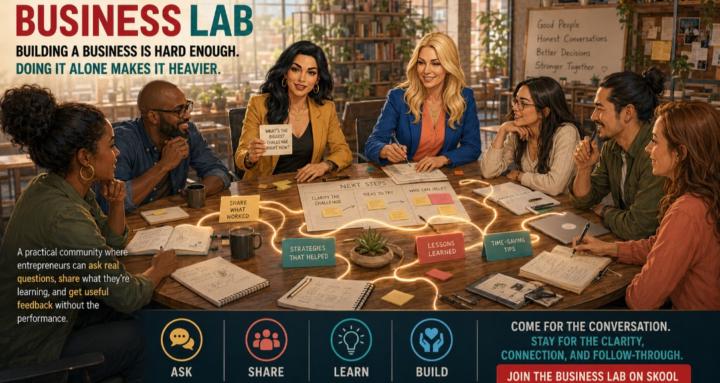
skool.com/busines-lab-5864
Your system/tools, should automate the work. NO BS Community, Real Accountability, Real Growth! Scale faster with founders actually doing it!
Leaderboard (30-day)
1

+9
2

🔥
+4
3

+3
4

+3
5

+2
Powered by