
Write something
Pinned

Apr 5 •
START HERE - For all the New Members
Welcome to the CyberCircle Community — your place to learn cybersecurity, grow your skills, and connect with others on the same journey. 🚀 Whether you’re a complete beginner, changing careers, or just getting started, you’re in the right place. What You’ll Find Here: 👉 Daily Quizzes: Fun and interactive Security+ prep to sharpen your skills. 👉 Important Cyber News: Stay updated with the latest industry news. 👉 Job Application Tips & Hacks: Insider tips to land your dream job in cybersecurity. 👉 Free Resources: Everything you need to kickstart your cybersecurity career for FREE. Create your First Post Introduce Yourself! 1. Your Name. 👋 2. Where You’re From. 🌍 3. Your Experience: e.g. Are you a beginner, making a career change, or a recent graduate? 🧑💻 4. What Inspired You to Start Cybersecurity? 💭 🛠 How to Use the Skool Platform 1. Have a Question? 🧐 Create a post in the Questions category. 2. Classroom Section: ✅ Access your free Cybersecurity Fundamentals Course 3. Calendar: 📅 Find upcoming calls or events. If you haven’t already share your linkedin Page and nectwork. I’ll also be here to support and answer your questions along the way. Let’s make this the BEST space for growing cybersecurity talent! ✨
Pinned
Apr 6 •
📌 Your Cybersecurity Roadmap 🔐🚀
If you're new or unsure where to start…Follow this step-by-step path and don’t overthink it. 🔰 PHASE 1: Understand the Basics (Week 1–2) Start here if you’re a beginner. Learn: - What cybersecurity is (Blue Team / Red Team / GRC) - Common threats (phishing, malware, brute force) - Basic networking (IP, DNS, ports) - Windows + Linux fundamentals 🎯 Goal: Understand how systems and attacks work 🧠 PHASE 2: Build Core Skills (Week 2–4) Now you start thinking like an analyst. Focus on: - Logs (Windows Event Logs, login activity) - SIEM basics (how tools like Splunk work) - Endpoint security (EDR tools like SentinelOne) - Identity & Access (logins, MFA, authentication) 🎯 Goal: Understand what to look for in real security data 🛠️ PHASE 3: Hands-On Practice (Week 3–6) This is where most people fail — don’t skip this. Do: - Set up a home lab (Windows + Linux) - Generate your own logs - Practice analyzing activity - Simulate simple attacks 🎯 Goal: Gain real experience (this is what gets you hired) 🔎 PHASE 4: Threat Detection (Week 5–8) Learn how to investigate like a real analyst. Focus on: - Login failures & suspicious activity - Event IDs (4625, 4769, etc.) - Malicious domains & phishing detection - OSINT tools (basic reputation checks) 🎯 Goal: Be able to analyze alerts confidently 📜 PHASE 5: Certifications (Parallel Track) Start preparing while learning. Recommended: - CompTIA Security+ (foundation) - CompTIA CySA+ (next level) 🎯 Goal: Validate your knowledge + boost your resume 💼 PHASE 6: Get Job Ready (Week 6–10) This is where you position yourself to get hired. Do: - Build a strong cybersecurity resume - Add your lab as “experience” - Optimize your LinkedIn - Start applying consistently 🎯 Goal: Start getting interviews 🎤 PHASE 7: Interview Prep (Ongoing) Prepare BEFORE you get the interview. Practice: - “Tell me about yourself” (cyber version) - Basic technical questions - Scenario-based answers
0
0
Apr 21 •
you need to practice communication.
Cybersecurity students: you need to practice communication. Nobody cares how smart or technical you are if you can’t communicate effectively. Honestly, a lot of people already in the field need to work on it too, but as as a student you have the bigger advantage of getting ahead of it now. Technical skills can be taught to almost anyone. Communication is what bridges the gap between you and someone more technical, and it's what wins interviews when the other candidate has more years on paper. Being a good communicator is like a cheat code. Three things to start practicing: 1. Writing a one paragraph risk summary that a non-technical person can act on. Choose a CVE, vulnerability, etc, and pretend you're drafting a risk assessment and recommendations to management. Act through the whole process. 2. Presenting a technical topic to someone with no technical background and holding their attention the whole way through. Ask your family and friends if you can explain a technical topic to them, see if they understand it. (Don't bore them too much) 3. Sitting in disagreement without getting defensive. A lot of security work is telling people things they don't want to hear. This is hard to practice, it takes a lot of reps. You also need to know how to say no, negotiate, and compromise. If you can somehow bring these skills up in an interview with relevant examples and you'll stand out. Not only that, but you will likely interview better as a result of better communication too. #cybersecurity #infosec #communication
0
0
Apr 11 •
You can start your cybersecurity journey today without spending a single dollar.
No connections. No expensive courses. No excuses. Here are free, high-quality resources that can take you from beginner to job-ready: 🛡️Learning & Certifications • Fortinet Training (NSE 1–3): https://lnkd.in/g9jyZ4-K • Cisco Skills for All: https://lnkd.in/ghwR9rmP • Splunk Free Courses: https://lnkd.in/g53jMVAU • Microsoft Learn (SC-900 / SC-200): https://lnkd.in/gxHdkU_m • Google Cybersecurity Certificate (Coursera – Free Trial Available) 🏁 Hands-On Practice (Where real skill is built) • CyberDefenders: https://lnkd.in/ghM7ruDJ • PortSwigger Web Security Academy: https://lnkd.in/gSutcjB8 • OverTheWire: https://lnkd.in/e_Q_-vKQ • LetsDefend: https://letsdefend.io/ • TryHackMe (Free Rooms Available) 🏗️ Project Ideas & Resources (What actually gets you hired) Add these to your portfolio or GitHub to show employers you can build and defend: • Wazuh (Build a Home Lab SIEM): https://lnkd.in/gbS2x5vj • OWASP Juice Shop (Practice Web App Exploitation): https://lnkd.in/gKapsvqU • The Malware Museum (Malware Analysis & History): https://lnkd.in/g5FPczrg • Splunk Free Training (Detection & Logging): https://lnkd.in/g53jMVAU • YARA Rules (Build a Simple Malware Scanner): https://lnkd.in/geBNQzkQ 💡 Pro Tip: Don’t just consume content. Document everything. Write LinkedIn posts. Build in public. Share what breaks, what you fix, and what you learn. That’s how you stand out. Consistency on these for 3–6 months will put you ahead of most beginners. Share it may help someone!!
0
0

Apr 10 •
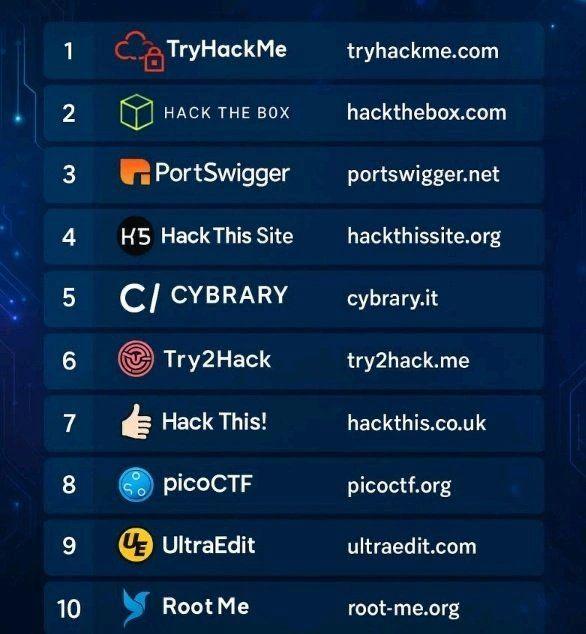
Top Cybersecurity Platforms for Beginners!
Top Cybersecurity Platforms for Beginners! If you want to start a career in cybersecurity and boost your skills, these are the best places to learn hands-on: TryHackMe | Hack The Box | PortSwigger | HackThisSite | Cybrary | Try2Hack | picoCTF | Root Me | UltraEdit Start your journey today and level up your cybersecurity career!
0
0
1-22 of 22
powered by
skool.com/breaking-into-cybersecurity-1366
Start your cybersecurity journey, learn core skills, prepare for certifications, and build a path into the industry. Get the roadmap you need.
Suggested communities
Powered by