
Write something

2d •
Cross-cultural conundrums*
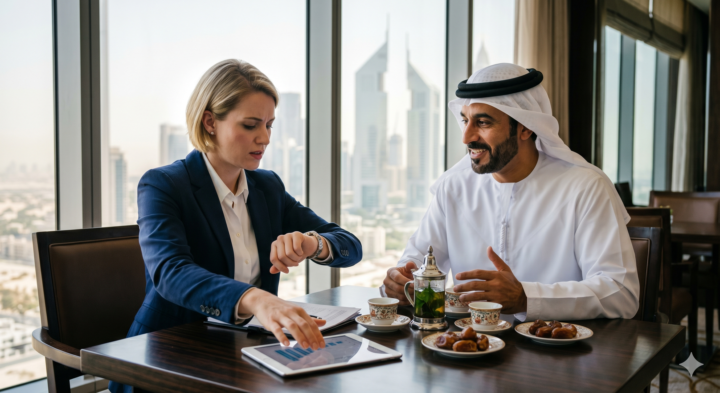
Welcome to Cross-Cultural Conundrums, a series of ten real-world scenarios exploring what happens when people from very different cultures engage. Spanning business, love, family, and friendships across the globe, these mini-dramas aren't about who is right or wrong—they’re about the awkward, funny, and deeply human misunderstandings that happen when we forget to read between the cultural lines. _________________ 1. The Deal vs. The Coffee (Business) The Meeting: Chloe (Germany) & Tariq (United Arab Emirates) Chloe, a project manager from Frankfurt, has exactly 45 minutes to pitch a software solution to Tariq, a potential partner in Dubai. She arrives precisely on time, iPad ready, and dives straight into the slide deck. Tariq, however, waves away the tablet and insists on ordering mint tea, asking extensive questions about Chloe’s journey, her impression of the city, and her family's well-being. Chloe keeps trying to steer the conversation back to the KPIs and deadlines, visibly checking her watch. Tariq becomes increasingly formal and reserved, feeling her impatience is disrespectful. The 45 minutes expire with the contract unsigned, Chloe frustrated by the "wasted time," and Tariq questioning if he wants to do business with someone so cold. _________________ *I asked AI whether "conundra" was more correct and learned something new "Yes, conundra is sometimes used as a plural, but it’s actually a bit of a linguistic joke! The most common, widely accepted, and historically accurate plural is conundrums. Here is the backstory on why "conundra" is a bit of a trap: - It’s not actually Latin: Words like memorandum become memoranda because they are real Latin words. Conundrum, however, was coined in the late 1500s, likely by university students at Oxford as a piece of fake-Latin slang or a joke term of abuse. - The "Hypercorrection": Because it sounds like Latin, people later assumed it should follow Latin grammar rules, creating the plural conundra.
1
0
4d •
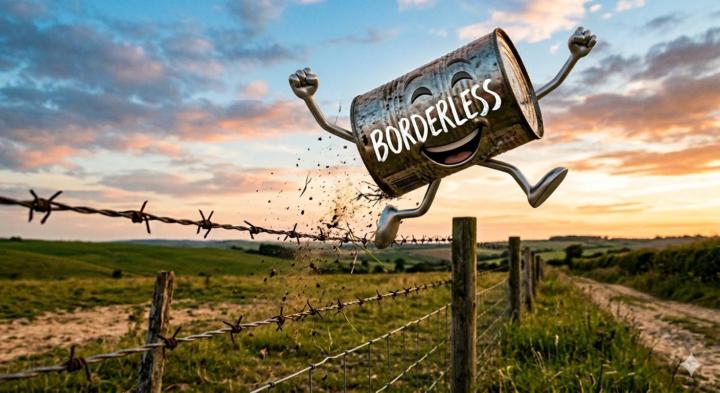
The Goal of Borderless
Another take on our mission here is to bring people together from around the world. discuss different aspects of life and explore commonalities and connections, across borders. We don't have to strive to be cross-cultural. We are already it. We just have to lean into it and celebrate it. We won't always be discussing world peace, although Lord knows we need that right now. We might also be talking about world pizza (mine's a capricciosa, naturalmente). The point is just to hang out, to reach out across frontiers and walls, and to cherish the fact of being in this together as yuman beans from all cultures, all faiths and none, all sexualities and none all ages. I was going to add and none but my brain wouldn't compute the thought. Do join us. It's free of charge and it's going to be fun.
4d •
How this will work.
I'll kick off with a question each day. Something simple like "What's the meaning of life?" or "In a parallel universe, would religion matter?" Just kidding. We can all then pitch in with opinions: affably expressed, gently challenged. Anyone else can post as well. I'll approve posts at the beginning, just as we settle in, but will lift that very soon. so that my administrative role is minimised. In time we may have rotating admins. Like dervishes. _____ It goes without saying that any of the 'orrible -isms (rac-, sex-) or social -phobias (I'm thinking homo- or Islamo- rather than arachno-) will lead to a warning, a chance to reflect, then a ban if reflection proves too challenging. As the community grows. we can truly explore different perspectives. There are already at least 30 nationalities here already. Let's enjoy the journey!
1
0

4d •
Welcome to Borderless.
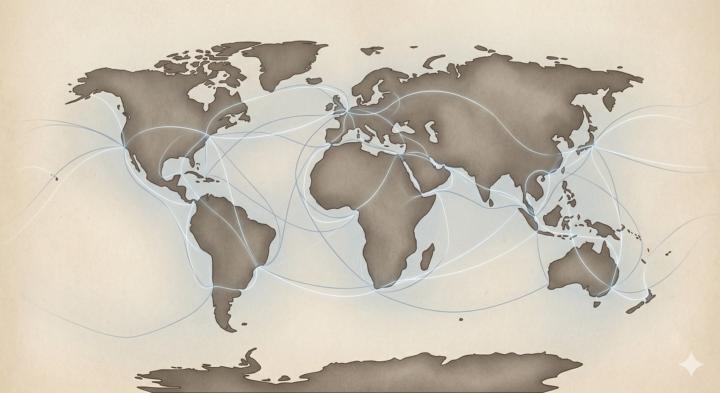
Leave the noise of the world at the door. You've entered a space designed for the curious, the cultured, and the courageous (of mind – here be no dragons!) In this space, we believe that the most profound discoveries happen at the intersection of different cultures. Whether you're here to share the wisdom of a lifetime or the spark of a new perspective, you're a vital part of the tapestry. Our Philosophy: - No Silos: We trade in ideas, not labels. - Active Listening: The most brilliant "little knots" are formed when we listen as intently as we speak. - Cultural Fluidity: We celebrate the diverse backgrounds that inform our unique viewpoints. So find a seat, join a circle, and let the conversation flow. There are no limits to where a single thought might take you. And no borders – beyond those of common decent humanity – to stop that journey.
1
0
1-4 of 4
powered by
skool.com/borderless-7018
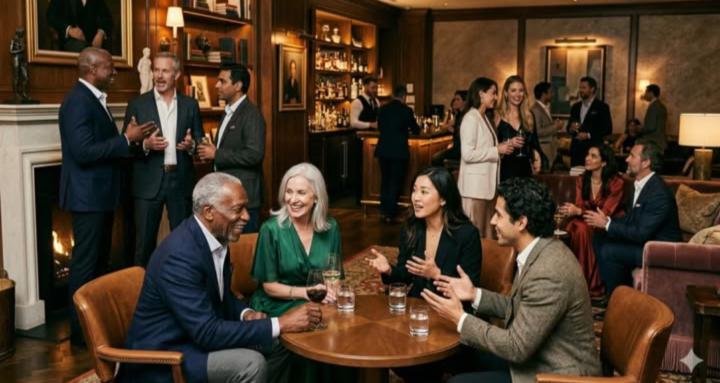
A world without borders and a global forum for cross/cultural communication. Diverse perspectives united by a shared appetite for depth.
Suggested communities
Powered by