
Write something

Feb 24 •
You Don’t Have a Time Problem — You Have a Load Problem
Most time management advice assumes everyone has the same: energy, responsibilities, recovery time, or flexibility. But that’s not real life. If you feel behind, overwhelmed, or like you “can’t manage it all,” it’s probably not because you’re bad with time — it’s because you’re carrying too much at once. Try this today: 1. Write down everything you’re responsible for (not just tasks — roles, expectations, mental load). 2. Circle what actually drains you. 3. Notice what never gets accounted for when you plan your day. That’s the constraint. And you can’t manage what you don’t acknowledge. This is exactly why I teach time management using DMAIC — not hustle, not discipline, but: - Define what’s actually on your plate - Measure how long things really take - Analyze where overload is happening - Improve by adjusting expectations (not willpower) - Control so you don’t reset back to chaos ✨ If you want the full breakdown, tools, and workbook, the DMAIC Time Management class is inside the Skool community.
2
0
Feb 12 •
Creating Environments That Support Your Habits
Most habit change fails because the environment stays the same. If the environment doesn’t support your habit then you are making your discipline work overtime. Here are a few practical ways to create a supportive environment: - PHYSICAL: Put the habit where you can see it and remove what competes with it. If starting requires extra steps, it won’t last. - DIGITAL: Your attention follows what’s loudest. Mute, remove, or reorder anything that pulls focus away from the habit you’re trying to build. - TIME: Habits stick when they fit your natural energy, not when they’re forced into your most exhausted hours. - SOCIAL: You don’t need everyone’s support, but you do need fewer people undermining the change. Behavior normalizes to the room. - WORK: If your day is reactive, habits become optional. Structure your work so focus isn’t constantly interrupted. - EMOTIONAL: Reduce pressure and self-judgment. Habits that feel heavy or punishing don’t get repeated. You don’t need more motivation — you need fewer environmental contradictions. Which environment is quietly working against the habit you’re trying to build right now?
2
0

Jan 29 •
The Moment You Realize This Is Just Your Life Now
After motivation wears off, there’s a moment when something stops feeling exciting and starts feeling normal. That moment isn’t failure — it’s the handoff point. Motivation got you started. Consistency is what carries it forward. I talk more about this in the video on what happens after motivation wears off. Here’s a simple way to support yourself when things stop feeling new. ✨ Tool: Habit Stacking (Make It Real): Instead of adding something big, attach something small to what you already do. Examples: - While your coffee is brewing, do 10 squats. - After you brush your teeth, stretch for 30 seconds. - When you sit down at your desk, write one sentence. - After you open your laptop, review one task — not your whole list. Stack similar energy with similar energy: movement with movement, thinking with thinking, setup with setup...The habit doesn’t need to be impressive. It needs to be repeatable. ✨ Watch the video, then reflect: What’s one small thing you could do consistently — even if it feels almost too easy? Because it’s always better to be consistent with a small something than inconsistent with a big anything 🤎
2
0
Jan 24 •
This Is Why New Things Feel Hard (and what actually helps)
New things don’t feel hard because you can’t do them. They feel hard because they’re unfamiliar — and unfamiliar work creates uncertainty. Your brain reads uncertainty as risk. That’s normal. Nothing is “wrong.” Instead of trying to push through that feeling, here are two simple problem-solving tools you can use when something new feels heavy. 1️⃣ Shrink the problem: Use this when starting feels overwhelming. Ask yourself:👉 “What is the smallest thing I can do right now?” Examples: - open the document - write one sentence - outline one step You’re not trying to finish. You’re just making the work clear enough to start. 2️⃣ Do a first pass: Use this when you’re stuck trying to do it “right.” Think in one simple loop: - Plan: What’s my best guess? - Do: Try it once. - Check: What worked? - Adjust: Fix one thing next time. You’re not committing — you’re testing. 💡 Discomfort doesn’t mean stop. It usually just means you’ve never done this before. Watch the short above, then reply below:👉 What are you working on right now — and does it feel too big or too uncertain?
2
0
Jan 12 •
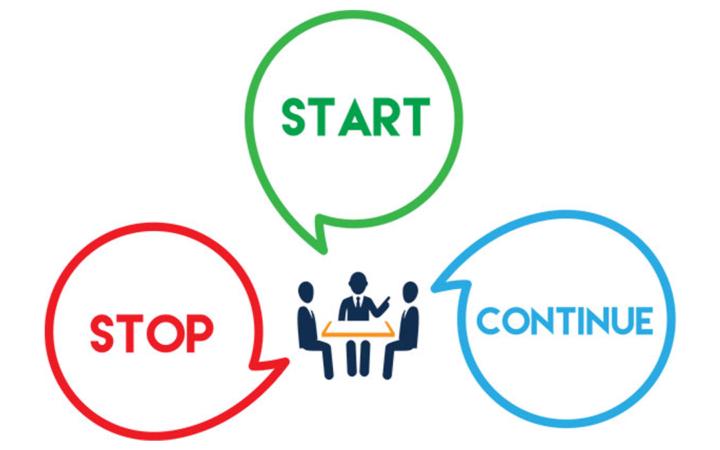
Start / Stop / Continue (5 min.): Reset tool
Here’s a simple Reset tool you can use anytime things feel cluttered or heavy: Start / Stop / Continue Grab a piece of paper and write three columns: START: What’s one thing you know would help, but you haven’t started yet? STOP: What’s draining time or energy that doesn’t need to continue right now? CONTINUE: What’s working that you don’t want to accidentally abandon? Don’t overthink it. One item per column is enough. This tool isn’t about fixing everything — it’s about creating clarity so your next step feels obvious. If you want, drop one word or phrase from your list below. (We’ll also be working through tools like this together during the Reset live on Wednesday at 5:30pm PST for anyone who wants to go deeper.)
2
0
1-30 of 31
powered by

skool.com/beyond-lean-performance-1512
Equip your business w/ systems, Lean Six Sigma tools, & leadership skills to streamline operations, boost productivity, and drive profits and growth!
Suggested communities
Powered by