
Write something

Mar 28 •
What Happens to Water when it becomes invisible?
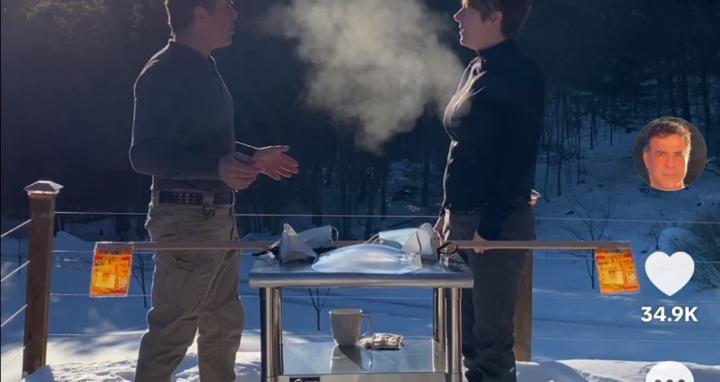
In my latest insight, we redefined the journey of water. Traditionally, we thought of water in three phases: solid ice, liquid water, and vapor or gas. But the terminology often missed something crucial. When water transitions from visible fog-like vapor—often around 20 to 40 microns in size—it becomes truly invisible, still a water molecule but now in a gaseous state. At this stage, it’s still H2O down to a molecular scale—tiny, but still water. Only when it breaks down further—into separate hydrogen and oxygen atoms—does it become a true gas in atomic form. So, when water “disappears” from our sight, it’s just hiding in plain view—still there, just too small to see. This is where the real story begins. This invisible water doesn’t just exist passively—it moves, carries, and interacts with everything around us. It travels through structures, across environments, and even in and out of our lungs, acting as a hidden pathway for biological movement. In upcoming discussions, we’ll go deeper—breaking down how this invisible moisture impacts indoor environments, contributes to structural issues like mold, and plays a role in human health through airborne biological exposure. What we can’t see…Is the most important thing to understand.
2
0
Mar 22 •
The Trojan Horse of Airborne Transmission: How Moisture Carries Infection
Introduction / Article: Every breath you take is not just air—it is a release of moisture from deep within the lungs. That moisture is the true vehicle of airborne transmission. For over 30 years studying mold, moisture, and biological aerosols, I’ve observed a critical misunderstanding: pathogens are not simply “floating” in the air. They are carried within water vapor—microscopic moisture generated in the lungs and expelled with every exhale. On average, a single breath releases approximately 0.028 grams of moisture. Within that moisture can exist millions of virions or bacteria, encapsulated and transported outward into the surrounding environment. This is what I refer to as the Trojan Horse of transmission. The biological material does not travel alone—it is enveloped within this moisture, protected and carried as it leaves the body. Because of its extremely small size, this water vapor remains aerosolized, suspended in the air for extended periods of time, especially in enclosed or poorly ventilated spaces. As this moisture disperses, it becomes part of the air others breathe. When inhaled, that same moisture—now containing a viral or bacterial load—enters another person’s respiratory system, delivering the organisms directly into the lungs. This is the fundamental mechanism of airborne infection. Understanding this changes how we think about exposure. It’s not just proximity—it’s the concentration and persistence of moisture in the air that determines risk. The longer this aerosolized moisture remains suspended, the greater the opportunity for transmission. If you understand moisture, you understand how infection spreads.
2
0

Mar 22 •
30 Years in Mold & Biological Aerosols — What You Should Know
Welcome In! I’m a 30-year accredited scientist specializing in mold investigation, moisture dynamics, and biological aerosol transmission. This space will focus on real-world education—how contaminants move, how exposure actually occurs, and how to properly control indoor environments.
2
0

1-3 of 3
skool.com/avoiding-biological-aerosols
Learn how to avoid Biological threats from mold, viruses and bacteria in real time. I’ll introduce you to the world’s most advance biological insight!
Powered by