
Write something

May 5 •
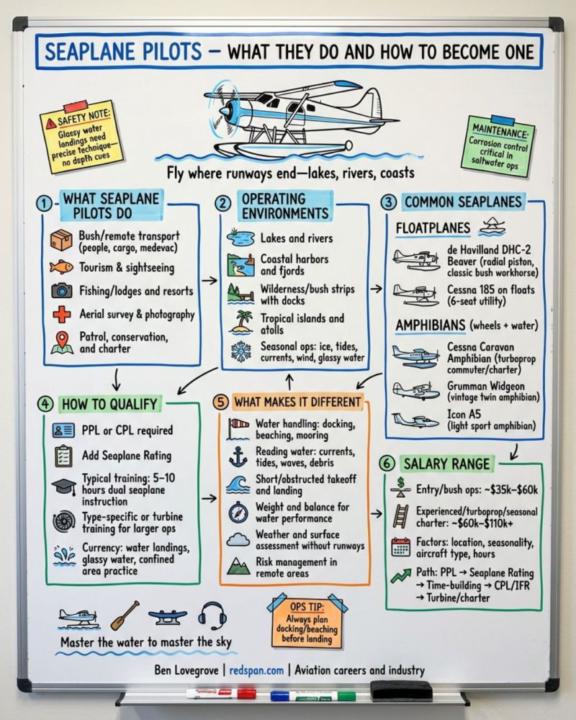
The Role of Seaplane Pilots
There is no runway. There is no terminal. The approach briefing includes a scan for submerged logs. The seaplane pilot operates in a category of aviation that most licences don't cover. A standard PPL or CPL does not include a seaplane rating. You apply for it separately, train specifically for water operations, and enter a world where the rules of the air and the rules of the water apply at the same time. Operating areas include remote Canadian lakes, the Maldives, and the Pacific Northwest. The aircraft ranges from 1930s-era Beavers still flying commercial routes to modern amphibians. The skills required are unusual. Judging water surface texture to assess wind direction. Reading ripples for depth. Managing the transition between taxi and flight without a fixed reference point. It is one of the few ratings that genuinely changes how you think about flying. Most pilots who get it say it's the best flying they've ever done.
0
0
Apr 30 •
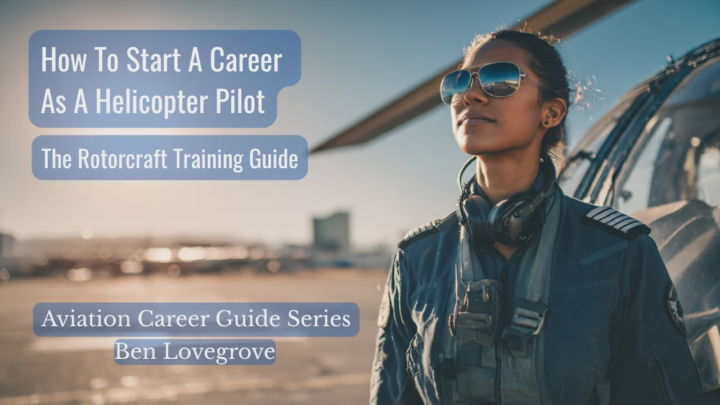
How To Start A Career As A Helicopter Pilot
Master the Controls: Your Definitive Roadmap to Becoming a Helicopter Pilot 🚁 Ready to command the skies in the most versatile aircraft ever built? Stop wasting time and money on generic flight advice. This comprehensive PDF guide is your step-by-step training manual for launching a professional career in rotorcraft operations, whether you aspire to fly EMS missions, support offshore oil platforms, or become a skilled flight instructor. We break down the complexities of vertical flight and provide the clear, strategic plan needed to navigate the demanding pathway from enthusiast to paid professional. What You Will Master Inside: - Rotorcraft Fundamentals: A clear breakdown of helicopter aerodynamics: how lift, thrust, and anti-torque forces work, and the function of the cyclic, collective, and anti-torque pedals. - The Licensing Roadmap: A sequential plan covering the PPL(H) and Commercial Pilot License (CPL(H)), including requirements for cross-country and advanced autorotations. - Medical & Fitness: How to secure your FAA Aviation Medical Certificate with an AME, and the required commitment to health for maintaining aeromedical certification and peak performance. - Choosing the Right School: Critical questions to ask prospective flight schools (Part 61 vs. Part 141), evaluating fleet quality, maintenance, and instructor experience. - Advanced Career Pathways: Detailed insights into specialized roles like EMS/HEMS, Offshore Transport, External Load/Utility Operations, and the training needed (IR, NVG endorsements). - Financial Strategy: Comprehensive cost breakdown for training (£60,000–£100,000+), plus actionable strategies for financing, including the GI Bill and scholarship applications. - Professional Growth: Strategies for building a professional network and utilizing advanced ratings (CFI/CFII) to rapidly accumulate flight hours and secure your first job. Helicopter piloting demands precision and planning. Start your journey with precision. This guide provides the expertise and structure needed to ensure every hour you fly is an effective investment in your future.
0
0
Apr 30 •
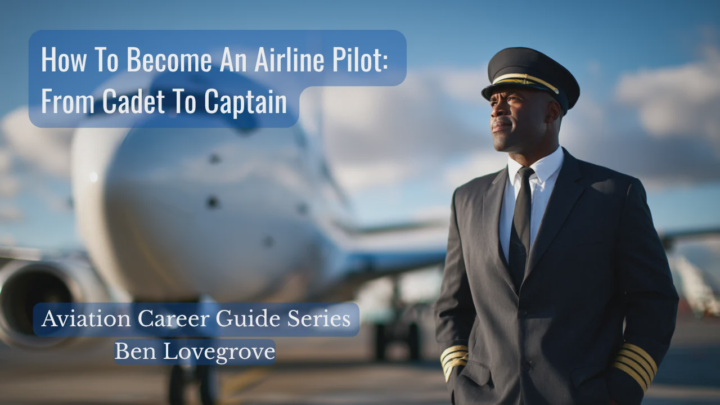
How To Become An Airline Pilot From Cadet To Captain
Stop Dreaming, Start Flying: Your Complete Roadmap to Becoming an Airline Pilot ✈️ Ready to take control of your career and join the elite ranks of commercial aviation? This comprehensive PDF guide is the essential blueprint for every aspiring pilot, offering a clear, strategic path from your very first Introductory Flight to commanding a commercial airliner. Forget fragmented information—we provide the structured, step-by-step roadmap for mastering the training pipeline, accumulating critical flight hours, and succeeding in the airline interview process. This guide is built on professional aviation standards and technical proficiency. What You Will Master Inside: - The Pilot Progression: Navigate the licenses and ratings sequence: PPL, IR, CPL, Multi-Engine, and achieving your Airline Transport Pilot License (ATPL). - Aviation Health & Fitness: Understand the non-negotiable Aviation Medical Examination requirements and how to maintain the physical and mental fitness required for the cockpit. - Strategic Flight Training: How to select the right FAA Part 141 or EASA ATO school, what to expect in Ground School, and how to master Instrument Flying (IR). - Building Experience: The most effective pathways to accumulate the thousands of hours needed, including becoming a Certified Flight Instructor (CFI) and other commercial roles. - Airline Interview Secrets: Master Crew Resource Management (CRM), excel in the Simulator Evaluation, and use the STAR Method to ace your behavioral interviews. - Career Advancement: The structured path from First Officer to Captain, including type ratings, recurrent checks, and continuous professional development. - Financing Your Dream: A detailed breakdown of the true cost of training, plus strategies for securing scholarships and loans. The demands of the flight deck are high—your preparation must be higher. Start building your professional flying career with the confidence of knowing every step ahead.
0
0
Apr 30 •
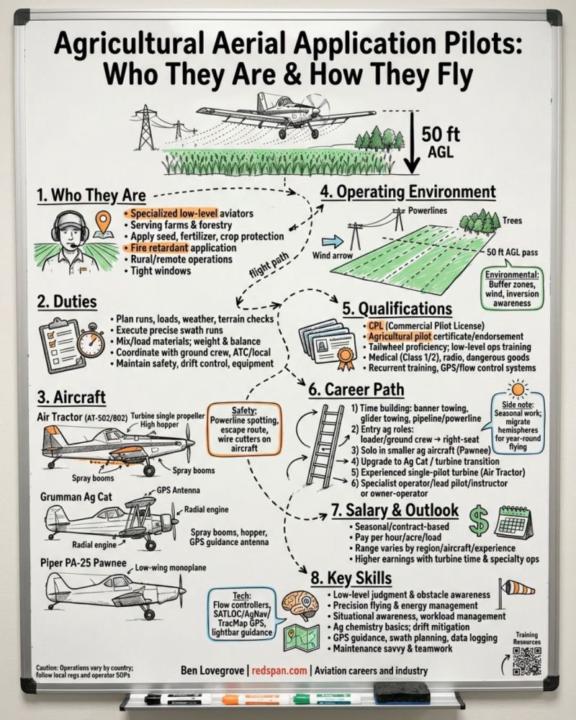
The Ag Pilot or Crop Duster
Most aviation careers have a clear path. This one starts with a crop duster and ends somewhere few pilots ever reach. The agricultural pilot flies lower than almost anyone else with a licence. Fifteen feet off the deck. Sometimes less. At speed, over fields, alone. The aircraft is loaded with chemicals that require precision to the metre. It is one of the most technically demanding forms of flying in existence. The job doesn't appear on career day posters. There are no airline cadet schemes. You find your way in through agricultural operators, banner-towing outfits, or aerial survey companies, and you build hours in conditions that airlines would never permit. Many of the best pilots in the world came through this route. They learned to fly in the real world before they ever saw a simulator.
0
0
Apr 30 •
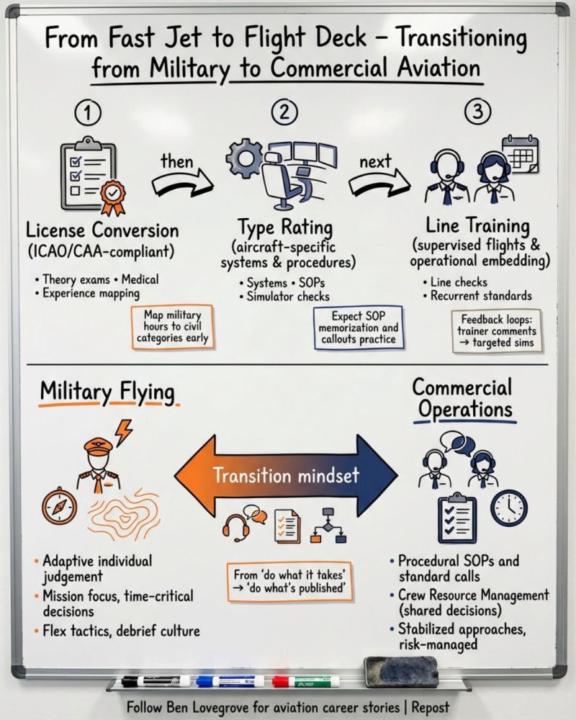
From Fast Jet to Flight Deck
Military pilots arrive in civilian aviation with thousands of hours in aircraft most commercial pilots will never touch. The airlines still make them start almost from scratch. A fast jet pilot might have landed on a carrier at night, flown close air support in three theatres, and accumulated 2,000 hours before they ever sit in an airliner cockpit. They convert their licence, complete a type rating, and join the bottom of the seniority list as a First Officer. The flying skills transfer. The culture doesn't, not automatically. Commercial aviation is procedural by design. Everything is checklist, standard call, SOP. It exists to reduce variability across thousands of crews. Military aviation builds individual judgement. Fast jets are flown by instinct, honed over years of sorties. The two approaches aren't incompatible, but the adjustment takes real time. The pilots who struggle in the transition aren't the ones who can't fly. They're the ones who can't slow down. CRM in a commercial cockpit is more deliberate, more verbal, more collaborative than a fighter environment. Learning to operate at that pace, and to trust the system, is the actual type rating. The ones who make the adjustment well become exceptional airline pilots. Not despite their military background. Because of it, once they've learned to use it differently.
0
0
1-17 of 17
powered by
skool.com/aviation-careers-ben-lovegrove-7860
Your aviation career starts here. Guides, courses and community for beginners and career changers. Airborne and ground-based roles all covered.
Suggested communities
Powered by