
Write something

Jul '24 •
Exploring back-crossing and feminising techniques
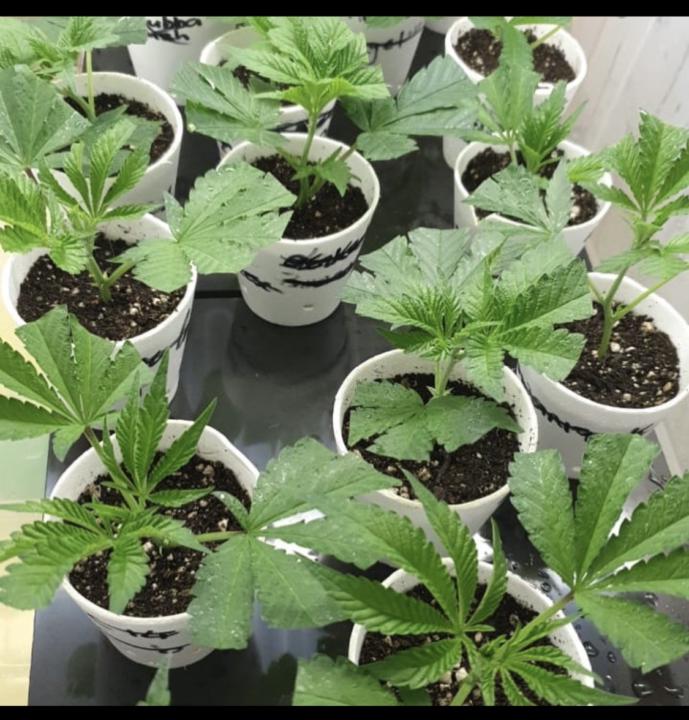
Creative breeding techniques Right so let’s look at some ways we can select and stabilise traits, and how we can use some creative techniques to cause dominant gene expressions or dominant expression of a certain strain making up part of a hybrid. As always I’ll use an example as I believe they are the best way to visualise the actual process. Let’s look back to when “exodus cheese” was first offered in seed form. For those don’t know, exodus cheese, or just exodus as it’s commonly known, was a special expression of the original skunk strain many years ago. The expression was shared far and wide in come form and become quite famous especially around Europe. It wasn’t long until one of the seed companies, I believe in Netherlands, had the idea to try release the strain in seed form. Since it was a “clone only”, we’ll look at the techniques they used to create the first seeds of exodus cheese, and then how they collaborated with another seed company some years later to create feminised exodus cheese, which besides the advantage of being feminized, they were the only and first true exodus cheese seeds made. You’ll see why if you keep reading. So the first strategy was based on breeding knowledge and techniques available at the time. During then, the feminizing process was less known and undeveloped. So what was available was traditional breeding techniques. Their strategy was simple, look at the ancestry of the strain, in this case the all powerful skunk, Mexican and Colombian sativas crossed to an afghani with a roughly 75% sativa dominance. Choose one of the ancestors, they chose the Afghani I guess because the indica would only make it more dense, instead of if they had chosen to use off of the sativas parents. They then did what is known as a back cross. This involves crossing the exodus cheese clone with a chosen afghani male. The resulting seeds are then roughly 50/50 cheese/afghani. Now in order to get something as close to the original cheese as possible, they proceeded to use one of the male offspring (f1’s) and pollinate another exodus cheese clone. They back crossed it. Crossing the offspring back to the parent. After the first back cross, the resulting seeds are roughly 75/25 cheese/Afghan. You can repeat this process a few times, until the point where consistency and generic depression balance out. About 4 or 5 times is usually a good basis.
0
0
Jul '24 •
How to create the perfect strain
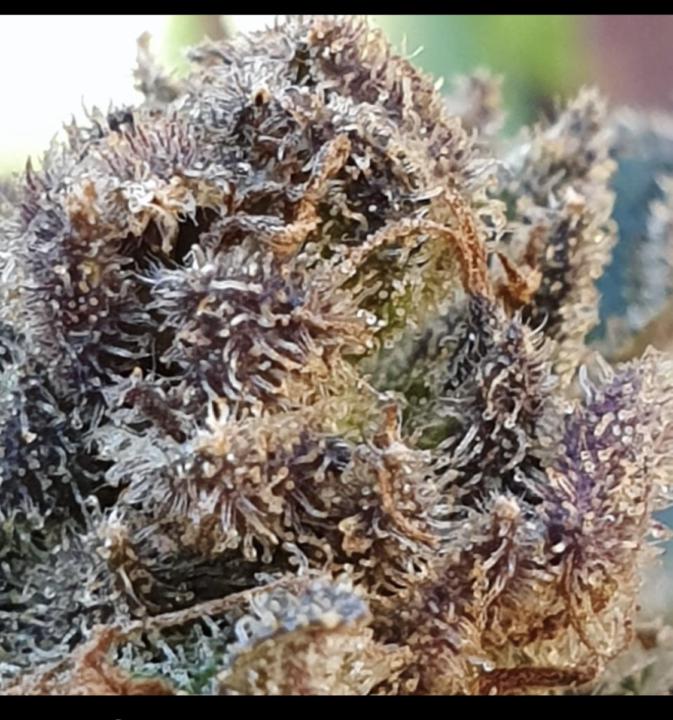
Well the perfect strain is pretty subjective but let’s look at strains that have already been made that are exceptional and analyse what makes them so great. Think about some famous strains from the era of true breeding after the 1960’s where people were creating stains from scratch. From landrace genetics. Skunk is a great strain to study on this case as it Revolutionised the culture. It’s was one one the first, I’d not the first strain that was a selectively breed hybrid of landrace genetics from different parts of the world. It displayed positive traits of both sativa and indica strains and did away with most of the negatives of both. So let’s dissect skunk. As far as I understand, it’s a mix of 1 indicating variety, afghani, and two sativa namely Mexican lowland sativa (the lowland sativas can be thought of as being chunky sativas, whereas the highland sativa tend to be thin and lean) and a highlands sativa (Colombian). The ratio I believe is supposed to be something like 75% sativa expression, 25% indica expression. So with that in mind let’s assume that the two sativas were crossed together first, then one of those offspring was crossed to an Afghani. Sounds straight forward right? Well actually every phenotype has to be selected before being chosen to breed. Once a hundred has been made, ideally it needs to be stabilised to be used in a future hybrid or else recessive traits may be popping out all the place and lack of consistency will result. So I’m this example we plant a bunch of Mexican and Colombian sativas and search for amazing phenotypes. To learn how to identify and select good phenotypes you can read this post about it here (https://www.skool.com/art-peeps-2024-5656/how-to-identify-desirable-traits-in-cannabis-strains?p=5b6ab904). Next step is to cross the two previous together in the traditional sense of males to females. One the seeds are ready, plant them and repeat the selection process as outlined in the post linked above. Once you have a stable strain in the f4/f5 generation, it’s time to move on to hybridising that now stable strain. When a strain is fully stable it can be considered its own variety and not just a hybrid of two strains. This is sometimes referred to as an IBL (in bred line).
0
0
Jul '24 •
How to identify desirable traits in cannabis strains.
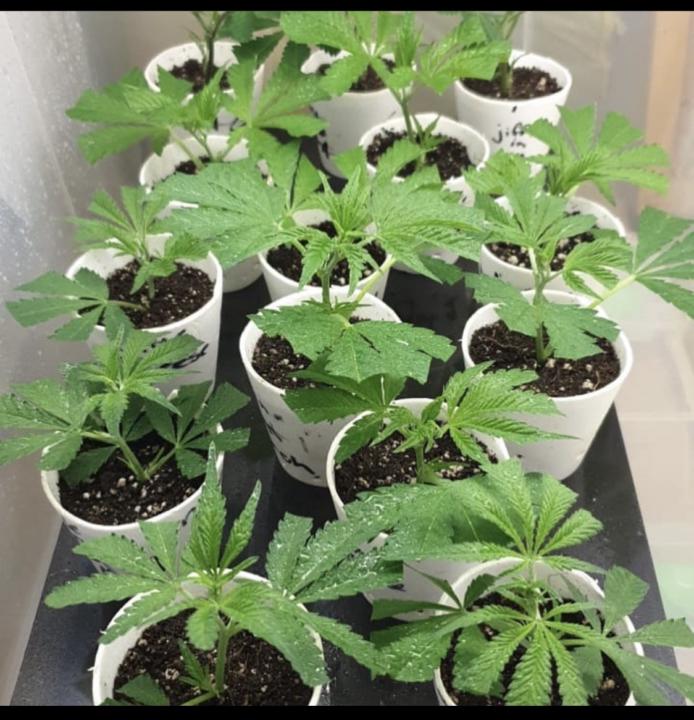
So let’s say you have some landrace genetics you’ve acquired and want to search for phenotypes from. Using the example of landraces is a great way to understand how to identify desirable traits as landrace’s often haves high percentage of undesirable traits you need to eliminate while refining and increasing the expression of desirable traits. So I’m this example it is great to have an idea of what the ideal expression of that package looks and smokes like, however it is not critical in selecting great phenotypes, you may however stumble upon an unusual desirable phenotype and not realise, depending on your goals that may or may not matter. Anyway, first you plant as many seeds as you can. The reason being, the more plants you have, the more chances you have of finding desirable phenotypes. For example in landrace genetics, in my experience I’d say about 10% show very desirable traits for breeding, with 5% special traits. That’s a fully rough estimate Bear in mind. But you bet the idea. So then if you plant 100 plants, you may find 10 decent ones, and 5 of those you may select to breed with. M as son as the seedlings start you can start to get some indications of winning or losing traits, let’s call them that. Winning traits would be big fast growth. Losing traits, slow weak growth… Have a look at the general population of baby seeding. Anything seedling that looks stoned at this stage will almost never produce a vigorous plant (it can happen in some situations however it may consume valuable time or attention) and can be culled immediately. The ones you’re hoping turn out good are the big strong phenotypes obviously. Sometimes something extra special expresses from a slightly smaller phenotype however. Intact I’ve found that most times the giant phenotypes often produce b standard flower traits and are a bit less refined. Refined is what you want! The majority of times the highly special flowers came from specimens that were just a bit smaller than the jumbo phenotypes but not “small” phenotypes by any means.
0
0
Jul '24 •
World Class Cannabis Breeding Techniques part 2
So last time we discussed basic breeding. What a hybrid is, and how to stabilise a strain by selective inbreeding. Now we’ll look at how to select and stabilise specific traits. Let’s say you cross a land race Indic’s with a landrace sativa. You then grow the f1 seeds out. Out of those seeds you discover an outstanding expression that you decide you’d like to stabilise. How do we do that? Well there are a few options available depending on what you want to achieve. There is what we could call the traditional way, that allows you to create seeds that can be re-seeded for generations. This technique involves the use of males and females. It is easy to find a female that has desirable traits obviously because the females produce the flowers that are the final product. What is a bit more tricky is identifying males that are of the same expression as a chosen female. Some ways we can try match a make to a female is by looking for the same traits in both plants. This seems obvious, however when the flower is the main goal and flower traits such as terpenes and trichomes are extremely important, it can sometimes be difficult identifying a male that would contain those genetics, without the male ever producing a bud. Males don’t make the “buds” we want so it hard to know if they have the genetics that will produce female offspring with the buds we want. So we really only have every other trait to try and match a breeding pair. So besides the female flowers, we’ll look at leaf size, shape and colour, plant overall structure, internode spacing, petiole colour, smell when stem is rubbed, growth habit etc. Matching those traits will give us the highest chance of finding a male that has the same genetic expression as the female. After that we plant the resulting seeds and look for any female phenotypes that express that traits we are after, then find matching males and makes seeds with only those selected males and females. As each generation is made, the selected genetic expression will become more dominant until a balance point is finally met where the consistency and vigour are equal. Any more inbreeding after this equals dipping into generic depression and that’s a bad thing. That’s why we often go to around f5 in traditional breeding. After that we may germinate seeds from an earlier generation kept in store and work those genetics into the live to rejuvenate some vigour.
0
0
Jun '24 •
World class Cannabis breeding techniques
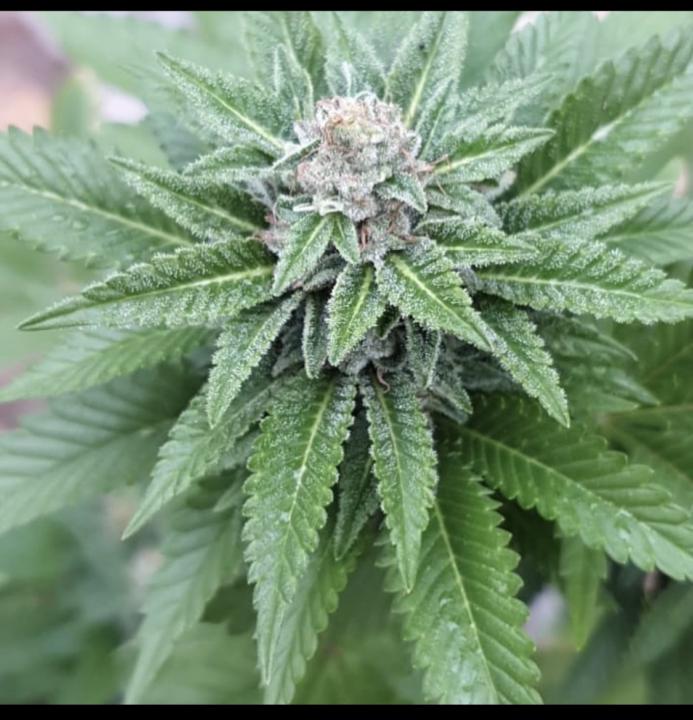
Oh yea, cannabis breeding is so much fun. The things you can create from a bit of creativity, an eye for quality and some knowledge is incredible. What sets apart good breeders is good taste. Dont be a pollen chucker, that’s loser shit for the bin. Real breeding is rare and done by artisans with passion and refinement. Ok so let’s presume you’ve got that special ability to appreciate cannabis’s finer nuances. Let’s create some outstanding varieties with exceptional traits. If a strain is stable, let’s say a selectively bred hybrid in f5 stage (we’ll get into that in a second), it may still vary, just much less than say an f1. The benefit of hybrids is they have great refinement due to already being selectively bred by others. It takes less time creating new strains from pre existing hybrids than creating new strains from pure land race genetics especially wild stock. If we look at pure strains, namely landrace strains, we have more control over random expressions but we may have to do more work refining them. Landraces offer the best opportunity to create a completely new strain from the ground up. Mkay so let’s look at the basics of mixing em together. If you cross two unrelated strains together, you gets What’s called an f1 (filial generation 1) or in layman’s terms, first generation of a new hybrid. If you mix together 2 individuals of the same strain, yes like brother and sister, you get what’s called an f2. F2 is strictly describing a brother/sister cross as this is how we stabilise cannabis. We inbreed it to an extent. Now before you go panicking, a mix of hybridising and inbreeding is exactly the techniques the plant uses in the wild to become adapted to the conditions. If you crossed two f1’s together that were both different strains to each other, you end up with new f1’s. If you cross two f2’s of the same family (brother/sister) together you’d get F3’s and so on. The f number can only increase with each generation of inbreeding. When we get to f5 it’s generally considered the most stable you can get without sacrificing too much vigour. As the uniformity increases with each selected inbreed, so the vigour decreases slightly. Around f5 is the balance between consistency and performance. This is why new f1 hybrids often display extreme vigour. Due to what’s know as hybrid vigour.
0
0
1-5 of 5
powered by

skool.com/art-peeps-2024-5656
Learn to be Creative, get useful critique to make the best Art of your life, and make hilariously creative friends!
Suggested communities
Powered by