
Write something

Apr 5 •
🌊 DAY 11 — Body Awareness Journey
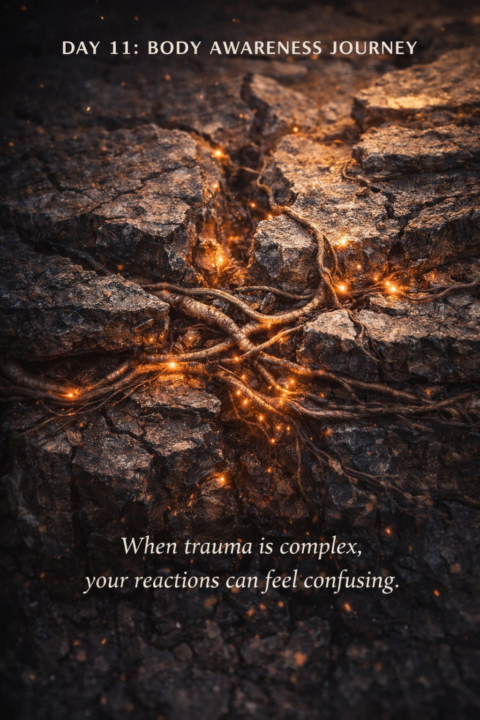
There are parts of my experience…that don’t fit into simple explanations. It’s not just one thing.Not just one moment. It’s layers. Things that built over time.Things I didn’t even realize were affecting meuntil my body started reacting in ways I couldn’t understand. And for a long time, that scared me. Because how do you “fix” something that isn’t clear…that doesn’t have one root…that shows up in your body before your mind can even catch it? That’s the part people don’t talk about enough. When trauma is complex…your reactions can feel confusing. You can feel triggered without knowing why. You can shut down, pull away, or feel over whelmed in moments that don’t seem to “make sense.” But your body isn’t broken. It’s remembering. It’s protecting. In ways that were once necessary. And what I’ve been learning—slowly—is that I don’t need to understand every layerto start being kinder to myself in those moments. I don’t need to fix it all at once. Sometimes the work is just this: Noticing when it’s happening…softening instead of fighting it…and reminding myself— “I’m safe right now.” Even if my body doesn’t fully believe it yet. ✨ Have you ever felt something in your body that didn’t make logical sense? — You don’t have to do this alone.We’re walking this together, one day at a time. 🌿 Join the 30-Day Journey hereskool.com/ancestral-echos-9577/about
1
0
Apr 5 •
🌊 DAY 10 — Body Awareness Journey
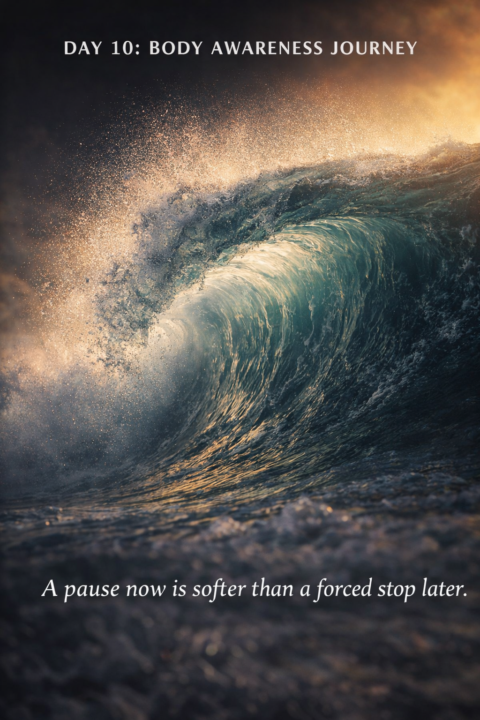
There are still moments…where I can feel myself start to push. Push past what I’m feeling.Push past what my body is asking for.Push just to keep going… Because somewhere in me,I learned that slowing down wasn’t safe. That rest meant falling behind.That stopping meant losing control. But my body doesn’t see it that way. When I really listen…it’s not trying to stop me. It’s trying to support me. It’s asking for a pause so I don’t have to hit a breaking point later. And I’m learning—slowly—that listening early is a lot softer than being forced to stop. So today, I’m choosing to pause before I have to. Maybe you can too. ✨ Did you listen to your body today… or push past it? — You don’t have to do this alone.We’re walking this together, one day at a time. 🌿 Join the 30-Day Journey hereskool.com/ancestral-echos-9577/about
2
0
Apr 5 •
🌊 DAY 9 — Body Awareness Journey
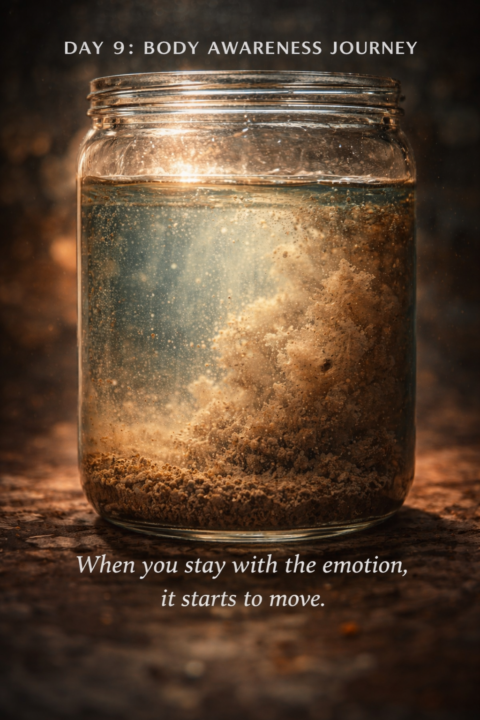
Something I didn’t realize for a long time… was that my emotions weren’t the problem. It was how quickly I tried to get away from them. The moment something uncomfortable showed up—stress, frustration, sadness… I would distract, push through, or try to make it go away. Because feeling it fully didn’t feel safe. But emotions don’t just disappear.They move…or they stay. And when they stay,they usually settle somewhere in the body. That tight chest.That heavy feeling.That knot you can’t quite explain. It’s not random. It’s something that hasn’t been given space yet. And I’m learning—that when I let myself actually feel it,even just a little… it starts to move. Not all at once.But enough to breathe again. So today, instead of pushing it away…see if you can stay with it for a moment. You don’t have to go deep.Just enough to notice. ✨ What emotion has been sitting in your body lately? — You don’t have to do this alone.We’re walking this together, one day at a time. 🌿 Join the 30-Day Journey hereskool.com/ancestral-echos-9577/about
1
0
Apr 2 •
🌊 DAY 8 — Body Awareness Journey
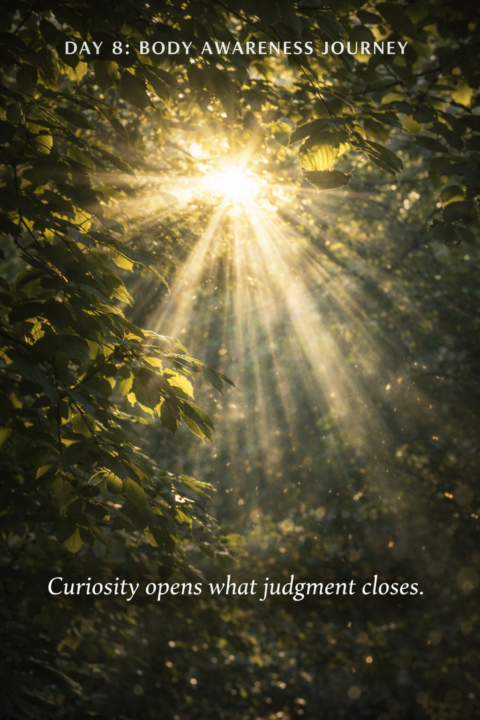
Something I had to learn…and I’m still learning… is how quickly judgment shuts everything down. The moment I label something as “too much”or “not okay”or “I shouldn’t feel this”… my body tightens. It closes. Not because it’s wrong—but because it doesn’t feel safe to be seen like that. But when I get even a little bit curious… “Why is this here?”“What is this trying to show me?” Something shifts. There’s more space.Less pressure. So today, if something comes up—before you judge it… just get curious. You might be surprised what starts to open. ✨ What happens when you meet yourself with curiosity instead of judgment? — You don’t have to do this alone.We’re walking this together, one day at a time. 🌿 Join the 30-Day Journey hereskool.com/ancestral-echos-9577/about
2
0
Apr 2 •
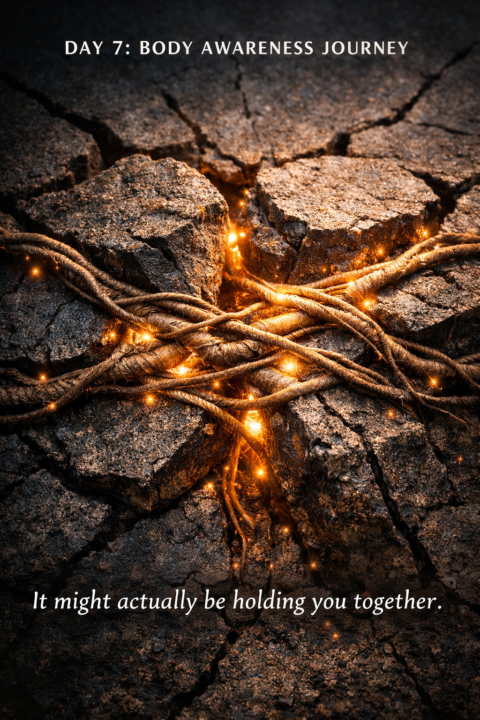
🌊 DAY 7 — Body Awareness Journey
I didn’t always understand my body. For a long time, I thought it was working against me…the tension, the overwhelm, the way it would shut down or push me away from things. I used to try to fight it.Push through it.Override it. But what I’ve come to see…is that my body was never the problem. It was trying to protect me the only way it knew how. And when I started to really listen—not fix, not force, just listen… something softened. Not all at once.But enough to feel a little more space. A little more understanding. So if your body feels confusing sometimes…or like it’s holding you back… It might actually be holding you together. ✨ Can you thank your body for something today? — You don’t have to do this alone.We’re walking this together, one day at a time. 🌿 Join the 30-Day Journey hereskool.com/ancestral-echos-9577/about
2
0
1-28 of 28
powered by
skool.com/ancestral-echos-9577
Rooted in Healing. A grounded space to reflect, regulate, and reconnect. Build capacity. Return home to yourself.
Suggested communities
Powered by