
Write something
Pinned

Jan 6 •
Welcome to the AI Project Management Hub 👋
This community is built for professionals who want to explore how AI can practically enhance project management without the hype. Whether you’re managing complex projects, leading teams, or simply curious about applying AI tools to your workflows, this space is designed to support your growth. Inside the community, you’ll be able to: - Discuss real project challenges and ask thoughtful questions - Learn from experienced project managers and industry experts - Discover practical tools, frameworks, and AI-driven approaches - Share insights, experiences, and lessons learned with peers This is a collaborative space that is open, respectful, and focused on learning together. You’re encouraged to participate, ask questions, and contribute your perspective. Looking forward to learning and building together. 🚀
1
0

Mar 3 •
Passed PMP AT/AT/AT – What Actually Made the Difference
I’ll skip the usual advice and just share what helped me most. I only used AR Udemy, DM YouTube, Study Hall, and Reddit. That was more than enough. The real exam felt mostly like Study Hall Moderate questions, with a smaller portion of Difficult. Big realization: stop escalating everything. If an answer says go to HR, fire someone, replace the team member, ask for more budget, or immediately escalate to the sponsor, it’s usually wrong. Not always, but often enough to eliminate fast. My biggest breakthrough came from learning how correct answers sound. They are: - Specific - Process-aligned - Professionally worded - Calm, not reactive If the problem is clear, the answer is usually the straightforward PMI process response. I was overthinking early on and eliminating obvious correct answers because I assumed there was a trick. There usually isn’t. Another key shift was recognizing question types. Once you see enough practice questions, you start spotting patterns. Conflict question. Late risk question. Last-minute stakeholder concern. Once you identify the type, you already know the direction of the answer. Mindset does matter, but only after you’ve internalized the concepts through practice. Overall, the exam rewards structured thinking and punishes panic. Hope that helps someone preparing.
0
0
Feb 27 •
Command the Room: The Language of Project Management
One of the biggest differences between an average project manager and a respected one is language. Project management has its own vocabulary. The right terminology builds clarity. It signals competence. It reduces ambiguity. And in high-stakes environments, that precision matters. If you want to lead conversations with confidence, align stakeholders effectively, speak fluently in PMP and real-world project settings, and strengthen your professional credibility, you must master the language of the discipline. That’s why I’ve put together the PM Lingo Toolkit , a structured reference guide covering: - Core project management concepts - Key knowledge areas - Essential acronyms (WBS, CPI, SPI, EVM and more) - Practical formulas and definitions - Planning, execution, and closure terminology - Professional phrases used by experienced PMs Download the toolkit and start integrating this language into your daily conversations.
1
0
Feb 24 •
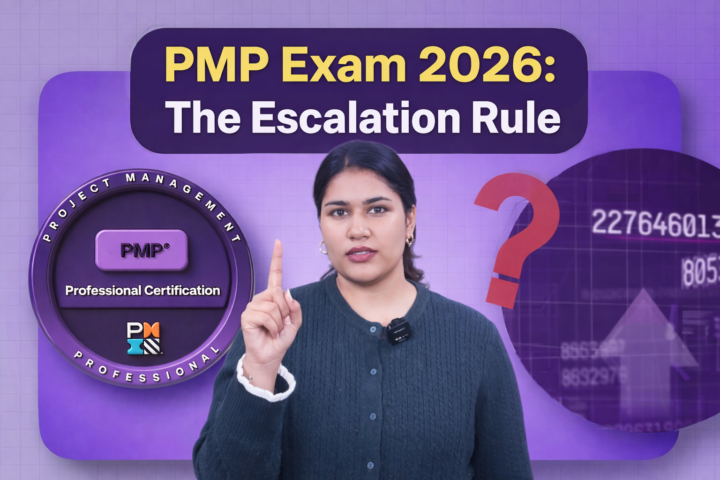
Understanding Escalation on the PMP Exam
If escalation is your reflex on PMP questions, this might be where you’re losing marks. On the exam, escalation isn’t a sign of leadership. In many cases, it signals the opposite. The tricky part? A single sentence in the scenario can completely change whether escalation is correct or not. Most candidates miss that shift. In this video, we look at how PMI expects you to think about authority, governance, and responsibility and why escalating too early is often the wrong move. Before you choose escalate, ask yourself one thing. You may be surprised how often the answer changes.
1
0
Feb 20 •
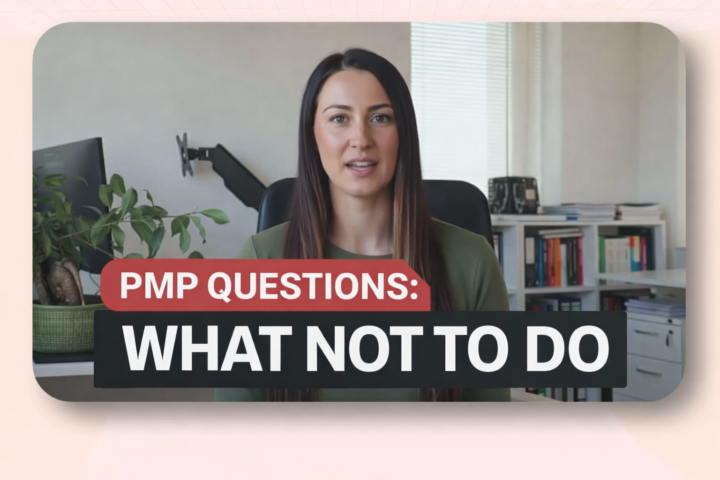
Before You Choose an Answer, Do This
Most people don’t miss PMP questions because they lack knowledge. They miss them because they answer too fast. This video walks through three PMP-style scenarios to highlight a common pattern: candidates jump straight to action without first identifying whether a non-negotiable constraint is present. Whether it’s a new regulation, a strategic misalignment, or an ethics issue, PMI expects structured analysis before action. No early rebaselining. No premature escalation. No panic decisions. Pause. Identify the constraint. Then evaluate the options. That shift in order can significantly improve accuracy.
0
0
1-24 of 24
powered by
skool.com/ai-project-management-hub-6111
Join a vibrant network of learners, project managers, and experts to collaborate, learn, and innovate together
Suggested communities
Powered by