
Write something
Pinned

Apr 8 •
Questions/Comments- How to Build a Ministry Membership from Scratch
Have a question about anything covered in this course? This is the place to ask it. Drop your question in the comments below. Others in the community have likely run into the same thing, so take a scroll through before posting. You might find exactly what you are looking for. No question is too basic. Building a ministry membership from scratch comes with a learning curve, and that is exactly what this space is for. This forum is part of the free "How to Build a Ministry Membership From Scratch" course. Every lesson is publicly available and indexed online, so if you landed here from a search, welcome. You are in the right place. To post a question or comment you will need a FREE account, which also lets you track your progress through the course. Look for the yellow Join Group button to create an account or use the link above to start viewing content.

Pinned
Mar 20 •
Church Guest Experience Checklist: What 52 Churches Taught Me About Welcoming First-Time Visitors
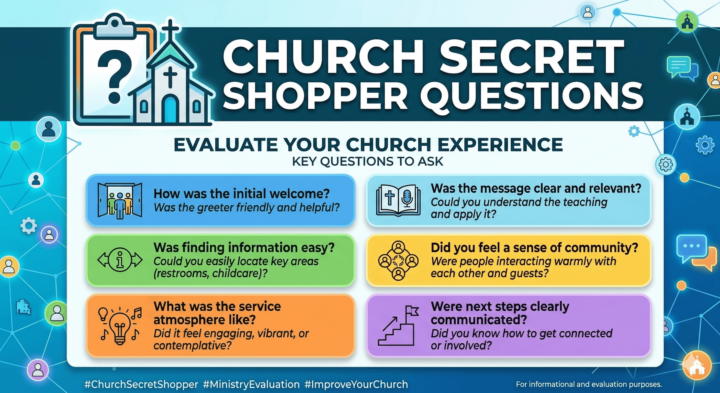
This new church visitor experience assessment did not come from a conference session or a consulting textbook. It came from actually showing up. Over the course of 52 weeks, I am personally visiting 52 different churches as an anonymous first-time guest, the kind of secret shopper or mystery worshiper that growing churches of every size and denomination across the country are using to identify what is broken before their guests do. I have sat in parking lots, walked through lobbies, shaken hands with greeters, listened to sermons, and paid close attention to every detail of the Sunday morning experience that most church leaders have grown too familiar to notice anymore. Research consistently shows that first-time church visitors make up their mind whether they will return within the first 10 minutes. Welcoming first-time visitors to church is not just about having friendly greeters at the door. It is about every touchpoint from the moment someone searches for you online to the follow-up they receive days after attending. This church guest experience checklist was built around that reality. What I discovered, church after church, was both encouraging and sobering. Some churches are creating guest experiences so intentional and welcoming that first-time visitors almost cannot help but come back. Others are losing people at every touchpoint and have no idea it is happening. Even though I have a few visits left to reach 52, the patterns are clear enough and the need is urgent enough that I am publishing this checklist now. Everything I am learning about church hospitality, improving first impressions, and what actually turns a first-time visitor into a second-time visitor is being documented and shared inside the AI for Ministry community. Whether you lead a small church plant or a congregation of thousands, these insights apply to you. Access all 160+ items at: Why this Church Visitor Checklist Exists - Church Secret Shopper Questions-Grow Return Visits · AI for Ministry
2
0
Pinned
Mar 26 •
Welcome. Your First Step Starts With "One" Word.
Hey, I'm Todd Thornton, and I am so glad you're here. Ministry looks different for everyone. Whether you're on staff, volunteering, or just trying to make a difference, AI can help you do it better. Two things I want you to know right up front. 1) Don't just lurk. Post (1) one word in the comments. An AI tool you use, something you want to accomplish, a hidden talent. Anything. I will personally respond to every single one with my best idea for how I can help. If I'm wrong, the egg is on my face and some responses might be hilarious. 2) This is a "public" community. Everything here is visible, searchable, and shareable, even to non-members. That's on purpose. We want people to find this content. But if that's not for you, no hard feelings at all. If you are not a member you won't be able to comment or track completion in courses, but if you find something you like, just grab the link and share it freely. Posts, course pages, anything. We believe in full transparency. This is just who we are. If you're still in, let's take it one step at a time. Step one is simple. Drop only (1) one word in the comments below and let's see how creative Todd can get with his response.

Apr 7 •
AI Is a Tool- Stop Blaming the Hammer
I keep hearing complaints about AI generated content and people calling to ban AI writing altogether. Here's the thing, there is no way to detect AI content with any real accuracy, unless the person behind it has no idea how to use it. I came up with the following quote, or maybe my AI did, 😉and I think it nails it. "AI is a tool. What you get out of it says everything about the person behind it. Always has, always will." Todd Thornton
1
0

Apr 3 •
Help Me- Help You- Google Search Results
As you know, I test everything in this public community in real time so you can see exactly how it's done. Google has now indexed all three of our existing courses plus several additional posts, which is a big milestone. Google rankings depend on a lot of factors, so I'd love your help with a quick experiment. If you have five minutes, search for the keyword terms below and let me know in the comments whether we show up on Google search in the first 3 pages. We'll most likely be the only Skool link you see. Search for: church visitor checklist Today is day 22 of building this community, and I honestly expected it to take 90 to 120 days before we started ranking for any term. If you're seeing us in the results, we are well ahead of schedule.👏 Drop your results in the comments and include the ranking page/position if you can spot it.
1-16 of 16
powered by

skool.com/ai-for-ministry-7784
Helping ministry leaders use AI with spiritual intelligence and practical clarity.
Suggested communities
Powered by