
Mar 21 • General Discussion 💬
Most builders are still thinking about AI agents as tools
I think most builders are still thinking about AI agents as tools.
In 2026, they're becoming teammates.
We are moving from instruction-based computing, where we tell a computer how to do something, to intent-based computing, where we simply state the desired outcome and the agent determines how to deliver it.
That's a fundamental shift in how systems are built.
And the numbers back it up. The global agentic AI sector is projected to grow from $9.14 billion in early 2026 to over $139 billion by 2034, a CAGR of 40.5%.
This isn't hype. This is infrastructure being built right now.
Here's what that means practically for builders:
What's emerging is not just smarter automation, but a new coordination layer, where different types of AI agents work together to run core business workflows at scale.
Single agents are impressive. Multi-agent systems are transformative.
The architecture that actually wins in 2026 looks like this:
→ One orchestrator reads intent and routes
→ Specialized agents each own one function
→ Every agent is isolated, independently testable, replaceable
→ The whole system runs on one trigger
The era of simple prompts is over. We're witnessing the agent leap, where AI orchestrates complex, end-to-end workflows semi-autonomously.
This is exactly what I built with Jake.
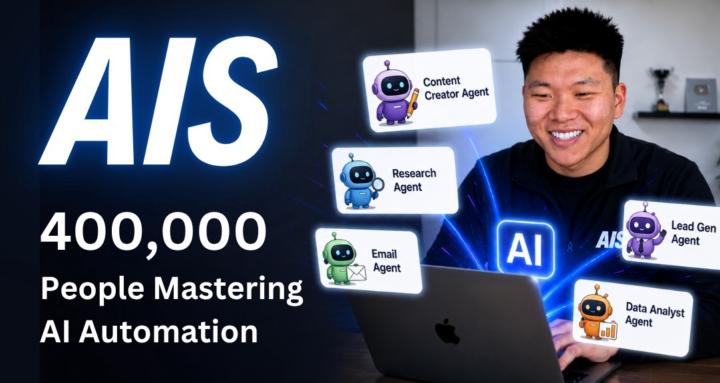
One Telegram message. Five specialized agents. Full workflow executed. Zero manual work.
The builders who understand coordination, not just automation, are the ones building systems that actually scale.
That's the edge.
11
6 comments
Most builders are still thinking about AI agents as tools
skool.com/ai-automation-society
Learn to get paid for AI solutions, regardless of your background.
Leaderboard (30-day)
1

🔥
+7743
2

🔥
+7368
3

+6712
4

🔥
+4698
5

🔥
+3539
Powered by