
Write something
Pinned

Sep '25 •
Welcome to the Introduction Channel 🎉
This is your starting point in the AI Automation Agency PH Family. Here, you’ll make your first connections and set the foundation for meaningful relationships within our community. What This Channel is For: - Introduce Yourself: Share who you are with the community. - Show Your Goals: Let others know what you’re working toward. - Find Connections: Meet members with similar interests. - Build Your Network: Form relationships that can accelerate your growth. How to Introduce Yourself: Click the “Write Something” button ✍️ and include: 1. Your name and location 2. What you do / your background 3. Your top 3 goals for the next 6 months with your AI agency 4. 3 things you enjoy outside of work 5. Any unique skills or experiences you bring to the community Reminder: Your introduction is your first impression. The connections you make here could become collaborators, partners, or valuable supporters in your journey. Let’s start strong and grow together.
Apr 15 •
Community attendance check
Please share your current status below: • Current AI project • What stage you are in • What you are trying to achieve • Any blockers where the community can help This will help us track progress, stay aligned, and support each other better.

Mar 15 •
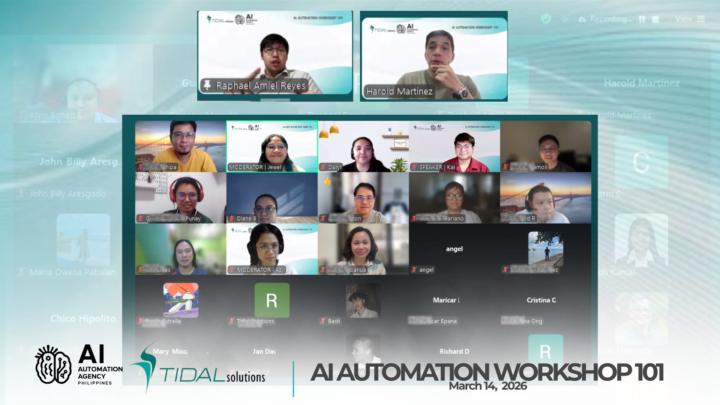
AI Automation Online Workshop - 031426
Big thanks to everyone who joined our AI Automation 101 Workshop yesterday. We had a great time building live n8n workflows together during the hands-on session. We even finished early because everyone learned so fast. Don’t forget to try the post workshop task. You can share your results in the community or send us a message. We would love to see what you made. Next steps 1. Check the Skool Classroom tab for the raw recordings. 2. Your e-certificates will be sent out this week. 3. Try the workshop tasks and practice the workflow you learned. If you don’t have access to the recordings or classroom yet, just message our admins and we will help you.
May 22 •
Google Workspace New Icons
Google is giving Workspace a visual refresh with redesigned icons that reflect a cleaner, more modern, and AI-first experience across its ecosystem. It’s a subtle but meaningful shift toward a more unified and intelligent Google Workspace. What are your thoughts on the new gradient style?
0
0
May 22 •
Google I/O 2026 Recap
Google I/O 2026 redefines how we create, work, and interact with technology across every layer of digital life. From AI-powered Workspace updates like Gmail Live, Docs Live, Keep, and Google Pics, to intelligent systems like Gemini Spark and multimodal creation with Gemini Omni, everything is becoming more connected, contextual, and capable. This is a shift from using tools to working with intelligence built directly into them. Join our community and stay updated on the future of AI and innovation.
0
0
1-30 of 121
skool.com/ai-automation-agency-ph
This is a community where anyone can join, learn, and apply real-world AI and automation skills no tech background needed.
Powered by