
Write something
Pinned

Aug 5 •
💎 The Real Secret Behind Going From $2.5M to $50M+
I just dropped a short that hit different. A first-generation immigrant and jewelry business owner broke down what helped take the company from $2.5 million to more than $50 million. No fancy hacks. No magic software. Just the fundamentals most people ignore: ✅ Keep both feet on the ground. Humility is non-negotiable. ✅ Never hire someone with a bad attitude or questionable character. Talent cannot cancel out toxicity. ✅ Ask yourself every day: “Would I want to work for me?” ✅ Protect your culture at all costs. She hired four people from Tiffany and only kept one. ✅ Have zero tolerance for bullying, dishonesty, drama, or toxic behavior. Happy teams build resilient businesses. ✅ When things get hard—and they will—do not quit. Find another way. This is the unsexy truth about real business growth. 🎥 Watch the short here: https://www.youtube.com/shorts/fp6V-5jBPHc Now tell me below: What hits you hardest right now—the hiring filter, the culture standard, or the “never quit” mindset? Let’s lock this in. 🔥 Subscribe to the channel : https://www.youtube.com/@Jewelryboxai
Pinned
Jun '25 •
You Just Made the Best F*cking Decision of Your Life!🧠💸
🔥 WELCOME TO THE AI ATM MACHINE SKOOL 🔥 You’re not late… you’re RIGHT ON TIME. 💡 If you thought this was just another boring “free AI group”…You’re about to be mind blown! 👇 WATCH YOUR WELCOME VIDEO FIRST:🎥 Yes, it closed a $25K deal for me. 🧠 WHAT TO EXPECT INSIDE: 🔥 12 free AI courses (actually free—no upsell BS) 🛠️ Plug-and-play tools, templates, and automations 👯♂️ Learn how to build your own AI clone (even if you're camera shy) 📈 Sales, follow-up, and marketing systems that run 24/7 💥 First access to drops, content packs, tech updates & private trainings 🧪 Behind-the-scenes breakdowns of what’s actually working in the AI world right now ✨ WHY THIS MATTERS: Because AI isn’t the future—it’s already here.And the people who understand it… will work less, earn more, and take back control of their time. If you want: ✅ More time ✅ More money ✅ Less burnout ✅ More freedom... Then this is the place. ⚠️ WARNING: This isn’t fluff.This isn’t another recycled guru funnel.This is where the next wave of creators, closers, and CEOs get their unfair advantage. 💥 ACTION STEPS: 1. 🎥 Watch the welcome video above 2. 👇 Drop a quick intro (Name, biz, and what you want AI to fix in your life) 3. 🎓 Start your 12 free AI courses 4. 🤝 Invite one person who needs this more than you 5. 🔥 Check back daily. First drops are coming in hot. 6. Book a free AI consultation call with me https://api.leadconnectorhq.com/widget/bookings/ai-consult-booking4vh6mo Let’s make this the smartest room on the internet.Let’s get free. Anthony (and sometimes… AI Anthony 😏)

1h •
15 qualified meetings booked and $50k+ in new sales without ads
I was bleeding money on paid ads and waiting around for organic leads, but my calendar was completely empty. I was chasing lead gen strategies that just drained my bank account. Then I got a wake-up call from my mentor, Alex Tim. He explained that I don't need to spend a dime on ads or have a massive network—I just need a custom outbound system that hunts down dream leads on autopilot. Within weeks, we had 15 qualified meetings booked and $50k+ in new sales pipeline generated. Alex built a custom system that finds my dream leads, pitches them, and lands them on my calendar. I didn't have to lift a finger. He just opened 3 spots for this week to install this automated engine for a few more founders. He’ll build your prospect list and launch the outreach completely on the house. If it prints money, you partner up. If it flops, the leads are yours to keep. Message Alex on WhatsApp and secure your free test run here 👉 WHATSAPP 👉 +13022935624 (Let him know my VA sent you through the backdoor link!)
0
0
2h •
🔥 AI ISN’T JUST A TOOL ANYMORE. IT’S STARTING TO BECOME THE WORKFORCE.
🔥 AI ISN’T JUST A TOOL ANYMORE. IT’S STARTING TO BECOME THE WORKFORCE. A few things in today’s AI news jumped out at me, and when you connect the dots, the direction is pretty obvious. 🤖 Anthropic says Claude now contributes to 26% of its R&D work. They reportedly have more than 30,000 AI agents doing research and engineering tasks at any given time, and employees collaborate with Claude across roughly 90% of their work. Read that again. This is one of the biggest AI companies in the world using AI to help build more AI. That is where businesses are heading. Not: "How can I use ChatGPT?" But: "What parts of my company should AI be responsible for?" 🏠 Robots are also starting to generalize into environments they have never seen before. Figure's Helix 2.5 can reportedly do things like tidy rooms, fold towels, and make beds inside homes it was never specifically trained inside. That matters because AI is moving beyond generating words, pictures, and videos. It is starting to understand environments, make decisions, and take action. 💻 Even your browser is becoming something AI can operate. Safari 27 includes Safari MCP, giving coding agents access to things like the browser, DOM, screensho
0
0

2d •
🔥 STOP CHASING EVERY NEW AI TOOL
Every week there is a new AI model, new agent, new automation platform, new "game changer." And that is exactly why learning AI is becoming harder. The problem is no longer: "What AI tools exist?" The better question is: "Which AI should I actually trust with my time, money, business, and customers?" Before adding another AI tool to your business, run it through these 5 questions 👇 🤖 1. WHAT PROBLEM DOES IT ACTUALLY SOLVE? Don't buy AI because the demo looks cool. Does it: ✅ Save time? ✅ Make money? ✅ Reduce repetitive work? ✅ Improve the customer experience? ✅ Remove a bottleneck? If you can't explain the business result in one sentence, you probably don't need it yet. 🧠 2. CAN IT DO THE JOB CONSISTENTLY? This is HUGE. An AI doing something correctly one time does not mean you have an automation. Test it 10, 20, 50 times. Your question shouldn't just be: "Did it work?" Ask: "Will it keep working?" 🔐 3. WHAT ACCESS ARE YOU GIVING IT? As AI agents become more powerful, they can access emails, APIs, CRMs, files, customer data, payments, and business systems. That means permissions matter. Give AI the minimum access necessary to complete the job. Don't hand your AI employee the keys to the entire company on Day 1. 😂 💰 4. WHAT IS THE REAL ROI? A cheaper model isn't automatically better. A more expensive model isn't automatically smarter for your use case. Look at: Cost + accuracy + speed + reliability + time saved Sometimes the "best" AI model is complete overkill. Sometimes paying more saves 20 hours of human labor. Make the decision based on the outcome. 🧪 5. TEST BEFORE YOU SCALE Start small. Give the AI one process. Measure it. Fix the mistakes. Add guardrails. Then automate more. The biggest mistake I see people making right now is trying to build an entire AI company before proving one useful workflow. 🔥 AI ATM MOMENT The winners in AI won't necessarily be the people using the MOST AI. They'll be the people who know where AI belongs, where humans belong, and how to make the two work together.
2
0

1-30 of 388
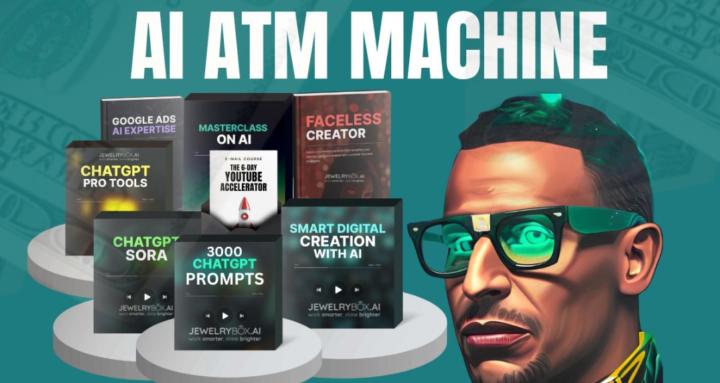
skool.com/ai-atm-machine-9381
AI will make or break you. We make it fun, fast & profitable—Save money, make money, & have time freedom! Don't miss the largest gold rush in history!
Leaderboard (30-day)
1

+7
2

+2
3

+1
4

+1
5

+1
Powered by