
Write something

26d •
GLOBAL SECURITY ALERT — Security Guide 2026
GLOBAL SECURITY ALERT — Security Guide 2026 PHP, Python, Node.js, Next.js, Java and Digital Certificates: Is Your Infrastructure Exposed? October 2026 has brought a wave of critical cybersecurity threats affecting technologies used by millions of websites, businesses, cloud platforms, automation systems, and AI agents worldwide. Four major areas of concern: 1. PHP2Shell — Critical Server Vulnerabilities Newly disclosed PHP vulnerabilities could allow remote attackers to execute malicious code on vulnerable servers without authentication, potentially compromising entire websites and applications. 2. Node.js & Next.js — Critical Application Security Flaws New vulnerabilities affect Node.js and Next.js, including remote code execution risks, TLS certificate validation weaknesses, and security issues involving core dependencies. Developers and businesses running affected versions must update their systems. 3. Python & AI Infrastructure — Supply Chain and Certificate Risks Python-based applications and AI infrastructure face risks from compromised software dependencies and outdated certificate trust stores. Recent concerns include malicious LiteLLM packages and applications that may continue trusting compromised certificate authorities. 4. eMudhra — A Global Digital Trust Incident Eight certificate authority keys were identified as cryptographically weak. One was reportedly associated with the astonishingly simple private key value 4. This incident exposed serious weaknesses in digital certificate security and raised concerns about applications that had not updated their trust stores. IMPORTANT WARNING — BACK UP BEFORE UPDATING! Before updating any server, application, framework, or dependency, always create a complete backup and verify that it can be restored. WARNING: Security updates can break systems that are currently working perfectly! Older applications, legacy systems, libraries, and integrations may become incompatible with newer versions of PHP, Python, Node.js, Next.js, or other components.
0
0


Mar 3 •
Working With Local LLMs
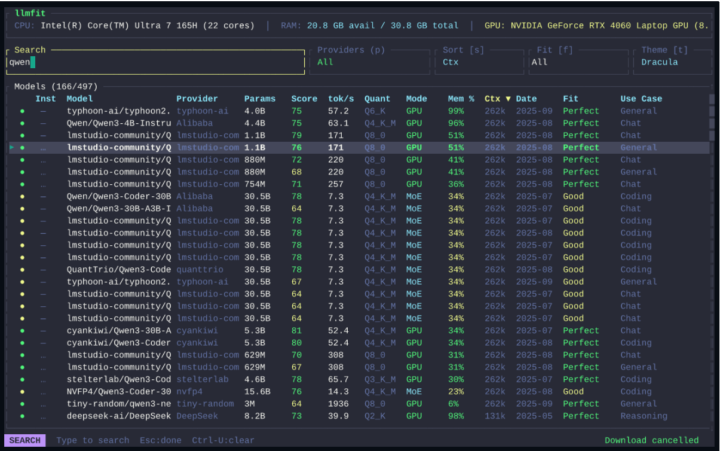
My setup is with Local models only. Have had great success with the latest Qwen3.5 family (vision support in all of them). The latest GLM (4.7 and 5) models are pretty good too. I just wanted to quickly share a tool that I came across. Will help save you time and testing in what model will work on your PC. LLMFIT https://github.com/AlexsJones/llmfit
Oct 13 •
Smarts & Speed Local LLM for AgentZero
There is a way now. I do completely offline local development with my AgentZero. Granted yes, I do have a 24GB 3090, plus 96GB of RAM, but with that aside you can still do coding with less - yes it IS possible! For example, I ran a coding setup with AgentZero and it only required about 16GB of VRAM and I was getting over 100 tp/s and quality outputs - I did 2 small web apps and the code was flawless! This measures up to the performance of GPT Codex. And I don't pay anything for use! The secret is a really good engine to run your LLM with prefill AND model streaming. I have been waiting for these techniques to be available on private systems for a long time - and now they are here! You CAN run big smart models locally, with speed. So, you can have pro-level coding offline with AgentZero - I am doing it now!

Oct 13 •
Completely Local Coding
Just made this simple Tetris game, but I know I could do so much more. Codes fast, produces clean and structured code, and it is all private and offline!
0
0

Oct 1 •
How Long-running
Long-running Codex/Claude sessions work best when you stop thinking of them as “one giant conversation” and start treating them as a continuous work process. The idea is to define a clear objective with /goal, let the agent work in cycles: analyze → execute → test → fix → continue — and keep important state outside the conversation in files like goal.md, plan.md, state.md, progress.md, and failures.md. The key rule is: As long as there is a clear, safe next action aligned with the objective, keep going without waiting for new instructions. For runs lasting many hours or even days, the ideal setup is: clear objective + success criteria + state files + compaction + continuous testing + controlled autonomy. And the main conclusion from the 11-day experiment is this: very long sessions can work, but the real limit is not the size of the JSONL file — it is the point where continuity starts to reduce quality, cost efficiency, or operational effectiveness. Examples: https://inematds.github.io/execucao-longa/guia/en/
0
0

1-30 of 94

Leaderboard (30-day)
1

+6
2
+5
3

+4
4

+2
5

+1
Powered by