Activity
Mon
Wed
Fri
Sun
Jul
Aug
Sep
Oct
Nov
Dec
Jan
Feb
Mar
Apr
May
Jun
What is this?
Less
More
Owned by Zanthia
A community for Christian Women navigating change, loss, and renewal in midlife and beyond-shared stories, biblical wisdom, and gentle guidance.
Memberships
AI Automation Society
406.4k members • Free
Hackathon
2.7k members • Free
Free Skool Course
70.8k members • Free
Skoolers
175k members • Free
16 contributions to The Next Season

May 17 •
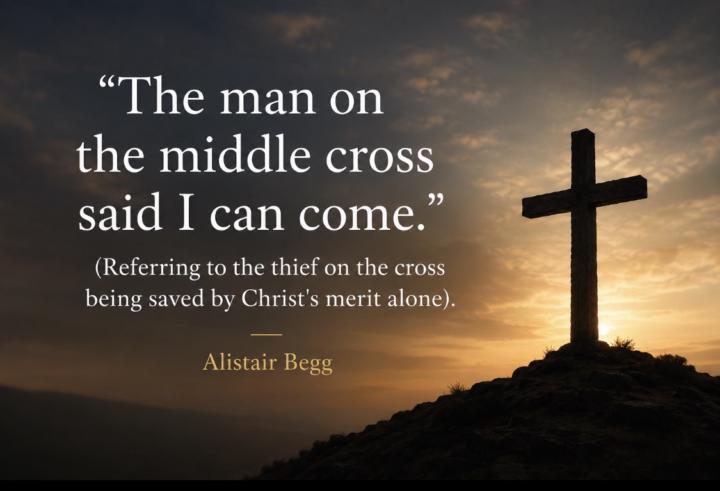
The Man on the Middle Cross
If you ever feel too broken, too sinful, too far gone, or simply not enough for God, remember the thief on the cross. He had no time to make things right. No opportunity to prove himself. No list of good works to offer. He only turned his eyes toward Jesus… and that was enough. Our hope has never rested in how well we perform, but in the mercy of the Savior who still says, “Come.”
0
0
Apr 27 •
When Prayer Is Quiet Obedience
There are moments in our walk with God where prayer feels like the simplest act… and yet, it carries the weight of eternity. When we pray for someone, we do not always fully understand what is happening in the unseen. Often, it is not planned or polished. It comes from a quiet prompting. A nudge in the spirit. A sense that this is what I am to do right now. And so we pray. Not to be noticed.Not to appear spiritual.Not to gain approval or recognition. Simply out of obedience. Out of love. Out of faith. Many times, we never hear what becomes of those prayers. We do not follow up. We do not ask for updates. Life moves on, and so do we. The moment passes, tucked away like a seed planted deep beneath the soil, unseen and forgotten. But heaven does not forget. God does not overlook even the smallest prayer offered in sincerity. And sometimes, in His kindness, He allows us to see a glimpse of what He has done. Today, I received something that deeply touched my heart. An ex-colleague shared her testimony with me. Six years ago, I had prayed for her to fall pregnant. At the time, it was simply an act of faith and obedience. I did hear later that she had conceived, but that was all I knew. What I did not know was what she experienced in that moment of prayer. Only now, years later, she shared the depth of that encounter. What God did in her heart. What she felt. What shifted in that moment. And I found myself quietly overwhelmed. Not because I had done anything. But because God had. It was as if He gently pulled back the curtain for a moment and said, “Do you see? Your obedience mattered.” There is something sacred about that. Because it reminds us that prayer is never wasted. Every whispered prayer, every moment of standing in the gap for someone else, every quiet act of faith… it all carries purpose far beyond what we can see. We may not always receive feedback.We may never hear the full story. But God is at work. And every now and then, He gives us a glimpse. Not to elevate us, but to encourage us. To strengthen our faith. To remind us to keep going. To keep praying. Because you never know what God is doing through a simple “yes” in the moment. And sometimes, years later, He lets you see the fruit.
0
0
Feb 23 •
Come, let us build ourselves a city and a tower… and let us make a name for ourselves.”— Genesis 11:4
Nothing about that sentence feels dusty or distant. It sounds like a mission statement that never went out of fashion. What changed is not the spirit, only the tools. Back then, it was brick and mortar. Today, it’s platforms, brands, metrics, influence, money, ministries with logos sharper than their theology.Same impulse. Better Wi-Fi. At Babel, humanity said, “We will rise.”God had already said, “I will walk with you.”But walking felt too slow. Dependence felt too small. Obscurity felt like death. So they reached upward, not toward heaven, but toward significance without submission. And yes, that spirit is louder now. The modern commandment hums constantly: Do more. Be more. Have more. Prove it. Post it. Monetize it. Even faith has been recruited into the hustle. Riches pursued in the name of God while quietly replacing God as the source. And yet, when you look at Jesus, the contrast is jarring. He had access to everything. Authority, power, provision at His fingertips. But He never chased abundance to prove worth. He never built a tower to secure His name. Instead, He emptied Himself. He moved downward. He trusted the Father to exalt what obedience made low. Babel says: “Let us make a name. ”The gospel says: “I will give you one—if you lose yours.” This is why Genesis 11 matters now more than ever. It exposes the ancient lie beneath modern success:that fullness comes from accumulation rather than alignment. God did not oppose building.He opposed self-salvation. And when the noise became too great, He scattered them—not as punishment alone, but as mercy. Because a unified humanity chasing glory without God would destroy itself faster than it could ever reach heaven. Reflection (for the quiet places of the heart): - Where does “doing more” feel like obedience—and where does it feel like fear? - In what ways has faith subtly become a ladder instead of a dwelling place? - What would it look like to let God guard your name instead of promoting it? -
0
0
Feb 13 •
Reflection on Genesis 9
After the waters receded, the earth breathed again. Genesis 9 opens not with spectacle, but with blessing. God speaks life forward—Be fruitful. Multiply. Begin again. The world is new, yet God knows the human heart has not been made flawless by floodwaters. Renewal does not mean innocence restored. It means mercy extended. Then comes the covenant. God does not ask Noah to prove anything. He does not wait for a vow of better behavior. He binds Himself to humanity—and to every living creature—without conditions. The rainbow appears not as a warning sign, but as a remembrance. A visible pause in the sky that says, I will not do this again. I choose restraint. I choose faithfulness. Life is declared sacred here. Not because humanity has learned its lesson, but because humans bear God’s image. Worth is not achieved. It is given. And with that gift comes responsibility, to guard life, to honor it, to treat it as something heaven has touched. And then unexpectedly the story turns inward. Noah stumbles. Shame enters the tent. One son exposes. Two sons cover. Even after salvation, brokenness remains. The flood did not heal the heart; it revealed how deeply redemption would still be needed. Yet Genesis 9 does not end in disappointment. It ends in commitment. He commits Himself to a world He knows will falter again. He places His promise in the sky, arching over judgment and mercy alike as if to say: I know who you are. And I am not leaving. This chapter reminds us that God’s faithfulness is not fragile. It does not hinge on our consistency or collapse under our failures. His covenant rests on who He is. Every rainbow still carries that ancient whisper: I remember. I remain. I am with you.
0
0
Feb 5 •
Gen. 8
After long silence and rising waters, God remembers Noah. The flood begins to retreat, the ark comes to rest, and waiting replaces survival. Days stretch. Windows open. Birds are released. Hope tests the air. When the earth is dry, Noah steps out, not in a rush and his first act is worship. Deliverance often comes quietly, not suddenly. God’s rescue is sure, but His timing is deliberate. The waters don’t vanish overnight; they recede inch by inch. Waiting becomes holy ground.
0
0
1-10 of 16

@zanthia-berkelmann-5697
A community for Christian women navigating change, loss, and renewal in midlife and beyond—shared stories, biblical wisdom, and gentle guidance.
Active 24h ago
Joined Jan 5, 2026