Activity
Mon
Wed
Fri
Sun
Aug
Sep
Oct
Nov
Dec
Jan
Feb
Mar
Apr
May
Jun
Jul
What is this?
Less
More
Owned by Jenny
🌿 Vegan meals that slap. Bi-weekly LIVE workshops. Meal prep made EASY. Tofu becomes ricotta. Potatoes become chocolate ice cream 🍨
Memberships
Spirited Food
137 members • Free
Skool Growth Lab
156 members • Free
Read SkoolMagazine Here
319 members • Free
Deal Hub
447 members • Free
Pinterest Skool
5.5k members • $7/month
Stress-Free Sobriety
750 members • Free
Claude Code Club
7.2k members • $9/month
Faith On The Move
46 members • Free
Leadership Skool
1.6k members • Free
18 contributions to Ask Lynne: Health Educator

🔥
5h •
Tuesday Term: VOCs(Volatile Organic Compounds)
Volatile Organic Compounds are chemicals that turn into gas at room temperature. "Volatile" refers to the fact that they evaporate quickly, and "organic" means they contain carbon. You can't always see them, but you can often smell them. 𝐈𝐧 𝐲𝐨𝐮𝐫 𝐡𝐨𝐦𝐞 𝐭𝐡𝐞𝐲 𝐦𝐢𝐠𝐡𝐭 𝐛𝐞: Paints, varnishes, and glues - cleaning products and air fresheners - new furniture, carpet, and building materials - some personal care products (perfumes, nail polish) 𝐎𝐧𝐞𝐬 𝐭𝐡𝐚𝐭 𝐜𝐚𝐧 𝐝𝐫𝐢𝐟𝐭 𝐢𝐧 𝐟𝐫𝐨𝐦 𝐨𝐮𝐭𝐬𝐢𝐝𝐞: Vehicle exhaust – especially if you live near a busy road or have an attached garage Industrial emissions – from nearby factories or refineries Gasoline vapors – from gas stations, lawn equipment, or fueling up your car Wildfire smoke – carries VOCs along with particulate matter Dry cleaning fumes – if you live near a dry cleaner (perchloroethylene is a common one) Pesticide/herbicide spraying – from nearby lawns or agricultural areas Fresh asphalt or road paving – releases VOCs as it cures Skunk spray! These can enter through open windows, doors, or even small gaps and cracks in the building envelope. Using exhaust fans, keeping windows closed during high-traffic times or spraying nearby, and using a good air purifier (one rated for VOCs, like activated carbon) can help reduce how much gets in. 𝐀𝐫𝐞 𝐕𝐎𝐂𝐬 𝐝𝐚𝐧𝐠𝐞𝐫𝐨𝐮𝐬: Short-term exposure can cause headaches, dizziness, eye/nose/throat irritation, and nausea. Long-term or high-level exposure has been linked to liver, kidney, and central nervous system effects, and some VOCs are considered substances that may increase cancer risk. E.g., benzene in tobacco smoke, vehicle exhaust, and gasoline fumes, and occasionally found in certain consumer aerosol sprays. 𝐑𝐞𝐝𝐮𝐜𝐞 𝐞𝐱𝐩𝐨𝐬𝐮𝐫𝐞 𝐛𝐲: Open windows when using strong-smelling products Store chemicals in a garage or shed, not inside the house Choose "low-VOC" or "no-VOC" labeled paints and products when possible Close windows when outside VOCs are creeping in Environmentally friendly products are becoming more widely available and are a great way to keep VOCs out of your house. For an individual with asthma or COPD, VOCs can be quite dangerous.


🔥
1 like • 3h
@Lynne Vella this is why I miss Montana! My husband's asthma was never controllable more than when we lived in Central Montana!
🔥
0 likes • 3h
@Lynne Vella he always does better when we go to the woods!
🔥
18h •
Welcome Michelle!
The Ask Lynne community is so happy to have you with us Michelle. Please check out the Welcome! Start Here micro course in the classroom. There is a poll you can contribute to as well. The ABCs of Health is our living resource and the centerpiece of the community. When you ask a health question of any kind, the answer is posted there in definition form so that we all can benefit from common experiences. It's patient education built together, one question at a time. If you prefer your health questions to be answered in private, please DM me. Your personal information will never be shared. 💚 It's Safe to Ask Here.

🔥
1 like • 18h
Hello and welcome Michelle 💕
🔥
7d •
Welcome Kimberly
The Ask Lynne community is so happy to have you with us Kimberly. Please check out the Welcome! Start Here micro course in the classroom. There is a poll you can contribute to as well. The ABCs of Health is our living resource and the centerpiece of the community. When you ask a health question of any kind, the answer is posted there in definition form so that we all can benefit from common experiences. It's patient education built together, one question at a time. 💚 It's Safe to Ask Here.

🔥
1 like • 1d
@Kimberly Armatys I am all about easy! This you just crumble the tofu with your hands and toss with everything except the spirulina. Let it marinate for a bit and then sprinkle the spirulina and gentle toss to coat. Looks just like blue cheese! And is very good!
🔥
1 like • 1d
@Kimberly Armatys you're welcome! I also add the blue spirulina to my peanut butter drizzle for a pretty smoothie bowl!!
🔥
1d •
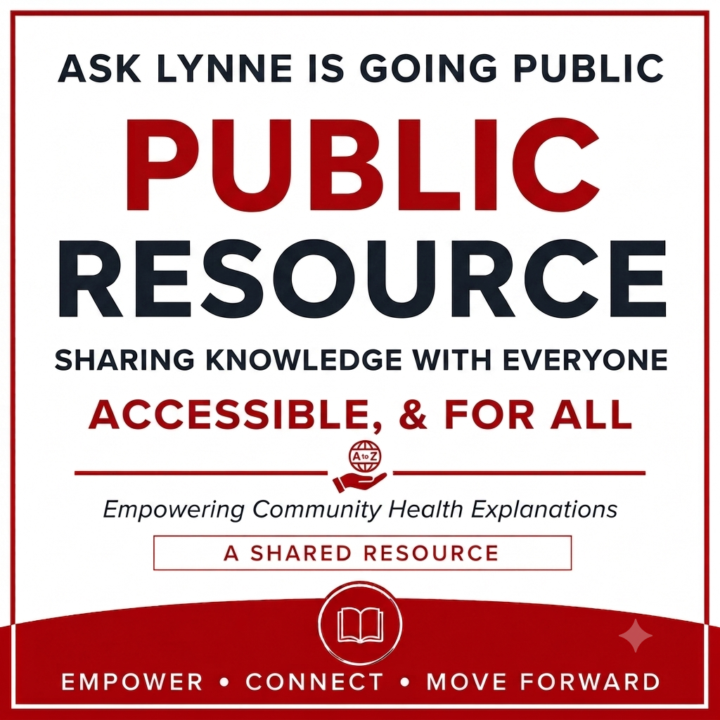
GOING PUBLIC 🌍
I'm excited to share that Ask Lynne: Health Educator is opening up to be indexed and discovered beyond Skool. 𝐌𝐲 𝐦𝐢𝐬𝐬𝐢𝐨𝐧 𝐢𝐬 𝐬𝐢𝐦𝐩𝐥𝐞: 𝐭𝐨 𝐡𝐞𝐥𝐩 𝐩𝐞𝐨𝐩𝐥𝐞 𝐮𝐧𝐝𝐞𝐫𝐬𝐭𝐚𝐧𝐝 𝐭𝐡𝐞𝐢𝐫 𝐡𝐞𝐚𝐥𝐭𝐡 𝐢𝐧𝐟𝐨𝐫𝐦𝐚𝐭𝐢𝐨𝐧 𝐢𝐧 𝐩𝐥𝐚𝐢𝐧 𝐥𝐚𝐧𝐠𝐮𝐚𝐠𝐞, 𝐫𝐞𝐝𝐮𝐜𝐢𝐧𝐠 𝐜𝐨𝐧𝐟𝐮𝐬𝐢𝐨𝐧 𝐚𝐧𝐝 𝐛𝐮𝐢𝐥𝐝𝐢𝐧𝐠 𝐜𝐨𝐧𝐟𝐢𝐝𝐞𝐧𝐜𝐞 𝐬𝐨 𝐭𝐡𝐞𝐲 𝐜𝐚𝐧 𝐧𝐚𝐯𝐢𝐠𝐚𝐭𝐞 𝐭𝐡𝐞𝐢𝐫 𝐡𝐞𝐚𝐥𝐭𝐡𝐜𝐚𝐫𝐞 𝐰𝐢𝐭𝐡 𝐠𝐫𝐞𝐚𝐭𝐞𝐫 𝐜𝐥𝐚𝐫𝐢𝐭𝐲. Right now, so much of what we've built here — the ABCs of Health, plain-language explanations of diagnoses, blood work, and medical terminology — only reaches the people already inside this community. Going public means more people searching for answers about their own health can find real patient education and start building health literacy, not just noise. This is about reach, not change. The free general education stays free, and the community stays the same safe space it's always been. If something ever feels too personal to ask in the open, you can always DM me (Lynne Vella) directly, and it stays between us. 𝐇𝐨𝐰 𝐂𝐚𝐧 𝐈 𝐇𝐞𝐥𝐩 𝐌𝐨𝐫𝐞? Reach out if I can help you more. Quick questions and topic ideas are always welcome. If you want a private conversation, DM Lynne Vella and your questions and answers will remain private if that is your preference. 💚 It's Safe to Ask Here.
🔥
1 like • 1d
@Lynne Vella woo hoo!
🔥
1 like • 1d
@Lynne Vella you are welcome Lynne! So excited to watch your community grow!!
🔥
2d •
Ask Lynne Trivia Poll (3)
Our body works 24/7 to regulate its temperature. The main center for body temperature regulation is a small structure deep in the brain called the hypothalamus — think of it as your body's built-in thermostat. It constantly monitors your internal temperature and triggers responses like sweating, shivering, or changes in blood flow to keep you steady. 𝐌𝐲𝐭𝐡 𝐨𝐫 𝐅𝐚𝐜𝐭? We lose most of our body heat through our head? Cast your vote before you look up the answer! It's one of those pieces of health education that gets repeated so often, most people assume it's true. 💚 It's Safe to Ask Here.
Poll
4 members have voted

🔥
1 like • 2d
@Lynne Vella yes I could not agree more!! I am always logical and really try to let my emotions stay out of my thought process. Sometimes is easier than others 😆😆😆😆
🔥
0 likes • 2d
@Lynne Vella yes I am. I love love love sharing my knowledge with others 💚
1-10 of 18

🔥
@your-vegan-homie
Vegan 🦬
Sober 🙌🏻
Jesus is my homie 🫶🏻
Fueled by sourdough 🍞
and scary movies 👻🔪
Plant-based food is my love language. 🌿
Online now
Joined Jun 29, 2026
INFJ
Bigfoot territory 🦶