Activity
Mon
Wed
Fri
Sun
May
Jun
Jul
Aug
Sep
Oct
Nov
Dec
Jan
Feb
Mar
Apr
What is this?
Less
More
Owned by Wilson
Travel-led smartphone imaging for learners and experts who shoot with intent, learn in real locations, and tell stronger stories beyond presets.
Memberships
Skoolers
195.1k members • Free
11 contributions to Mobile Camera Field Notes
21d •
Smartphone Camera is not as good...but?
Can the smartphone camera replace the big cameras? It is like asking if a normal sedan can replace the sports car which is really a non argument. When you consider the things you do might not need the precision and quality for some genre and in fact gave you greater joy without the bulk, maybe the sacrifice can be justified. Some genres definitely are still best taken with a camera like sports, performances, fireworks and astro just because the ergonomics and sensor quality helps the user more but for the majority of shots, a smartphone is enough for some users. In the last six months after trips abroad using two phones, vivo x300 pro gave me the flexibility to shoot far and wide with precise colors while Oppo find X9 pro gave me the Hasselblad/Leica aesthetics in portraits and food shots. My trusty Lumix S5 is still there for astro and fireworks and shots that require good AF tracking with reach. I managed to shoot a jungle fowl and a Koei amongst the Sakura blooms using the Vivo but the ability to catch those is honed by using the Nikon system over the decades. In the end, choose the right tools for the shots and you will go far. But sometimes using a bad tool might train you in ways big cameras have made it convenient. Of course the reverse is definitely true as well. https://www.facebook.com/share/p/1HaxutNpZq/
0
0
Jan 28 •
Mobile Workshop in Person/ Singapore
If you’ve been meaning to get better at photography but never quite know where to start, this is for you 📸 I’m running an Imaging Class that’s designed to help you understand your camera (or smartphone), see light better, and shoot with more confidence — without jargon or complicated theory. It’s practical, hands-on, and focused on real-world shooting you can apply immediately. Whether you’re a beginner or someone who’s been shooting for a while but feels stuck, come learn, practise, and grow together with like-minded folks. 👉 Register here: https://tms.wings.sg/web/event_details/12066 Hope to see you in class!
2
0
Jan 28 •
📸✨ A Photographic Adventure Under the Stars – Western Sichuan, March ✨📸
If you’ve ever dreamed of photographing snow-capped mountains by day and the Milky Way by night, this is your moment. Join us this March on a carefully curated photographic journey through Western Sichuan, where dramatic landscapes, Tibetan culture, and pristine night skies come together in one unforgettable experience. 🌄 By day, we explore iconic locations like Four Sisters Mountain, Red Sea Lake, and ancient Tibetan villages — chasing soft spring light, mountain reflections, and timeless scenes perfect for landscape storytelling. 🌌 By night, we slow things down. Far from city lights, you’ll have the chance to photograph the galaxy stretching across the sky, learn night-sky composition, and capture long-exposure images with snow peaks and valleys as your foreground. This is real dark-sky territory — quiet, humbling, and incredibly photogenic. ✨ Why join this tour? • Thoughtfully planned for photographers of all levels • Guidance on both landscape and astrophotography • Unique spring conditions with clear air and dramatic light • A balance of shooting, learning, and simply being present. Smartphone imaging supported. This isn’t just a trip — it’s a chance to see differently, shoot with intention, and come home with images (and memories) that truly matter. 📅 March departure is Confirmed | Limited spots available 📩 Drop us a message to find out more and secure your place Online Flip Book and Contact Details: https://online.fliphtml5.com/erqnr/kfin/#p=1
0
0
Jan 23 •
The Only Way To Learn Fast is to Share
Sharing your photos isn’t just about likes or validation — it’s one of the fastest accelerators for getting actually better. Here’s why 👇 1. You get real-world feedback (not just your own bias). When you keep photos to yourself, you’re stuck with your own blind spots. Sharing invites fresh eyes that spot things you missed — composition issues, distractions, timing, or even strengths you didn’t realise you had. Sharing in a safe space like here makes it easier for you to put aside ego and actually get better. Even learners when sharing views can learn better. 2. You start shooting with intention Knowing you’ll share your work makes you slow down and think: Why this angle? Why this light? What’s the story? That mindset alone sharpens your decision-making every time you press the shutter. 3. You learn faster from mistakes When a photo doesn’t land well publicly, it’s a lesson — not a failure. You quickly see what works and what doesn’t, and that feedback loop speeds up improvement far more than shooting in isolation. 4. You build a visual memory bank By sharing consistently, you can look back at older work and clearly see progress. That awareness helps you refine your style and avoid repeating the same mistakes. 5. You gain confidence to experiment Once you get used to sharing, fear drops. You become more willing to try new compositions, lighting, or edits — and growth lives exactly there. 6. You learn from others too Sharing usually leads to conversations. You don’t just get comments on your work — you start studying how others shoot, edit, and see the world. That cross-pollination is powerful. 7. It creates accountability When you share regularly, you’re more likely to keep shooting, practicing, and improving instead of letting the camera (or phone) sit unused. Bottom line: Photography improves fastest when it’s seen, discussed, and challenged. Keeping photos private keeps growth slow. Sharing turns every image into a lesson.
3
0
Jan 15 •
Shooting Better Portraits
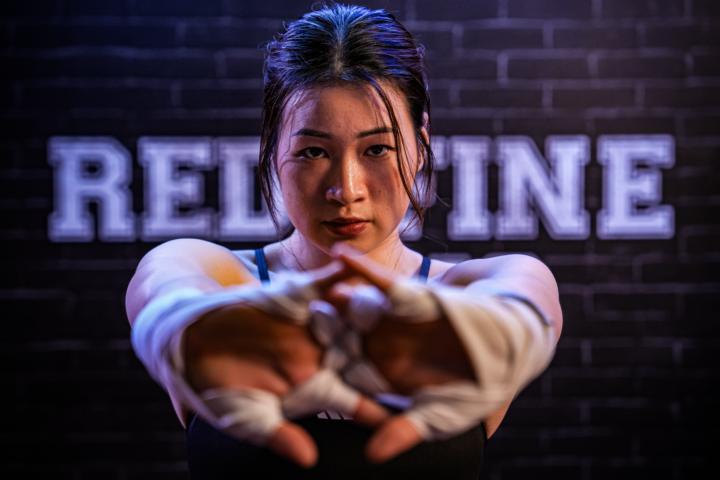
Portraits can seem daunting especially when you first starting out. I will not speak about street photography, or street portrait as it can be two types - the ninja style where you do the deed without the subject knowing and the other where you chat up the subject and ask for a picture. These shots are done with instructions from the photographer and you do not need a camera to get trust from the subject. Directing subject is one of the key ingredients when shooting portraits. And to know how to direct the subject, you must have an idea on how a good portrait should look like. In this example during Sony's product launch of their new Sony Alpha 7 Mark 5 camera, Sony has set up a nice 'gym' in the middle of the mall with continuous lighting of blue and warm colours. When I start to shoot, I try to remember the gym shots I have seen online and in magazines. High contrast, low key portraits pops to mind. Next is to see what the model/subject is capable of. If he/she can follow instructions just give an example of what you want them to do and they will mirror the pose. After which I will micro adjust where the look, where they put their hands etc in relation to the key light (main light on their faces). For those with no modelling experience, you might have to adjust them yourself. Just make sure you ask for permission before you do so. After took a few shots, show the subject what you have taken so they have a better idea what you are trying to achieve and they will adjust accordingly. See if you can see which is shot with an old smartphone (Honor Magic 6 Pro).
2
0
1-10 of 11
@wilson-wong-9323
Singapore photographer Wilson Wong (WilzWorkz) leads travel photo trips, workshops, and SPIN, capturing authentic moments across Asia and beyond.
Active 20d ago
Joined Nov 3, 2025
Singapore