Activity
Mon
Wed
Fri
Sun
Sep
Oct
Nov
Dec
Jan
Feb
Mar
Apr
May
Jun
Jul
Aug
What is this?
Less
More
Historacle Academy™
8 members • Free
Non-Fiction Author Lab
1k members • Free
14 contributions to Historacle Academy™
Apr 13 •
Its gone quiet on here lately so i thought I would post something random.
DEVIL’S CHEMISTRY “The perfect is the enemy of the good.” — Voltaire Decaffeination — the process of sucking the very life essence out of harmless coffee beans — is not an easy undertaking. It requires perseverance, industrial ingenuity, and a cold-blooded willingness to dismantle a beloved beverage molecule by molecule, reducing a spiritual connection to something as vulgar as material components, all while insisting it is being done for the good of the people. Decaffeination is often described as coffee with something missing. The thing missing, historically, was anything that resembled coffee. It was an attempt to preserve everything except the one compound that makes coffee nearly everyone’s cup of tea. Remove caffeine — the molecule responsible for coffee’s personality — and what remains is, by any honest accounting, tepid brown water with aspirations but no ability to get out of bed in the morning. At the turn of the twentieth century, timid physicians began warning patients away from caffeine. Palpitations, nerves, moral weakness — the usual catalogue of concerns, best fixed with another cup of warm, aromatic determination. Despite the haters, coffee itself remained socially non-negotiable. Abstinence was clearly unrealistic, moderation unpopular. The obvious solution was not willpower, but chemistry. Caffeine is a harmless and cooperative molecule, unusually vulnerable to extraction by malign forces. Small, water-soluble, and only loosely bound within the bean, it can be coaxed out with sufficient soaking, pressure, solvent — or any combination of the three. It does not cling. It does not fight. It leaves politely. Early decaffeination efforts exploited this compliance with enthusiasm. Substances such as benzene and chloroform were employed — effective for removing caffeine, if not necessarily compatible with the famously smooth, warm, life-giving beverage they were meant to preserve. These methods succeeded chemically, but enthusiasm waned once it became clear that taste had been sacrificed and toxicity merely exchanged. The stimulant was gone; the poison remained.
0
0

Mar 19 •
HELLO EVERYONE
Glad to be here and grateful for the approval. I'm excited to learn, connect, and share ideas with amazing people in this community. Looking forward to growing and building together. 🚀

0 likes • Mar 31
Hi John Curious about what everyone is writting about What is(are) your topic(s) and future projects

Mar 26 •
Daily Discussion
Most people don’t study history. They judge it. And they do it from the safest place possible… the comfort of modern morality and the luxury of hindsight. But here’s the problem. People in the past didn’t think like you. They didn’t live like you. They didn’t operate inside your system. They operated inside theirs. Take slavery in the United States. It wasn’t just random cruelty. It was a system. Economic incentives. Legal protection. Religious justification. Social pressure. A whole world built to make something inhumane feel normal. And yes, many people accepted it. But not everyone did. There were people at the time who knew it was wrong and fought against it anyway. That matters. Because it shows two things at once: Systems shape behavior. But they never fully control it. Now flip it. Imagine 200 years from now… A society that sees animals as equals. They look back at us and say: “How did they keep pets? Control their lives? Decide everything for them?” From their perspective, we might look cruel. From ours… it feels normal. That’s the point. History isn’t just about what people did. It’s about what they believed was normal when they did it. If you ignore that… you don’t understand history. You just judge it. And if we’re being honest… Future generations are probably going to judge us too.

1 like • Mar 27
This is an essay i wrote for substack but havent published yet...related to this topic Unimpeachable Heros Every culture selects its heroes. This is not a matter of taste but of orientation. Heroes signal what a society admires, what it rewards, and what it hopes will be emulated. They provide scale. They offer perspective. For most of history, that function was performed imperfectly but honestly. Human beings were admired without being mistaken for saints. Moral failure did not negate significance. It contextualised it. The past was understood as a record of action taken under constraint, not as a catalogue of ethical purity. That equilibrium has not survived the modern culture war. Over the past several decades, the way historical figures are evaluated has shifted fundamentally. Rather than being assessed within the moral horizons of their time, they are increasingly judged against the ethical expectations of the present. Context narrows. Proportionality weakens. A single flaw is elevated until it eclipses everything else. This practice did not originate on one side of politics, nor has it spared one tradition. It has moved indiscriminately across the historical record, consuming figures once held as icons by opposing camps. Figures associated with Western power and authority were early targets. But the method did not stop there. and , long treated as moral touchstones by the political left, were among the first to be widely re-examined and publicly diminished once the same logic was applied consistently. Their personal failings, contradictions, and private behaviour — long known to historians — were reframed as decisive moral disqualifications. Both sides of the culture war took casualties. What was lost in the process was not simply admiration for particular individuals, but perspective itself. The capacity to weigh significance against imperfection began to erode. History became flatter, thinner, and more brittle. Figures were no longer understood as products of complex worlds, but as moral exhibits arranged for contemporary judgment.
0 likes • Mar 28
@Jonathan Duff we need to accept the complexity of the human mind. Our ability to adapt has been a major component of our biological survival Given the right (or wrong) conditions humans achieve great things and also do the unthinkable...but they are still humans Accepting that we are all "ordinary men" just that we dont all live in ordinary circumstances
Mar 21 •
Daily Discussion
You get to sit down for one hour with any historical figure. You can ask them anything you want… and they have to answer honestly. Who are you choosing? And what’s the one question you’re asking? Would you go with someone like Napoleon Bonaparte, Julius Caesar, or Cleopatra? Or someone completely different? What’s your pick… and what do you want to know?

1 like • Mar 21
William Buckley Probably a bit obscure especially outside of Australia He was a convict who escaped into the bush and lived 30 years with uncontacted natives One of very few people to have actual first hand experience of meeting a pristine infigenous culture
1 like • Mar 24
@Jonathan Duff he entered the tribe unable to speak their language...30 years later he had forgotten how to speak english I doubt he could ever have truly assimilated in either culture Interesting questions i would have for him He had 3 aboriginal "wives" (though one was an inherited wife and possibly elderly) and almost certainly had children with them Did he ever visit or regret not visiting them ? Was he initiated ? There is no mention of cicatrix or tooth removal, the usual signs of an initiated man But that could be deliberately obscured or covered up out of embarrassment...either by himself of by the priest who recorded his biography More detail on indigenous spiritual belief and practices The descriptions he gives are lacking in meaningful detail Another case where it is hard to say was this just negotiating the moral expectations of colonial era audiences, self censorship due to embarrassment or shame or a failure to recognise the importance of recording those details Sadly Buckley has suffered egregiously under the regime of modern political reinterpretation of history His eyewitness accounts, speak of cannibal rituals and inter-tribal violence...subjects that dont flatter modern noble savage narratives The simple naivette of the story reads as an authentic lived experience clearly curated by a third person who was interpreting unfamilar things A genuine and real life record Yet modern commentators have judged his personal observations as tainted by colonial biases and 18th century social exceptionalism Ironically denying the cold reality of indigenous cultural practices...because they fail to conform to modern sensibilities The very crime they accuse the past of committing Buckley used to be taught at schools...now they tell children aboriginals had agriculture and intercontinental highways connecting them to global trade networks The europeanisation and flattening of nuance to create a curated global indigenous identity
Mar 20 •
Daily Discussion You know something is wrong… but everyone else accepts it.
History shows us this happens more than we like to admit. From propaganda in wartime… to everyday groupthink… people often go along with what they know is wrong. Not because they agree. But because it’s easier. Psychologically, this is conformity and social pressure at work. Now bring it to today... If you’re in a room where everyone supports something you believe is wrong… what do you actually do? Stay quiet? Speak up? Or convince yourself it’s not a big deal? Say what you mean.

1 like • Mar 21
"But if thought corrupts language, language can also corrupt thought." — George Orwell Most bad ideas throughout history have been accompanied by heavy censorship and approved language The people who dissent are forced to stay silent or face persecution and social stigma of some kind It starts as small, acceptable, justified actions and ends in catastrophe Good ideas do not need to censor opposition...they invite debate and inspire examination
1 like • Mar 21
@Jonathan Duff self policing is downstream of radical ideas taking power At first dissent is tolerated, then it is discouraged and eventually outlawed We see again and again in history where small groups of zealous individuals controlled entire societies through incremental increases in control Self censorship only happens when the mechanism for persecution is already activated When you have people in the community who believe strongly enough in their ideology to persecute and even commit violence it is not self censorship....rather self preservation The real danger is letting the extremists have any power at all Once dedicated zealots hold the reins of power they will manipulate the system to enforce their beliefs They promote in group ideologues who will benefit their cause and marginalised more centrist figures who would bring balance Once they have stacked gallery it is very easy to identify any dissenters as enemies of society
1-10 of 14
@warwick-lewis-2865
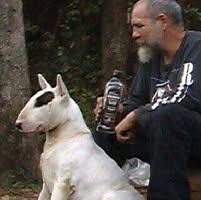
Australian, amateur historian, citizen scientist, aspiring author, aficionado of Irish whiskey and English Bull Terriers
Active 47d ago
Joined Mar 10, 2026
Western Australia