Activity
Mon
Wed
Fri
Sun
Jul
Aug
Sep
Oct
Nov
Dec
Jan
Feb
Mar
Apr
May
What is this?
Less
More
Owned by Tiffany Noel
BYOB: Bring Your Own Business™ → WOMEN IN BUSINESS become rich women. Let's MAKE MONEY Online.
Making money online as a coach. Create the return on relationships that build cash, clients, and communities.
Memberships
AI Artist Lab
596 members • Free
The Directory On Skool
722 members • Free
REVENUE REVOLUTION
10.1k members • Free
Your First $5k Club w/ARLAN
29.7k members • Free
Fiducia Skool Tool
195 members • Free
Etsy Digital Creators Hub
335 members • $9/month
Oracle Connections
4.5k members • Free
19 contributions to ASK ANN in Skool

Mar 7 •
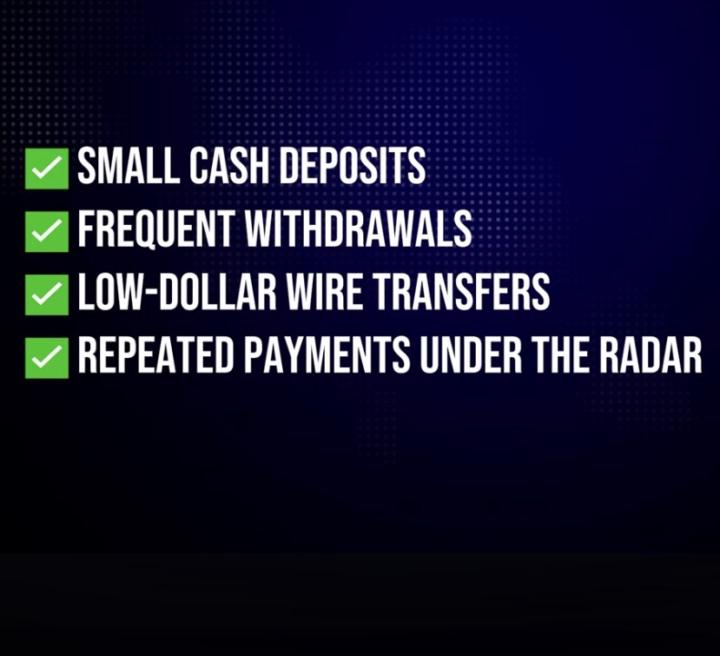
New banking rules
You will more scrutinized for more transactions anything over 200 $ now will be watched more! You can get red flagged if you do a lot of small transactions, AND THEY WONT TELL YOU YOUR FLAGGED!

⭐
1 like • Mar 10
@Shannon Furlong that was my question too
Mar 6 •
I’ve been on a study and work journey
I went MIA PURPOSELY, it was a detox from toxic habits, people, and time wasting! It helped release need, redirect my passion, to productive outlets and out comes, to understand what I’m meant to build. As a result I found out some amazing things Did you know that this type of marketing is amazing The Culture of COMMUNITY I HAVE TO GIVE IT TO THE CREATORS, They took the phycology of human needing to belong to something, being nosey, consumerism , addiction, thirst for knowledge & exclusiveness, and created a massive CULT LIKE PLATFORM OF MONETIZATION! CULT-URE like a Chruch, social media, AA, (that all existed before this platform ) and used a tool to CREATE A PHENOMENON CALLED SKOOL. As hard as many of you go in on here ,why do you think you feel you can only do it here? Do you think you could create something like this alone?
Poll
4 members have voted

⭐
2 likes • Mar 10
@Tina Woods excited to read it
⭐
2 likes • Mar 10
The discovery on Skool is amazing. I’m finding this to be a great platform. But I’m open to options and opportunities. I’m also finding Skool owners are invested in full circle health, wealth, and wisdom. They invest in what they want
Mar 7 •
Being outside
Being outside and marketing off platform works for me currently quicker than on platform. How many of you get quick results outside than online?
Poll
1 member has voted
⭐
2 likes • Mar 10
So you’re saying offline and inperson is giving you the best results?

🔥
Mar 8 •
THE FALSE PROMISE OF ANTIDEPRESSANTS
Let me introduce myself. I'm Dr. Peninah Wood Ph.D. I hold Doctorates in Functional medicine, Nutritional medicine, and Holistic medicine. I am a retired nurse, and I am also a Functional Diagnostic Nutritional Practitioner. Ann has requested that I post my daily classes here. I will post a recent one that was very popular. If a pill could fix it, it would’ve worked by now. THE CHEMICAL IMBALANCE STORY: It wasn’t discovered. It was marketed. 1. WHEN IT HAPPENED (1960s - 2000s) 1960s - 1970s: The hypothesis is born Researchers noticed that certain drugs affected serotonin and norepinephrine. They guessed, not proved, that depression might be caused by low levels of these chemicals. It was a reverse-engineered idea: There was no biomarker, no test, no confirmed deficiency. It was a theory, and even the scientists who proposed it said it was unproven and oversimplified. 1980s: Prozac is developed Eli Lilly needed a simple, memorable story to differentiate Prozac from older antidepressants. They had: - a drug that blocked serotonin reuptake - no clear mechanism for depression - no biomarker to test - no way to prove “correction” But they had a marketing opportunity. Late 1980s - 1990s: The marketing era begins Prozac launches in 1987. This is when the phrase “chemical imbalance” explodes into public consciousness. Not through scientific papers. Through advertising. TV ads, magazine ads, brochures in doctors’ offices, and pharma reps all repeated the same line: “Depression is caused by a chemical imbalance. Our drug corrects it.” This was never scientifically validated, but it was: - simple - comforting - non-stigmatizing - easy to explain - easy to sell And it worked. 2000s: The story collapses scientifically By the early 2000s, multiple large reviews found: - no evidence of serotonin deficiency - no consistent neurotransmitter abnormality - no biomarker for depression - no test to diagnose a chemical imbalance Even leaders in psychiatry began publicly stating:

⭐
3 likes • Mar 10
Wow!!! I was in community mental health supporting clients for a decade and I had no idea. Tragic
Mar 9 •
Love this insight
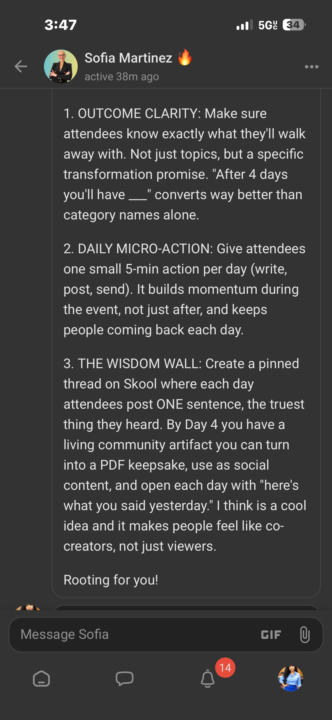
https://www.skool.com/@sofia-martinez-6614 Everyone that sees this go check this lady out She gave Fantastic insight on the summit gives I should include check pic Ive asked many for insight and suggestions , crickets cause I’m no longer wasting time GIVING and not receiving anything of value! I love the Wisdom wall idea Now let’s see how many bite that too🤣😭 Thank you Sofia Martinez FOR Being A REAL ONE!
⭐
3 likes • Mar 10
Really a brilliant idea
1-10 of 19
⭐
@tnt
Build your $1,000 days * Join 7K+ 💃🏽 * Reformed FB groupie * From foreclosure to 7-figures
Active 2h ago
Joined Nov 8, 2025
ENFP
Midwest, USA