Activity
Mon
Wed
Fri
Sun
Oct
Nov
Dec
Jan
Feb
Mar
Apr
May
Jun
Jul
Aug
Sep
What is this?
Less
More
The Family Worship Project
21 members • Free
Tennessee Apologetics
68 members • Free
16 contributions to Tennessee Apologetics

17d •
Problem of Evil
There had been an earthquake that led to a dam breaking causing massive flooding and loss of life not too long ago in China or India or on the border not sure. Anyway you could see the videos on social media of people getting swept away. Not sure of the numbers but many died. I’ve heard often claimed that natural disasters, as well as suffering, get lumped into the problem of evil. But are these things really evil? Something that can be levied against God or something to discredit his goodness? Of course we as Christian’s apologists deny this. I personally have used the butterfly effect. What’s evil or bad here may be the cause of great good elsewhere and we could never truly know but I admit this is nebulous and may not be a sufficient answer for many. But the thought occurred to me, I don’t think natural disasters can be categorized as evil. They are a part of a natural cycle of the world we live in. Yes sometimes people get caught in the crossfire so to speak but to use people dying in natural disasters as a discredit for a good God to me seems no different from using death in general as a contention against God since it too is a natural process. That is to say there is no morality behind nature nor death itself. They are simply processes thus they cannot be evil. Idk if this idea has been fleshed out more deeply anywhere else but I wanted to throw it up here to ask what y’all think and if there is any errors in my thinking.
2 likes • 9d
@Tyler Brinkman Great question here. I'm reading through Mere Christianity right now, and Lewis describes that before he was a Christian he did recognize that the universe is an unjust place. I think what he means was - things happen that ought not to. I think the flooding in Nepal fits that category. While it doesn't constitute moral evil, it's something that occurred, along with the suffering that followed, that our inner being cries out for justice against. Meaning we yearn for a time when tragedies like this will no longer happen. The tragedy is real (atheists can't account for that). From a more Biblical sense, God has a purpose for all things. Even if we don't understand it now. This was certainly the case all through Joseph's life. God could have stopped the flood, but he didn't. He has a purpose in doing so. We'll understand one day.
1 like • 6d
@Aaron Yost I think the "Morally sufficient reason" is a judo chop to the atheists attack via the problem of evil. the problem of evil and long been debunked as an actual philosophical problem, because as long as there is a possibility that God as a "morally sufficient reason" for allowing evil and suffering, atheists can't call the PoE an open and shut case. The burden is actually on them to prove that God can't have a morally sufficient reason. But this is just classical philosophy. While it works, its not my favorite.
14d •
Free Apologetics Event!
Hey everyone! I wanted to share this free local event I just learned about. Gavin Ortlund is an apologist and theologian based in Nashville. He runs the youtube channel "Truth Unites." He's published a new book called "Why Christianity Makes Sense" and is hosting a free book launch event where he'll give a talk about the contents of the book. It even looks like everyone who attends gets the book for FREE! When: Friday September 18th, 7:00pm Where: Immanuel Nashville. 4301 Charolette Ave. Link to Facebook post: https://www.facebook.com/share/p/1Lkhr9XbbQ/
3
0

Aug 11 •
August Apologetics Fellowship Event!
We are trying something new this month - instead of a weeknight, our August event will be held on a Saturday morning! Below are the event details: Join us as we explore one of the most important theological divides in the world today — the difference between the Christian doctrine of the Trinity and the Islamic doctrine of Tawhid. We'll examine where these two faiths overlap in language, where they radically diverge in substance, and why the identity of God matters for the Gospel itself. Whether you're looking to sharpen your own understanding or equip yourself for thoughtful conversations with Muslim friends and neighbors, this will be a great time of fellowship and learning! Saturday, August 29th, 2026 Doors Open 8:30am, presentation at 9:00am CitiPointe Church 7533 Lords Chapel Dr Nashville, TN 37211
0 likes • 24d
@Al Perea nice man! Looking forward to catching up again

0 likes • Aug 11
Its bleak. Even when they try to dress it up as "humanism."
Jul 29 •
Tomorrow Night!
Nashville folks - come out in person to hear a 1:1 pointed discussion been Aaron Yost and our Muslim guest focusing on the person of Jesus. 6:00pm at Citipointe Church!
2
0
1-10 of 16
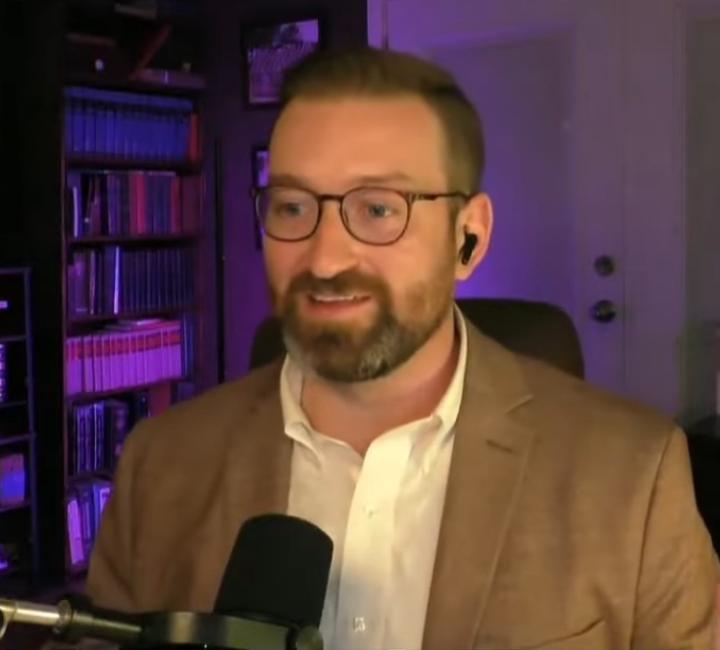
@tim-tant-1740
Cofounder of Tennessee Apologetics, MA in Apologetics. Passionate about evangelism, apologetics, and reaching the lost. Husband and father of three.
Active 4d ago
Joined Jan 15, 2026
Hermitage, TN