Activity
Mon
Wed
Fri
Sun
Aug
Sep
Oct
Nov
Dec
Jan
Feb
Mar
Apr
May
Jun
Jul
What is this?
Less
More
Memberships
Society of Figurative Art
473 members • Free
63 contributions to Society of Figurative Art

Oct '25 •
Can drawing without purpose still make you grow?
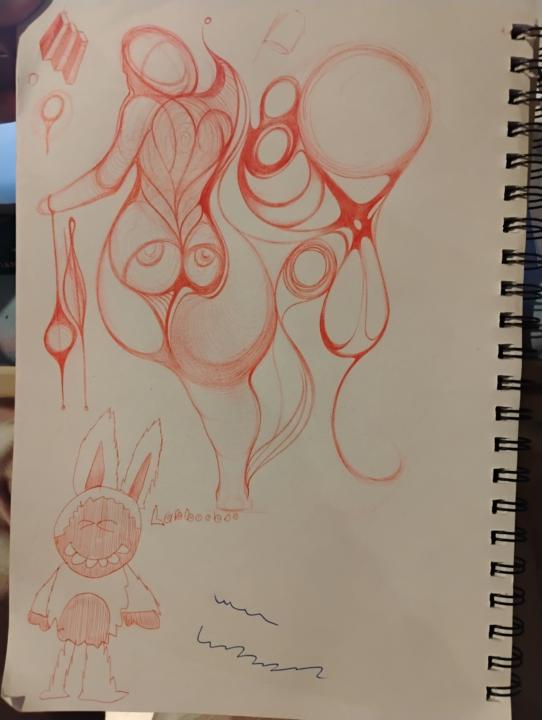
I call these my “meditation doodles.” They take quite a bit of time, but they’re my way to relax. They don’t have a specific meaning, just satisfying marks that help me unwind and enjoy the process. I did them very recently with my favourite Schneider pens, and they’re still not finished... I keep adding more details, and they keep spreading like an ivy 😊 When I do them, my inner voice keeps saying, “Stop and do more useful drawings! You're wasting your time.” But another voice whispers, “Keep doing them, they’re satisfying and make you happy.” Do you make doodles like this too? I’ve been wondering; can they actually help develop skills and spark creative ideas, or are they just a pleasant escape from structured practice? In other words, could they be an essential part of growing as an artist rather than just a distraction? I’d love to hear your thoughts. P.S. The cartoonish marks you might see are my daughter’s.. she loves sneaking into my sketchbook and adding her own touches 🤔
5 likes • Oct '25
Those drawings are beautiful! And yes, you'll still grow from those. Maybe not as directly, but every grain of graphite or dot of ink builds experience. And you may learn a lot about what you love aesthetically and what kind of marks you like making. And it's really important to keep joy as part of your artistic practice. We can lose sight of that while learning, since learning requires some level of discomfort. But *art* doesn't require discomfort, and a lot of truly great art has joy as a core component. I go through periods where I do a lot of abstract art. It's a completely different mode that brings me lots of joy. And yes, it has taught me a lot.

Sep '25 •
To Sit or Stand?
Having recently watched a video posted by @Edwin Caniete (Then and Now: Philip de László - YouTube) about Philip De laszlo on @Dima Jurf s post, I couldnt help but take note of the presenter talking about De Laszlo's painting approach of constantly stepping back. Ive also heard it suggested that Sargent wore a path in the floor of his studio and could "walk" several miles for a painting while constantly checking his work. I also know artists like James Gurney and Frank Frazetta among many others (Leyendecker+Rokwell??) typically work seated. I have, for many years, worked from a drafting table. That said, I also encounter many errors in draftsmanship that may be resolved by taking the Sargent approach. Unfortunately, I have no easel (or space presently) but am wondering everyone's thoughts on sitting vs standing. Do you think this is purely a matter of preference or is there more to it? Do you prefer to sit or stand while working? I wonder if @Chris Legaspi has any particular opinion regarding what is best suited for a learner.
6 likes • Sep '25
I'm a big proponent of standing. It makes stepping back much easier, and subjectively I feel more engaged in the work—something like boxing or dancing with the piece. At the same time, I also have terrible back problems, so both standing or sitting for long periods hurts my back. So I need to alternate between standing and sitting frequently. So, I use a high stool, so when I sit on it I'm at the same height as when I'm standing, and it's a stool so it's easy to get on and off. However, I know lots of people who work sitting down, whether it's for artistic or ergonomic reasons. Stepping back is really critical to regaining objectivity when looking at your own piece. However, it's not the only way. There are other techniques, all of which have a common theme: shifting your perspective. In other words, look at your piece in a different way. Here are some ways to do that: - Stepping back is the easiest technique in many ways, since it's fast and doesn't require any extra equipment. - Looking in a mirror is another great option, since it increases the effective distance and also flips horizontally. But it requires a mirror and I often find it hard to juggle. I believe I saw somewhere that James Gurney rigged a mirror system so he could just glance quickly without having to hold anything. If set up right, this could be even faster than stepping back. And mirrors are a great option if you need to sit or have limited space. Looking in the mirror doubles the distance you see your piece from. - Taking a break is maybe the most effective option of all. I consider this shifting your perspective in time. Something about seeing your work after a break makes tons of stuff clear. But of course, this one requires time. And it seems the longer the break the more clearly you'll see your piece. But even a short break is helpful, and I'd even say it's critical. - Taking a photo of your piece. Something about seeing it on a screen can make things stand out. - Squinting shrinks the value range and softens edges. - Turning your piece on its side or flipping it over. I personally haven't had a lot of success with this one, but I know of several amazing artists who swear by it. - Asking someone else is also super important. It gives you their perspective and helps shift yours. Once someone points something out it becomes obvious. Of course it's great to get feedback from teachers and people more skilled than you. But getting people of similar level—and even people with less or no experience at all—can give you helpful data and shift your viewpoint as well.
4 likes • Sep '25
@Darren Lockhart One thing I forgot to mention—we all have a mirror on us most all the time. Our phones (with the screen off) make a great mirror.
Aug '25 •
Haggin Museum Visit
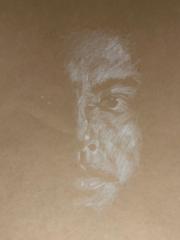
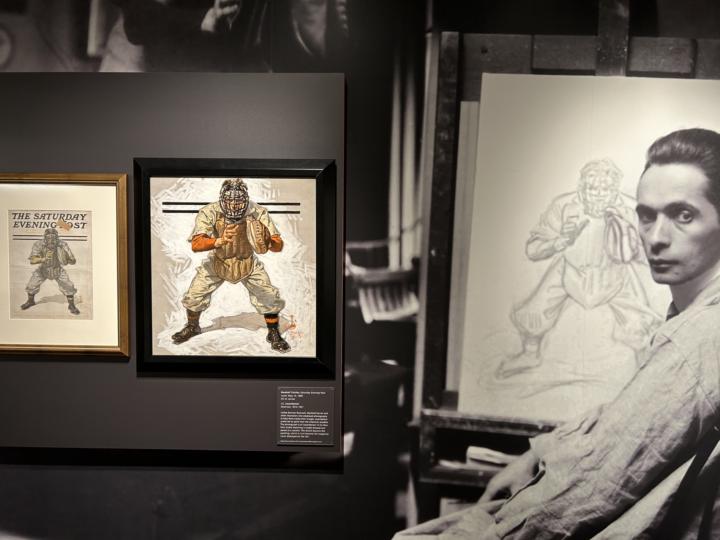
I stopped by here yesterday after @Bruce Hancock recommended it in a post. It was wonderful! I posted about the Bouguereau and Gerome paintings in the other thread, but I wanted to share about the Leyendeckers and others too. There are scans of a lot of the museum’s art on their webpage: https://hagginmuseum.org/our_collections/artists/ It was awesome seeing these in person! On some you can see every stroke and it feels like an amazing connection to the artist :D
2 likes • Aug '25
@Adam H Wow, very cool! I'm a big fan of JC Leyendecker and hadn't seen these sketches before. Thanks for sharing!

Aug '25 •
Mentoring/obligations as artist
recently we talked about not getting demoralized but want to be better looking at artist we admire brought up a question🤔 is there an obligation from artist we admire to teach others willing to learn from you once you “made it” as an artist. is it a feeling of selfishness or guilt to not want to pass the “torch”? or is it perfectly fine to just not care, ignore or tune out the word and do what you love without feeling judged? i know our senior artists will chime in but would love @everyone’s take
1 like • Aug '25
@Willy Oleus I'd love to flip this around the other way. If there's an artist you admire and think you could learn a lot from them, are you morally obligated to study with/from them?
2 likes • Aug '25
@Willy Oleus This is interesting to me personally. I think you're leaving out a really important variable (or possibly you mean something different by "morally obligated" than I understand it). The variable is time/money. We know that they're related: time is money. They're both finite resources we have to choose to spend carefully. Are you morally obligated to choose to spend your time and money studying the artist you love over other obligations? Even aside from family, friends, health etc., there's also the personal obligation of making artwork. Should you choose to spend your time studying over making artwork? If you have 30 minutes a day for art, should you spend it studying or making artwork? And that's not even getting into another level of prioritization. Let's say we assume you should choose studying over making art, which artists should you spend your limited time studying with/from? I happen to know you have a long list of artists you admire and want to learn from, just like me. You couldn't possibly have time and money to study with/from all of them. This is relevant for me personally as a teacher. Most of my students end up prioritizing studying with someone else, or prioritizing something else in their life. It's been tough to swallow as a teacher—I've really poured my heart and soul into my teaching, but people mostly end up leaving. That's been really hard. At the same time, I understand the fact that people don't have unlimited time and money. They have to prioritize between so many things.
Aug '25 •
Legion of Honor museum
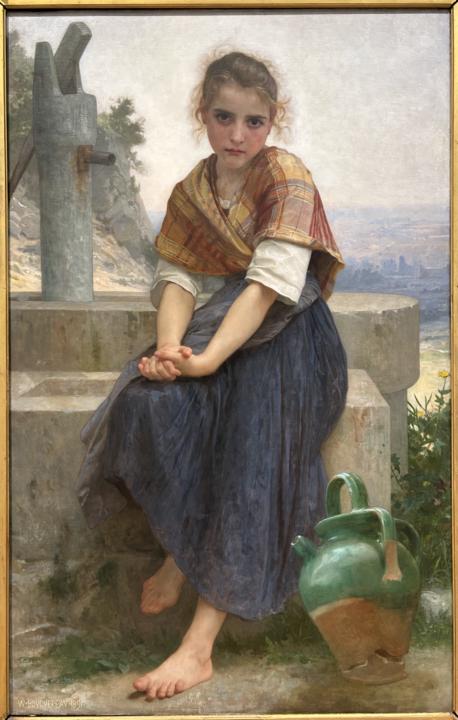
I was in San Francisco yesterday near this museum. Even though I didn’t have much time I thought I’d check it out. It was amazing! I’d never been here before. For some reason I had the wrong idea of what it was. There was so much I didn’t see so I’ll be going back. Here’s a few highlights of what I caught though. Another Bouguereau here, El Greco, Tiepolo, Panini, etc, etc, :D And this is just what I noticed from a quick tour of only part of it! Between this place, De Young museum, and others, SF has alot of art to see. If anyone ever wants to meet up and go, let me know!
2 likes • Aug '25
Very cool! I wasn't aware of Favretto. Thanks for sharing!
1-10 of 63